










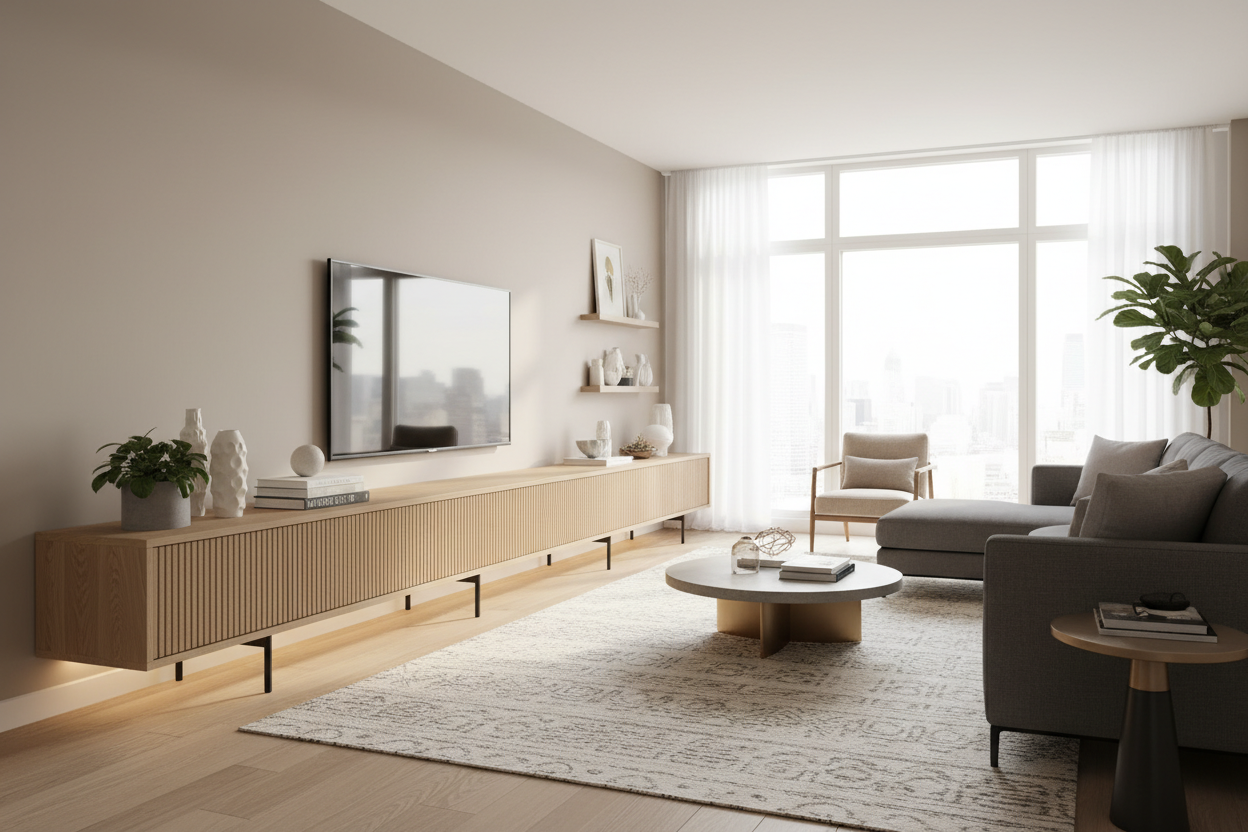
I spent three hours staring at a 12-foot wall in my rental, convinced that a modern long tv stand would make the place look like a cramped storage unit. My living room isn't a ballroom; it’s a standard 12x14 box where every inch of floor space is precious. I’ve lived the 'small furniture for small rooms' life for years, usually settling for those 50-inch particle board units that look like they belong in a dorm room.
But the clutter was winning. My router was dangling off the edge, my PS5 looked like a monolith from a different planet, and the visual 'choppiness' of my small furniture was making the room feel frantic. I decided to test the designer theory that a super long tv stand—something that spans almost the entire wall—actually makes a room feel bigger. I bought a 90-inch beast, and honestly, I’m never going back to small consoles.
Quick Takeaways
- Longer consoles create a horizontal line that tricks the brain into seeing a wider room.
- Hidden storage in a long tv console cabinet eliminates the 'tech clutter' that kills small-space vibes.
- Low-profile designs (under 18 inches tall) are the secret to keeping an oversized piece from feeling heavy.
- Always leave at least 12-18 inches of clearance from the corners to avoid a 'built-in' look that feels claustrophobic.
The Big Design Myth I Wanted to Bust
The standard advice for renters is usually to buy small, leggy furniture so you can 'see the floor.' I’ve followed that rule for a decade, and all it got me was a living room that looked like a collection of random islands. I wanted to see if a massive, wall-to-wall extra long tv credenza would actually 'swallow' the room or if it would ground the space.
I chose a unit that was nearly 8 feet long for a wall that was only 11 feet wide. My friends thought I was insane. They warned me it would look like a runway for a very small airport. But here’s the thing: when you have one continuous piece of furniture, your eye doesn't stop and start. It flows across the room. That lack of visual friction is exactly what makes a cramped apartment feel like a curated home instead of a temporary camp.
Why Oversized Consoles Actually Trick the Eye
It comes down to visual weight. When you have a small TV stand flanked by a floor lamp on one side and a basket of blankets on the other, your brain processes three separate objects. That’s three things to look at, three shadows, and three points of clutter. By replacing those with one long tv console modern design, you reduce the 'noise' to one single, clean horizontal line.
I’ve seen people make some classic modern long tv console mistakes, like picking a unit that is both long and tall. That’s where the 'swallowing the room' fear comes true. The trick is to stay low. My console is only 16 inches off the ground. Because it sits below my eye level when I’m sitting on the sofa, it doesn't feel like a wall; it feels like a base. It anchors the TV and makes the ceiling feel higher by comparison.
Measuring for a Long TV Console Cabinet (Without the Panic)
Before you drop $800 on a piece of furniture that weighs 140 pounds, you need to be sure it won't block your path to the kitchen. Most modern units are surprisingly slim. While a traditional dresser might be 20 inches deep, many sleek living room tv stands are only 14 to 16 inches deep. That four-inch difference is the difference between a comfortable walkway and bruised shins.
You also have to account for the 'swing' of the doors. If you’re in a narrow room, look for sliding doors or flip-down cabinets. I learned the hard way that a 24-inch cabinet door swinging out into a 30-inch walkway is a recipe for a bad Tuesday. Check your clearances twice, especially if you have a coffee table nearby.
My Painter's Tape Method
Don't trust the AR 'view in your room' apps—they lie about scale. I use blue painter's tape to mark the exact footprint on the floor. I leave it there for two days. If I don't trip over the tape or feel annoyed by it while vacuuming, the piece will fit. If you're still nervous about the commitment, an adjustable length media console is a great safety net. You can slide it out to fill the wall or tuck it in if you move to a smaller place later.
Storage Upgrades: Hiding the Ugliest Tech
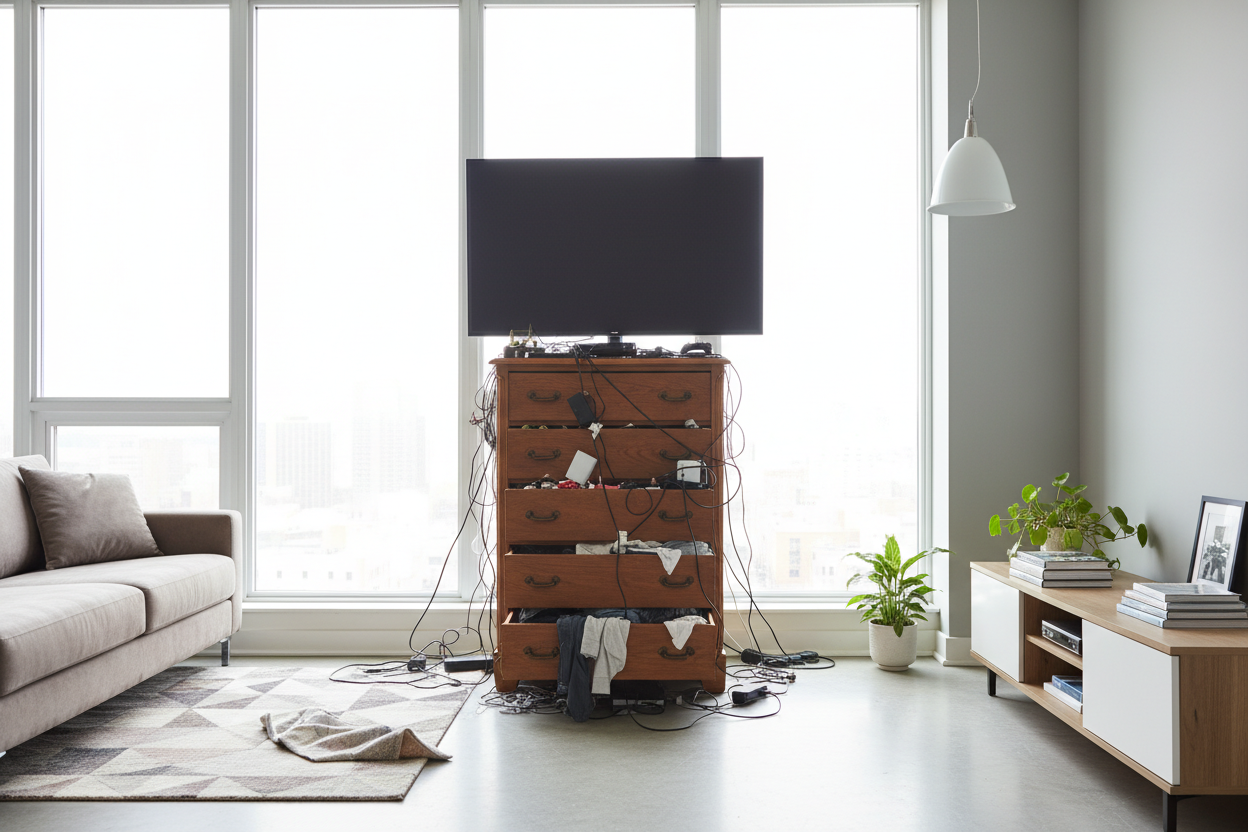
Let’s talk about the 'black box' problem. Between the cable box, the Nintendo Switch, the router, and the tangled mess of HDMI cables, my old setup looked like a high-tech bird's nest. Swapping to an extra long tv credenza gave me four massive cabinets to work with. I was able to hide everything—including my bulky printer and a stack of board games that used to live in the coat closet.
If you have a lot of gear, look for something with ventilated back panels. I once fried a receiver because I shoved it into a cheap, unventilated cabinet. An extra long barn door tv stand is a solid choice here because you can slide the doors to expose the tech when it's in use and hide it when you're hosting dinner. It’s the ultimate 'adulting' move for your living room.
What to Do With the Awkward Empty Ends
The biggest fear people have with a 90-inch stand is: 'I only have a 55-inch TV, what happens to the other three feet of space?' If you center the TV, you’re left with two empty runways on the sides. The mistake is trying to make it perfectly symmetrical. Please, don't put two identical lamps on either side like it’s a hotel lobby.
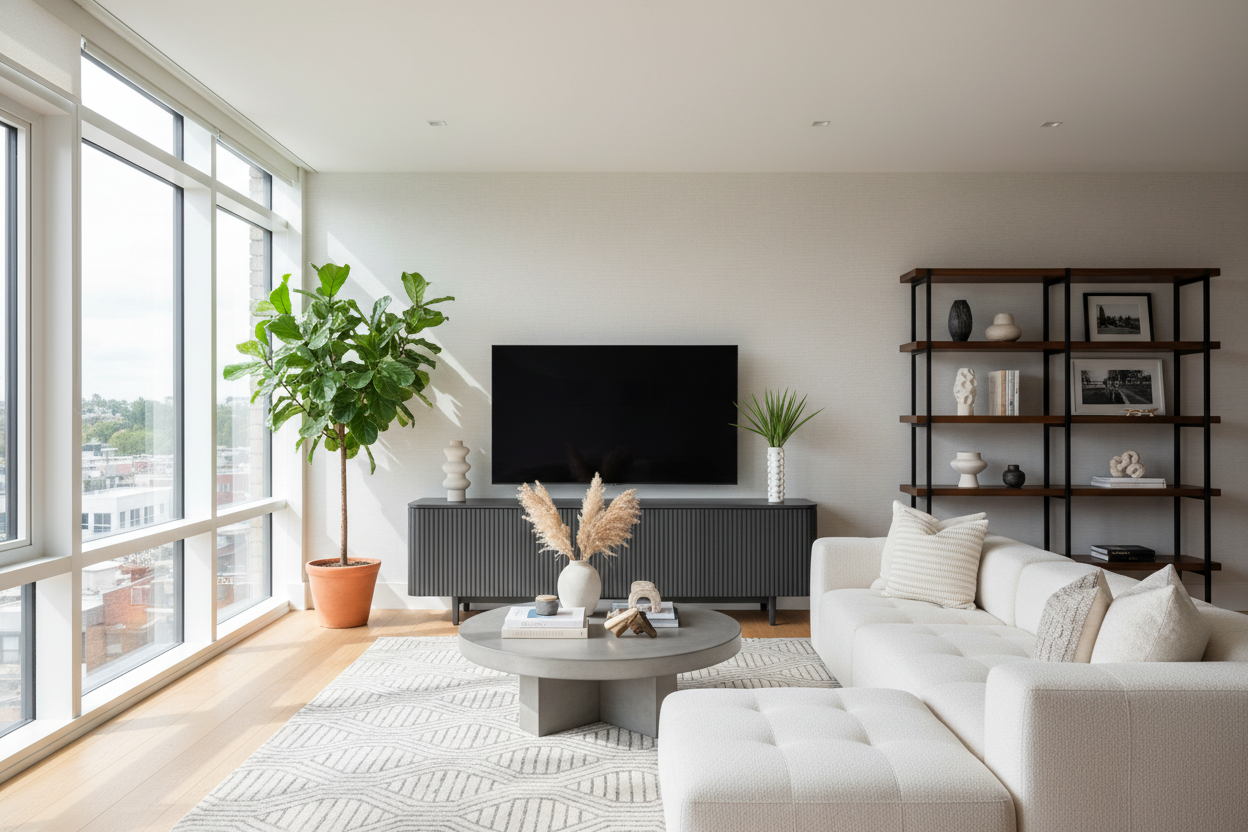
Instead, try asymmetrical styling. Put a tall plant or a high-quality table lamp on one side. On the other, stack some coffee table books and maybe a small ceramic bowl for your keys. You want to style wide media consoles so they look like a curated shelf, not just a TV holder. The extra length gives your decor room to breathe, which is exactly why the room ends up feeling larger in the end.
Personal Experience: The Baseboard Blunder
I have to admit, I messed up the installation of my first long stand. I didn't account for the thick, old-school baseboards in my apartment. Because the console had a solid back and no 'cutout' for the baseboards, it sat two inches away from the wall. It looked terrible and stuff kept falling behind it. I ended up having to buy new legs to lift the whole unit above the baseboard line. If you’re buying a floor-length unit, check if it has a recessed back or if you’ll need to DIY a solution.
FAQ
Does the TV stand have to be longer than the TV?
Yes, absolutely. A TV that is wider than its stand looks top-heavy and precarious. Ideally, you want at least 6-10 inches of extra stand on each side of the screen to keep the proportions looking balanced.
Can I put a long console in a carpeted room?
You can, but be careful with weight. A 100-inch MDF console filled with books and tech is heavy. It will leave deep divots in your carpet. Look for units with multiple center support legs to distribute the weight so the middle doesn't sag over time.
How do I manage cables on such a long unit?
Look for 'cable management' holes in every section, not just the middle. If the unit doesn't have them, you can easily use a 2-inch hole saw bit to add your own. Just make sure you're not drilling through a structural support beam.

Dejar un comentario
Este sitio está protegido por hCaptcha y se aplican la Política de privacidad de hCaptcha y los Términos del servicio.