










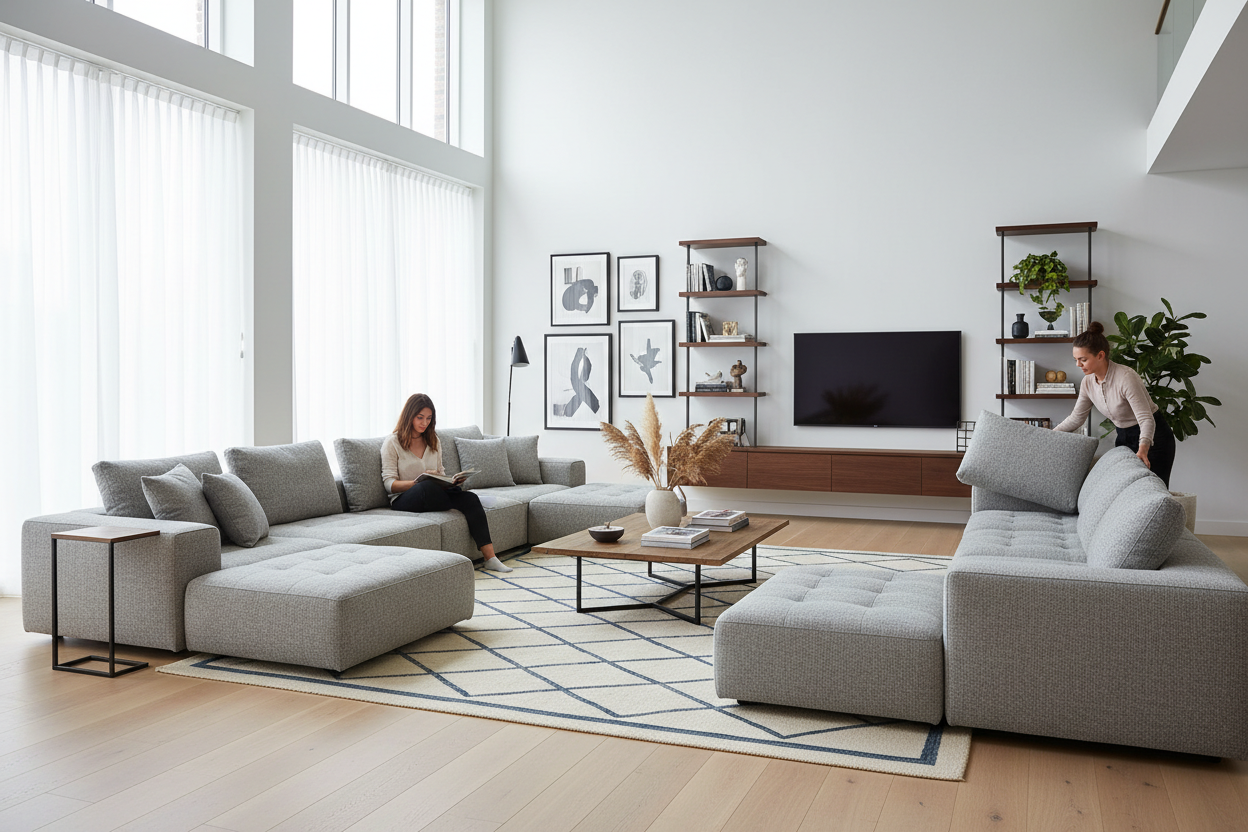
You purchase a sofa for the living room you have today, but rarely do we consider the living room we might have three years from now. This is the classic design dilemma: committing to a static layout in an evolving life. Whether you are navigating a tricky floor plan, anticipating a move, or simply enjoy refreshing your interior aesthetic frequently, the interchangeable sectional sofa offers a compelling solution. However, as a designer, I often see clients confuse versatility with quality. Not all modular pieces are created equal, and understanding the nuances of construction is vital before you invest.
Quick Decision Guide: What Matters Most
If you are rushing to make a purchase, prioritize these four critical factors to ensure your furniture stands the test of time and daily use:
- Connector Mechanism: Look for heavy-duty metal alligator clips or hidden brackets. Velcro or simple gravity-based systems often lead to frustrating gaps.
- Frame Composition: Ensure the frame is kiln-dried hardwood or furniture-grade plywood. Avoid particleboard, which cannot withstand the stress of frequent rearranging.
- Upholstery Continuity: Check that the fabric continues fully down the sides of each module. Some manufacturers use cheap black lining on the sides, meaning you can't use a middle piece as an end piece.
- Seat Density: High-resiliency foam wrapped in down or dacron ensures the cushions maintain their shape even after being moved to different positions.
Analyzing the Mechanics and Durability
The primary appeal of a sectional couch interchangeable by design is the ability to break the grid. However, the engineering required to make a sofa look cohesive while being segmented is complex. In high-end design, we look for a "tight" silhouette. When the pieces are locked together, the seams should look intentional, not like a mistake.
Durability is paramount here. Unlike a standard sofa, a transforming sectional couch undergoes physical stress every time you reconfigure it. If the joinery is weak, you will eventually hear creaking or notice the backrests wobbling. Always inspect the hardware. It should feel heavy and substantial in your hand, not like lightweight aluminum.
Space Planning & Layout Flexibility
The beauty of a sectional couch you can rearrange lies in its command of spatial flow. In a large, open-concept loft, you might configure the pieces into a dual-sided island, allowing guests to sit facing the fireplace on one side and the kitchen on the other. In a narrower apartment, that same piece can become a long, linear banquette.
Visual Weight and Balance
When selecting an interchangeable modular sofa, pay close attention to the visual weight. Because these sofas are blocky by nature (to allow for tessellation), they can feel heavy. To counter this, I often recommend styles with a slight leg lift—exposing even two inches of floor space can trick the eye into thinking the room is larger. Additionally, consider low-profile backs to maintain sightlines across the room, ensuring the furniture anchors the space without dominating it.
Choosing the Right Upholstery
Since you will likely handle the individual modules frequently, the fabric needs to be robust. I advise clients to look for performance weaves with a high double-rub count (over 50,000). A sectional couch that you can change often means rotation; if one seat is a favorite spot, you can swap it with a less-used corner piece to ensure even wear. However, this only works if the fabric has high abrasion resistance and resists pilling.
Lessons from My Own Projects
I want to share a specific realization from a project I worked on in a pre-war walk-up. We specified a beautiful, high-end modular system for a client with a narrow living room. Visually, it was stunning. However, six months later, the client called me about "connector drift."
Despite the high price tag, the floor glides on the bottom of the legs were too slippery for their refinished hardwood floors. Every time someone flopped down, the modules would micro-shift, eventually straining the metal connectors. We fixed it by applying heavy-duty, non-slip rubber pads to the feet, but it was a tactile lesson: the interaction between the sofa legs and your specific flooring is just as important as the sofa itself. Also, be prepared to vacuum between the modules. Unlike a standard sofa where crumbs fall under the couch, on a modular piece, they tend to get trapped in the crevices between the units.
Conclusion
Investing in an interchangeable sectional is a decision to prioritize adaptability. It allows your home to evolve with your needs, moving from a cozy movie-night pit to a formal entertaining layout in minutes. By focusing on the quality of the connectors and the integrity of the frame, you ensure that this flexibility doesn't come at the cost of longevity.
Frequently Asked Questions
Do the modules slide apart when you sit on them?
They shouldn't, provided the sofa uses a locking mechanism like alligator clips or bolted brackets. If the sofa relies solely on weight or friction, separation is inevitable. Always check for a mechanical locking system.
Can I wash the covers of a modular sofa?
Many interchangeable sofas feature removable slipcovers, which is a massive benefit. However, check the cleaning code. "S" means solvent-only (dry clean), while "W" allows for water-based cleaning. Always wash all covers simultaneously to prevent color variation.
Is a modular sectional comfortable for sleeping?
Generally, yes, because you can arrange the ottomans or chaises to create a large, bed-like surface. However, be aware of the seams. A deep, plush cushion style will mask the gaps better than a tight, firm seat.

Dejar un comentario
Este sitio está protegido por hCaptcha y se aplican la Política de privacidad de hCaptcha y los Términos del servicio.