










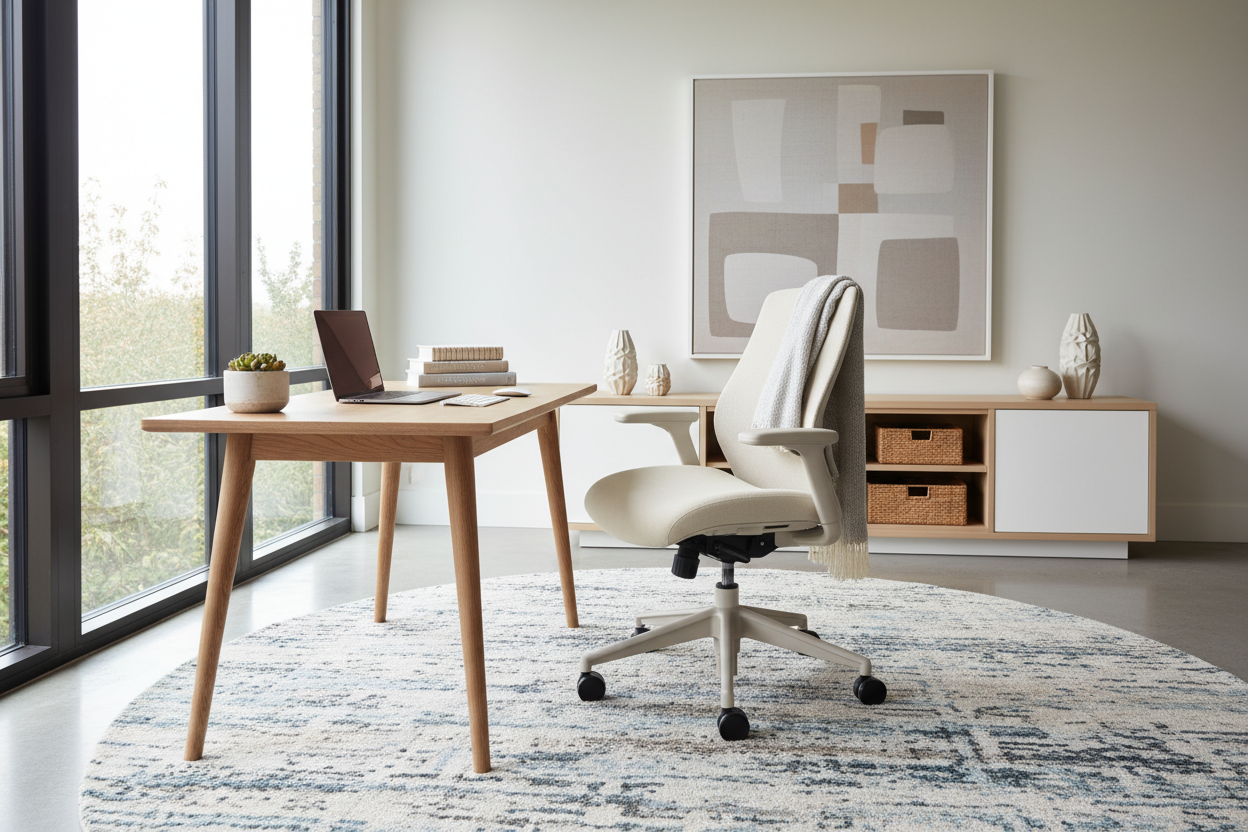
We have all seen it happen: a beautifully curated study or living corner ruined by a clunky, corporate monolith of a seat. The struggle to find a chair for home office use that respects your interior design while preserving your spinal health is the most common dilemma I encounter with residential clients. It is not just about a place to sit; it is about merging the utility of a workspace with the sanctuary of a home.
Key Features to Look For
Before falling in love with a velvet swatch or a sleek silhouette, consider these non-negotiable elements for desk seating that actually performs:
- Lumbar Integrity: Does the curve of the backrest align with your natural lordosis (lower spine curve)?
- Seat Depth: You should have 2-3 inches of clearance between the back of your knees and the seat edge.
- Martindale Rub Count: For desk chairs for home use, look for fabrics rated 20,000+ rubs for longevity.
- Base Stability: A five-star base is standard for safety; ensure casters match your flooring (soft for hardwood, hard for carpet).
- Visual Weight: Does the chair dominate the room, or does it blend into the surrounding architecture?
Balancing Ergonomics with Residential Aesthetics
The primary difference between commercial furniture and desk chairs for home lies in the visual language. In a corporate setting, function dictates form entirely. In your residence, the chair acts as a sculptural element when not in use. I often steer clients toward mid-century modern profiles or high-end task chairs that hide their mechanisms within the upholstery.
If your workspace is part of an open-plan living area, avoid high-backed executive styles that block sightlines. Instead, opt for a low or mid-back profile that sits below the horizon line of the room, maintaining an airy, uncluttered flow.
Choosing the Right Material
Material selection is where office chairs home setups often fail. While mesh is breathable and standard in cubicles, it rarely complements a warm, residential palette.
Leather and Faux Alternatives
Top-grain leather offers a sophisticated patina that improves with age, making it an excellent investment for a library or formal study. However, be wary of cheap bonded leather, which will peel within two years of daily friction. For a vegan alternative, look for high-grade polyurethane that mimics the suppleness of hide without the maintenance.
Fabric and Performance Textures
For a softer, more inviting look, performance velvets or tweeds are exceptional. They add tactile warmth to the sharp edges of an office chair desk. Just ensure the fabric is treated for stain resistance—coffee spills are inevitable.
Space Planning and Layout
A common oversight is failing to account for the chair's movement. An office chair desk setup requires a minimum of 42 inches of clearance behind the desk to allow you to slide back and rotate comfortably without scuffing the wall or hitting a bookshelf. If your space is tight, consider an armless design to ensure the chair tucks fully under the desk surface when the workday ends.
Lessons from My Own Projects
I learned a hard lesson about desk seating early in my career while designing a loft for a graphic designer. We chose a stunning, cream-colored bouclé chair that looked incredible against the walnut millwork. It was the visual anchor of the room.
Three months later, the client called me in distress. The issue wasn't the structure—it was denim dye transfer. Because she worked in jeans daily, the friction had turned the seat a muddy blue, and bouclé is notoriously difficult to spot-clean without ruining the texture. Now, I always perform a "lifestyle audit" before specifying light fabrics for high-traffic seating. If you live in denim, go for leather, dark tweed, or a high-performance Crypton fabric. It is a small, unpolished detail that saves significant heartbreak (and money) down the line.
Conclusion
Selecting the right seating is about respecting both your body and your architecture. By focusing on the intersection of durable materials, proper scale, and ergonomic support, you can create a workspace that feels as good as it looks. Do not settle for the temporary fix; invest in a piece that elevates your daily routine.
Frequently Asked Questions
Should I choose wheels or fixed glides for my home office chair?
If your workflow involves reaching for files or turning between screens, wheels (casters) are essential for reducing strain. However, if your desk is on a delicate vintage rug or hardwood that scratches easily, fixed glides or a rug pad are safer options to preserve your flooring.
How do I know if an office chair fits my desk height?
Most standard desks are 29-30 inches high. To ensure ergonomic alignment, your chair needs to adjust so your elbows sit at a 90-degree angle while typing. If the chair arms prevent you from pulling close enough to the desk, you will find yourself leaning forward, which ruins your posture.
Is a mesh chair better than a cushioned one?
Mesh offers superior breathability, which is vital if you run hot or live in a warm climate. However, cushioned seats generally provide better pressure distribution for the hips during long sitting sessions. For a home environment, a cushioned seat with a mesh back is often the best compromise between comfort and temperature control.


Dejar un comentario
Este sitio está protegido por hCaptcha y se aplican la Política de privacidad de hCaptcha y los Términos del servicio.