










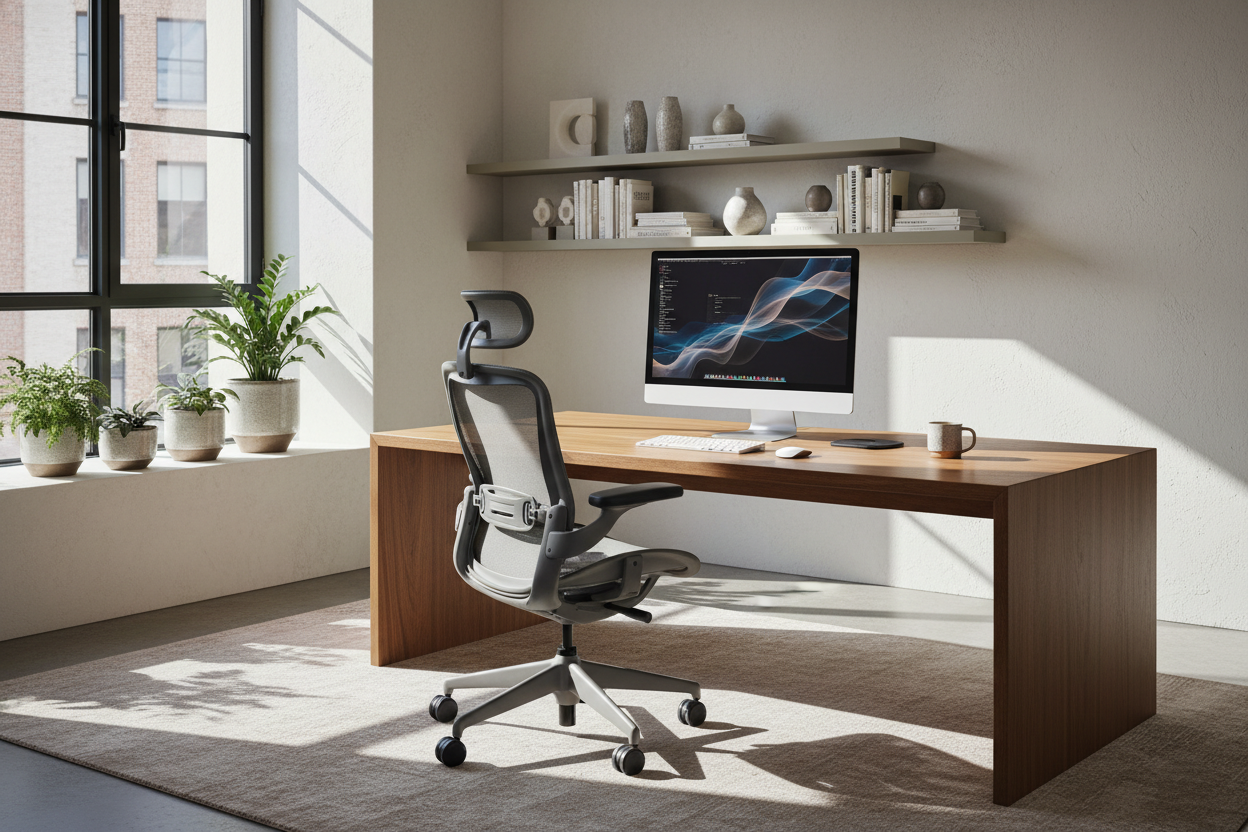
We often blame our own discipline or time management when the workday drags, but as an interior designer, I see a different culprit. If you are feeling less productive working from home, the issue is rarely your work ethic; it is almost always your environment. The transition from a structured corporate office to a makeshift home workspace often ignores the subtle ergonomic and spatial cues that signal our brains to focus. When the silhouette of your chair causes fatigue or your lighting induces eye strain, your output naturally suffers.
Key Design Elements Affecting Focus
- Ergonomic Integrity: The relationship between seat height, lumbar support, and desk surface determines physical endurance.
- Lighting Layers: Balancing task lighting (cool) with ambient lighting (warm) to prevent circadian disruption.
- Spatial Zoning: Creating distinct psychological boundaries between "living" and "working" zones.
- Visual Acoustics: Using textiles and soft furnishings to dampen echo and reduce cognitive load.
- Color Psychology: Selecting hues that stimulate concentration rather than relaxation or anxiety.
The Ergonomics of Efficiency: It Starts With the Chair
The most common reason remote workers less productive outcomes occur is physical discomfort. In the showroom, clients often gravitate toward aesthetic, sculptural chairs that lack adjustability. However, productivity is tied to posture.
When selecting seating, prioritize mechanisms that support dynamic movement. A static spine leads to fatigue. Look for chairs with breathable mesh or high-quality leather that regulates body temperature. If you are constantly shifting to find a comfortable position, you are breaking your flow state. The investment in a chair with proper synchro-tilt and seat depth adjustment is directly proportional to your ability to maintain focus for extended periods.
Lighting and Layout: The Invisible Distractions
Many homeowners ask, "Is remote work less productive because of distractions?" Yes, but visual noise is just as distracting as audible noise. A desk facing a cluttered room or a blank wall can be detrimental. Ideally, position your desk in the "command position"—facing the door but not directly in line with it, with a view of a window if possible. This taps into primal instincts of security and reduces subconscious anxiety.
Mastering the Kelvin Scale
Lighting temperature is critical. Residential lighting is often too warm (2700K), which promotes relaxation. For a workspace, layer your lighting. Use a task lamp with a cooler temperature (3500K-4000K) to mimic daylight and keep alertness high, while keeping ambient overhead lighting softer to avoid the sterile feeling of a cubicle.
Textiles and Acoustics
Are remote workers less productive in open-plan homes? Often, yes, due to poor acoustics. Hard surfaces like hardwood floors and glass reflect sound, creating a subtle echo that increases cognitive load during calls. Introduce high-pile rugs, heavy velvet or linen drapery, and upholstered furniture to absorb sound. These elements not only soften the acoustic profile of the room but add a tactile layer of comfort that makes the space inviting rather than sterile.
My Personal Take on less productive working from home
Early in my career, during a home renovation, I tried to work from a mid-century dining chair—a beautiful piece with a teak frame and woven cane seat. It looked stunning in photos. However, after three days, I noticed a sharp decline in my output. The rigid back forced me to slump, compressing my diaphragm and making me feel lethargic by 2:00 PM.
I realized that the "afternoon slump" wasn't about caffeine; it was about oxygen flow and posture. Once I swapped it for a dedicated task chair with proper lumbar resistance, my energy levels stabilized. It taught me a valuable lesson I tell every client: Is work from home less productive for you? Check your spine before you check your schedule. Never sacrifice spinal alignment for a design trend in a high-use zone.
Conclusion
If you find remote work less productive than the office, stop forcing yourself to work harder and start designing smarter. By curating a space that respects ergonomics, lighting, and acoustics, you transform your home office from a place of confinement into a hub of efficiency. Your environment should do the heavy lifting so your mind doesn't have to.
Frequently Asked Questions
How small can a desk be without affecting productivity?
While space is often at a premium, a depth of at least 24 inches is crucial to allow for proper monitor viewing distance. Anything shallower can lead to eye strain, which significantly hampers work stamina.
Does the color of my office walls actually matter?
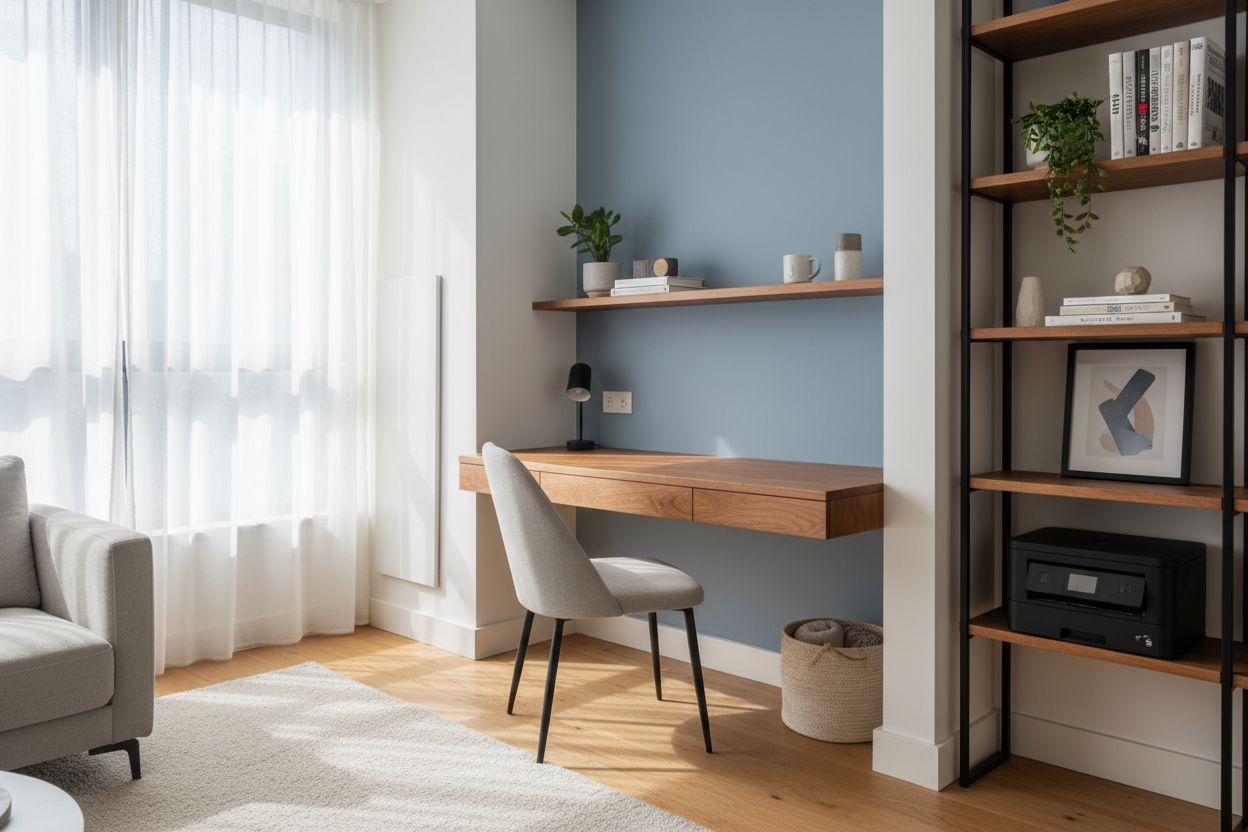
Absolutely. While white is safe, it can be uninspiring. Low-wavelength colors like calming greens and blues improve efficiency and focus, while high-wavelength colors like red can induce urgency and anxiety.
Is a standing desk worth the investment for productivity?
Yes, but with a caveat. It is about the option to move, not standing all day. The ability to alternate between sitting and standing keeps blood flowing and energy levels consistent, combating the lethargy associated with sedentary work.


Dejar un comentario
Este sitio está protegido por hCaptcha y se aplican la Política de privacidad de hCaptcha y los Términos del servicio.