










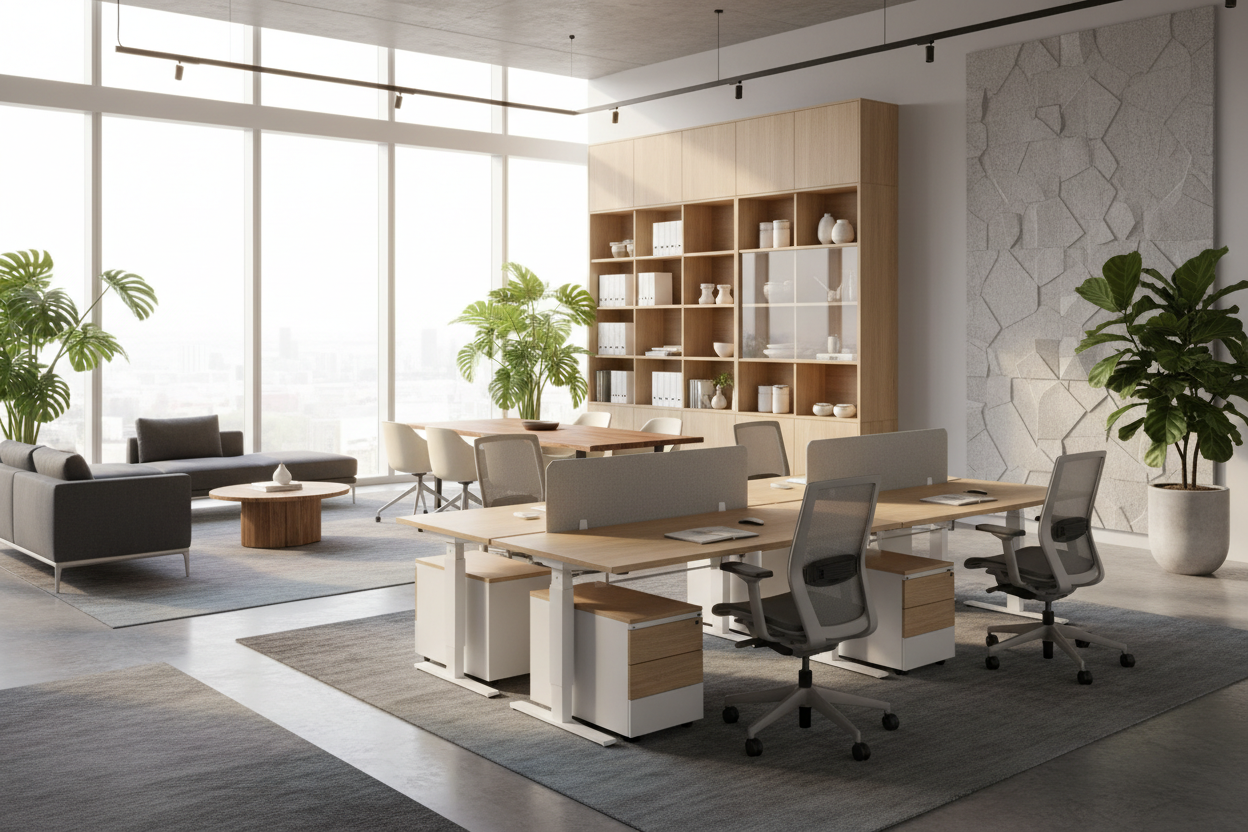
Designing a workspace that balances rigorous ergonomic standards with a refined aesthetic is one of the toughest challenges my clients face. Whether you are outfitting a corporate headquarters in Toronto or a home office in Vancouver, the market is flooded with options that look good online but fail the tactile test in person. Finding the right office furniture Canada has to offer requires looking past the glossy renders and understanding construction quality, material origin, and spatial dynamics.
Quick Decision Guide: Key Sourcing Criteria
Before you commit to a purchase order, scan this checklist to ensure you are investing in longevity rather than just filling a space:
- Origin of Manufacturing: Prioritize canadian made office furniture for better wood acclimatization and reduced shipping carbon footprints.
- Commercial vs. Residential Grade: Always check if the item is ANSI/BIFMA rated, even for home use. This ensures safety and durability.
- Lead Times: Office furniture suppliers canada often have varying timelines; custom Canadian millwork takes 8-12 weeks, while stock items take 2-3 weeks.
- Ergonomic Adjustability: Look for seating with seat slide, lumbar depth, and 4D armrests, not just height adjustment.
- Surface Durability: For high-traffic desks, opt for High-Pressure Laminate (HPL) or sealed solid wood over thermal-fused paper laminates.
Navigating the Canadian Market
The landscape of office furniture in canada is unique. Unlike the US market, which is heavily saturated with mass-produced imports, Canada retains a strong backbone of domestic manufacturing. When I curate pieces for a client, I look for makers who understand our climate. Wood furniture imported from humid tropical climates often cracks when introduced to the dry heating of a Canadian winter. Sourcing locally mitigates this risk.
The Value of Local Manufacturing
There is a distinct advantage to working with canadian office furniture manufacturers. Beyond the patriotic appeal, the build quality tends to be superior regarding joinery and finishing. Manufacturers like Global, Teknion, or boutique joinery shops in Quebec produce pieces that withstand the rigors of daily use. When you choose canadian made office furniture, you are often getting commercial-grade steel gauges and higher density foams that don't bottom out after six months of sitting.
Materiality and Visual Weight
In design, we talk about "visual weight"—how heavy an object looks in a room. For smaller Canadian condos or compact offices, you want to avoid heavy, blocky mahogany desks.
- Glass and Chrome: These reflect light and make a room feel larger, a common tactic I use in downtown high-rises.
- Solid Wood and Veneers: Office furniture manufacturers in canada excel at maple and walnut veneers. These add warmth and texture, acting as a focal point that grounds the room without feeling sterile.
- Textiles: For chairs, look for a high Martindale rub count (50,000+). This ensures the fabric won't pile or wear thin on the seat edge.
Ergonomics: The Non-Negotiable
A beautiful chair that hurts your back is a failed design. When vetting office furniture suppliers canada, I test the "active sitting" capabilities. Does the chair move with you? Does the desk height allow your elbows to rest at a 90-degree angle? Integrating sit-stand desks is no longer a trend; it is a standard health requirement. However, the mechanism matters. Dual-motor electric legs are smoother and quieter than single-motor options, preventing that annoying coffee-spilling jolt when you change heights.
Lessons from My Own Projects
I want to share a specific mistake from a project I managed in Calgary a few years ago to save you the headache. We were sourcing desks for a startup and decided to bypass the established office furniture manufacturers in canada to save budget on a trendy, imported "white oak" laminate line.
On installation day, everything looked pristine. However, within three months, I got a call. The laminate edges (the PVC banding) started peeling off because the glue couldn't handle the dry air and temperature fluctuations near the heating vents. Worse, the "matte finish" absorbed coffee oils instantly, leaving permanent rings that couldn't be cleaned.
I had to replace four workstations out of my own pocket. Since then, I only specify High-Pressure Laminate (HPL) or sealed veneer from reputable domestic suppliers. The initial cost difference is roughly 20%, but the replacement cost of cheap furniture is 100%.
Conclusion
Curating your workspace is an investment in your productivity and physical health. By focusing on ergonomic integrity and supporting local craftsmanship, you create an environment that feels professional and endures the test of time. Don't settle for disposable décor; choose pieces that work as hard as you do.
Frequently Asked Questions
How do I know if office furniture is commercial grade?
Look for ANSI/BIFMA certification. This indicates the furniture has passed rigorous safety and durability tests standard for commercial office furniture in canada.
What is the standard lead time for Canadian-made furniture?
While stock items can ship in days, custom canadian made office furniture typically requires 6 to 10 weeks for production, depending on the complexity of the finishes.
Is a sit-stand desk worth the investment?
Absolutely. From a design perspective, it reduces the need for multiple surfaces. From a health perspective, it improves circulation. Ensure you choose a model with a wide height range to accommodate your specific ergonomic needs.


Dejar un comentario
Este sitio está protegido por hCaptcha y se aplican la Política de privacidad de hCaptcha y los Términos del servicio.