










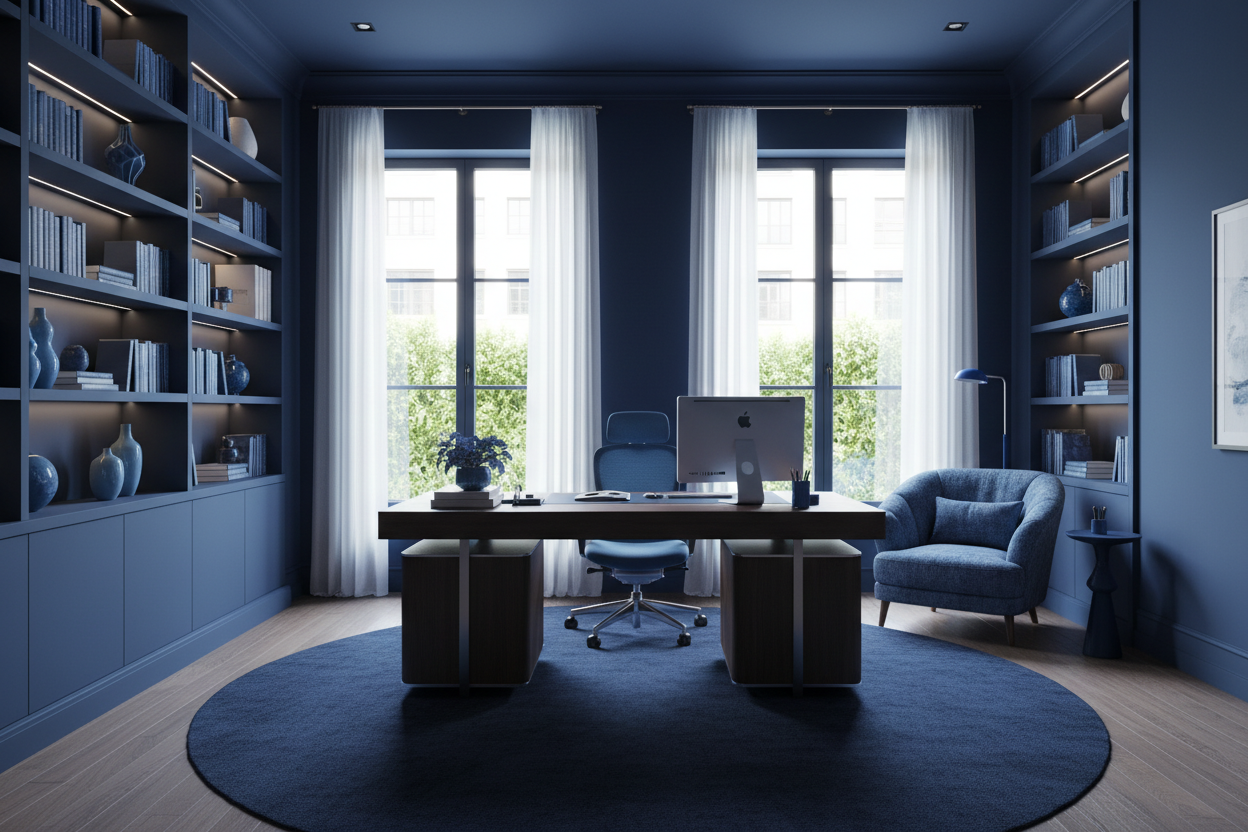
Choosing the right color palette for a workspace is rarely just about aesthetics; it is about psychological ergonomics. Many clients approach me wanting a workspace that feels calm yet authoritative, but they fear that a blue office will feel too cold or, conversely, too dark and cavernous. The secret lies not in avoiding the color, but in mastering the balance of light, texture, and furniture selection to create a space that promotes deep work.
Key Features to Look For
- Light Reflectance Value (LRV): Lower LRV (Navy) adds drama and focus; higher LRV (Sky/Powder) increases perceived space and airiness.
- Furniture Contrast: Warm woods (walnut, oak) and metallics (brass, gold) prevent blue rooms from feeling flat or sterile.
- Paint Finish: Opt for matte or eggshell on walls to reduce glare, but consider satin for trim to define the architectural lines.
- Lighting Temperature: Use 3500K-4000K lighting to ensure blue tones render true and don't turn muddy or grey.
Selecting the Right Shade for Your Workflow
The specific hue you choose dictates the energy of the room. In interior design, we categorize blue into two functional camps for workspaces: the grounding shades and the expanding shades.
The Authority of Navy and Dark Blue
A navy blue office or a dark blue home office creates an environment of introspection. Darker shades absorb light, which visually dissolves the boundaries of the room. This is excellent for high-focus tasks like coding or writing. However, dark blue office walls require intentional lighting. Without adequate ambient and task lighting, a dark navy office can strain the eyes. I often recommend pairing deep hues like Hale Navy or Gentleman's Gray with distinct navy office decor that features reflective surfaces—think brass desk lamps or silver frames—to bounce light around the room.
The Clarity of Light and Sky Blue
For smaller spaces or creative studios, a light blue office or sky blue office is superior. These shades mimic the horizon, naturally reducing stress. Light blue office walls work exceptionally well in rooms with limited natural light, as they maintain brightness. When executing light blue home office designs, avoiding a "nursery" look is critical. To do this, I ground the space with substantial furniture—a heavy mahogany desk or a charcoal grey ergonomic chair—to add visual weight.
Strategic Layouts: Accent Walls vs. Full Immersion
Deciding between a blue accent wall office and a fully drenched room is a common dilemma. A blue wall office setup, where only the wall behind the desk is painted, creates a strong focal point for video calls and anchors the desk visually. This is a safe entry point for blue office ideas.
However, for a truly modern blue office, I often advocate for color drenching—painting the walls, trim, and sometimes even the ceiling in the same shade. This technique, particularly in a royal blue office, creates a seamless, sophisticated envelope that feels bespoke and high-end.
Furniture and Decor Coordination
The success of an interior design navy blue office relies heavily on what you place against the walls. Blue is a cool tone; it craves warmth.
Material Selection
Avoid matching blue furniture with blue walls unless you are an expert at tonal layering. Instead, look for contrast. Cognac leather chairs look stunning in a navy blue home office. The orange undertones of the leather sit opposite blue on the color wheel, creating a vibrant yet professional harmony. For a blue and white office, crisp white lacquer desks create a clean, coastal, or Hamptons-style aesthetic that feels fresh and organized.
Textural Elements
In a home office with blue walls, texture prevents the space from feeling flat. Incorporate blue and grey office decor through wool rugs or tweed curtains. If you are leaning towards royal blue office decor, velvet upholstery adds a layer of luxury that absorbs sound, improving the room's acoustics for calls.
Lessons from My Own Projects
I learned a hard lesson about dark blue office ideas early in my career during a renovation for a client in Chicago. We selected a stunning, inky midnight blue for a small, windowless study. To make it feel "moody," we used a flat matte finish.
It looked incredible in photos, but practically, it was a nightmare. Within three weeks, the area behind the client's chair was covered in chalky scuff marks. Dark matte paint shows everything—every accidental bump of the chair and every fingerprint. I had to have the room repainted in a durable satin finish just a month later. Now, whenever I design a navy home office, I insist on a high-quality scuff-resistant washable matte or an eggshell finish, specifically in the high-traffic zone behind the desk. It preserves the depth of color without the maintenance headache.
Conclusion
Whether you opt for a serene blue and white home office or a dramatic dark blue accent wall office, the goal is to create a vessel for your productivity. Blue is versatile, timeless, and when paired with the right furniture, undeniably professional. Don't be afraid to commit to the color; just ensure your lighting and textures are there to support it.
Frequently Asked Questions
Can I use dark blue in a small office without making it feel claustrophobic?
Yes, but you must commit to the darkness. Painting a small room dark blue blurs the corners and shadows, making the walls recede visually. This creates an "infinite" feeling rather than a boxed-in one. Ensure you have warm, layered lighting to keep it cozy, not cave-like.
What wood tones work best with navy blue office walls?
Medium to dark warm woods are best. Walnut, teak, and mahogany provide a rich contrast that looks executive and established. Very pale woods (like raw pine) can sometimes look washed out against navy unless you are aiming for a specifically Scandi-marine look.
How do I style a blue office if I have white furniture?
A blue and white office decor scheme is classic. To keep it from looking too clinical, introduce a third element—preferably a metallic like brushed brass or a natural texture like a jute rug or a fiddle leaf fig tree. This bridges the gap between the stark white and the cool blue.


Dejar un comentario
Este sitio está protegido por hCaptcha y se aplican la Política de privacidad de hCaptcha y los Términos del servicio.