










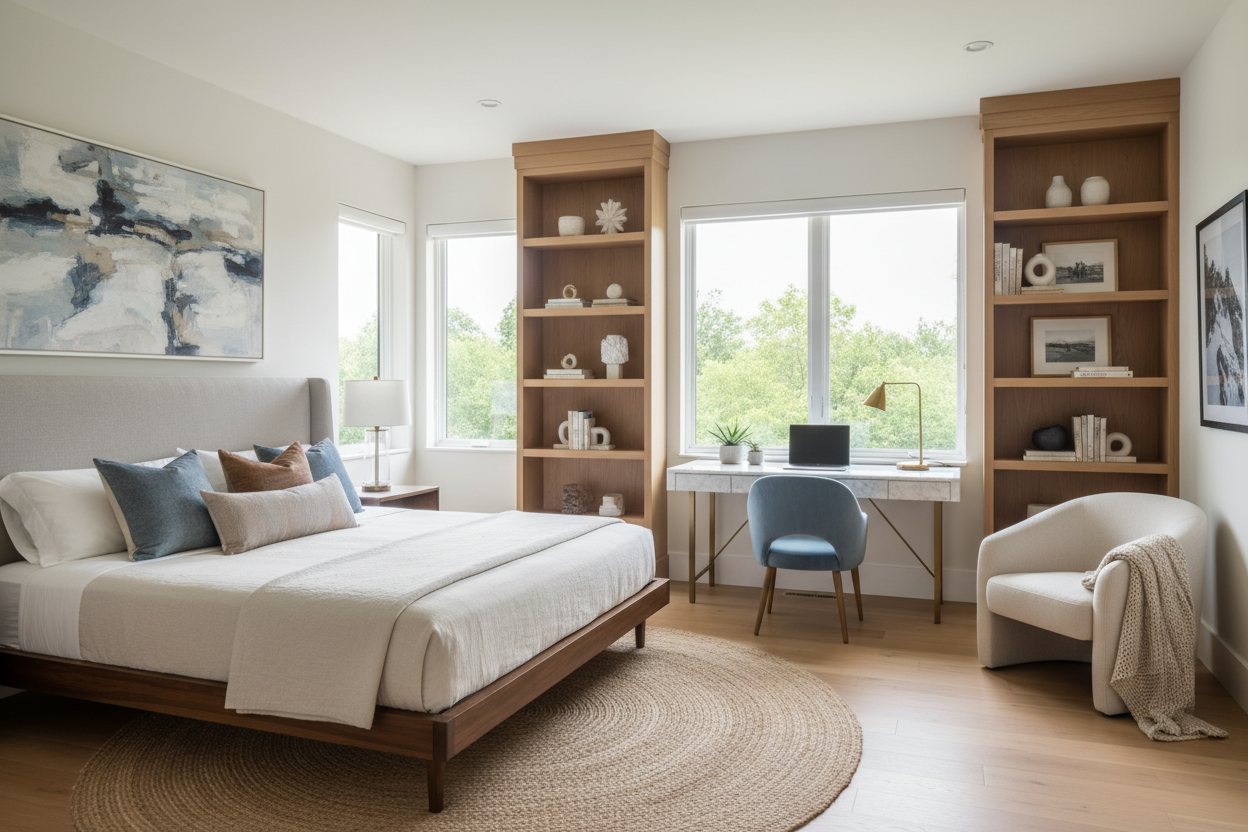
Integrating a workspace into your sanctuary is one of the most delicate balancing acts in interior design. The challenge isn't just fitting a desk into the corner; it is ensuring that the stress of the workday doesn't bleed into your restorative environment. A poorly planned master bedroom and office can lead to cluttered visuals and a restless mind. However, when executed with intentionality, this dual-purpose room can offer convenience without compromising the luxury of your sleeping quarters.
Quick Decision Guide: Key Features for Dual-Use Rooms
- Zoning Strategy: Position the desk away from the bed's direct line of sight to psychologically separate rest from work.
- Furniture Silhouette: Opt for desks with leggy, open profiles rather than bulky pedestals to maintain visual flow.
- Material Warmth: Choose natural woods (walnut, white oak) over cold metals or glass to keep the bedroom cozy.
- Hidden Cabling: integrated cable management is non-negotiable to prevent visual chaos.
- Lighting Layers: Ensure task lighting is directional so it doesn't overpower the room's ambient evening glow.
Mastering the Layout and Space Planning
The success of a master bedroom with office layout relies heavily on traffic flow and sightlines. The most common error I see is placing the desk facing the bed. This forces you to stare at your sleeping area while working, which induces lethargy, and conversely, stare at your work while trying to sleep, which induces stress.
For a spacious master suite with office potential, consider floating the desk in the center of the room, facing the window or the door, anchored by a small area rug. This creates a distinct "command position" separate from the sleeping zone. If square footage is tight, an office in master bedroom setup works best when tucked into an alcove or positioned against a wall perpendicular to the bed.
Furniture Selection: Blending Function with Aesthetic
When selecting pieces for a home office master bedroom design, the furniture must whisper, not shout. Standard corporate furniture—bulky black filing cabinets and mesh-back chairs—will instantly kill the vibe of a bedroom.
The Desk
Treat the desk as a vanity or a console table. Look for home office in master bedroom ideas that utilize writing desks with slim drawers. Solid wood with a matte finish absorbs light and adds warmth, whereas high-gloss lacquer can feel too clinical. If you are designing a master bedroom with attached office (an anteroom situation), you can afford larger pieces, but within the main room, scale is everything.
The Chair
This is where ergonomics meets elegance. Avoid the standard rolling office chair if possible. Instead, look for a swivel armchair upholstered in boucle, velvet, or high-grade linen. It should offer lumbar support but look like a reading chair when pushed in. This ensures your office space in master bedroom looks like a lounge area after hours.
Visual Separation and Zoning
Creating a home office nook in bedroom requires visual cues to signal a change in function. Rugs are your best tool here. A flat-weave wool rug under the desk area distinguishes the space from the plush high-pile carpet usually found near the bed. Furthermore, consider vertical dividers. A slat wall or an open bookshelf can provide a physical barrier that filters light without closing off the room entirely, perfect for a cohesive master bedroom home office.
Lessons from My Own Projects
I learned a hard lesson about finishes during a project I call "The Glass Desk Dilemma." I designed a master bedroom office for a client using a stunning, architectural glass-topped desk. It looked weightless and modern during the day. However, the client called me two weeks later complaining about sleep issues.
The problem? The glass surface was reflecting the standby lights from the monitor and the streetlights outside, creating a subtle but annoying glare that bounced around the room at night. It was a detail you wouldn't notice until you actually lived in the space at 2:00 AM. We swapped it for a matte, charcoal-stained oak desk. Not only did the glare stop, but the wood absorbed the sound of typing much better than the glass, making the room feel quieter and more grounded. It taught me that in a bedroom, acoustics and light absorption are just as important as the layout.
Conclusion
Designing a shared space for sleep and productivity requires a gentle touch. By prioritizing residential finishes, smart layouts, and visual quietness, you can create a space that supports your career during the day and cradles your sleep at night.
Frequently Asked Questions
How do I hide my computer equipment when not in use?
For a clean home office in master bedroom look, use a secretary desk (which closes up to hide the mess) or invest in a desk with a dedicated cable management channel. Wireless peripherals are also essential for reducing visual clutter.
Can I fit an office in a small master bedroom?
Absolutely. Focus on verticality. A wall-mounted ladder desk or a floating shelf desk creates an efficient home office nook in bedroom without taking up floor space. Use a ghost chair (acrylic) or a stool that tucks completely under the desk to keep the walkway clear.
What is the best lighting for a bedroom office?
Avoid overhead fluorescent lighting. Use a dedicated task lamp with a warm temperature (2700K-3000K) for work. This provides focused illumination for the office in master bedroom without flooding the rest of the sleeping area with stimulating blue light.


Dejar un comentario
Este sitio está protegido por hCaptcha y se aplican la Política de privacidad de hCaptcha y los Términos del servicio.