










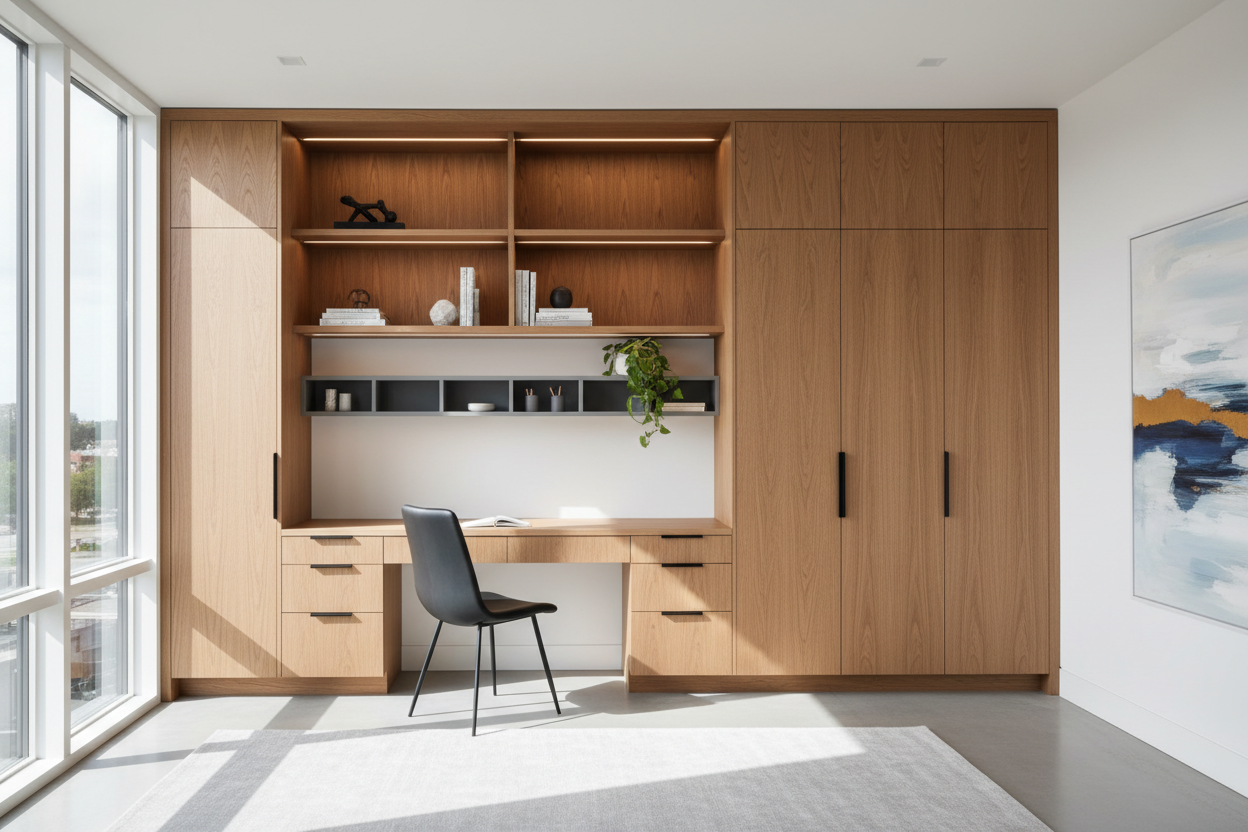
There is a distinct tension in home office design: the need for ample storage versus the desire for a light, airy aesthetic. Nothing kills productivity faster than visual clutter, yet bulky storage units can make a room feel claustrophobic. The solution lies in strategic office wall cabinet design. By utilizing vertical space effectively, you can clear your desk surface while adding architectural interest to the room. This guide moves beyond basic utility to help you curate a workspace that feels bespoke, functional, and visually balanced.
Key Features to Look For
- Depth & Clearance: Standard overhead cabinets should range between 12 to 15 inches deep to prevent head bumps while seated.
- Mounting Integrity: Ensure the cabinet employs a French cleat system or heavy-duty stud mounting for maximum weight capacity.
- Door Mechanism: Consider lift-up hinges (stays) for overhead units to avoid walking into open swing doors.
- Material Density: Look for high-density particle board (HDPB) or plywood cores rather than standard MDF for better screw retention.
Balancing Function with Visual Weight
In interior design, "visual weight" refers to how heavy an object looks to the eye. A wall-to-wall bank of dark, solid cabinets can dominate a small room, making it feel cave-like. To counter this, I often recommend breaking up the mass.
The Rule of Thirds in Cabinetry
Don't just install a solid block of wood. Try mixing closed cabinetry with open shelving. A common ratio I use is two-thirds closed storage (for files, printers, and clutter) and one-third open display (for books, plants, or art). This negative space allows the wall to "breathe" and prevents the joinery from feeling oppressive.
Selecting Materials for Longevity
While aesthetics draw us in, the substrate determines the lifespan. For a high-traffic home office, the finish must resist scratches and fingerprints.
Solid Wood vs. Engineered Veneers
Solid wood offers prestige, but it is heavy and susceptible to warping with humidity changes. For wall-mounted units, high-quality engineered wood with a thermal-fused laminate (TFL) or a wood veneer is often superior. It offers structural stability and is lighter, putting less shear force on your wall studs.
Integrating a Modern Aesthetic
If you are aiming for a modern office wall cabinet design, hardware is the first thing to edit. Contemporary styles favor a "handleless" look. Push-to-open latches or integrated channel pulls create a sleek, uninterrupted silhouette. Furthermore, consider the finish carefully. High-gloss finishes reflect light and make small spaces feel larger, but matte finishes (like Fenix NTM) offer a sophisticated, soft-touch texture that resists the glare of computer monitors.
Ergonomics and Installation Height
The biggest failure point in DIY installations is mounting height. The standard distance between the desktop and the bottom of the wall cabinet is 18 inches. However, if you use large dual monitors, you may need to push this to 22 or 24 inches. Always measure your tallest piece of equipment before drilling into the drywall.
Lessons from My Own Projects
I learned the hard way about "door swing" early in my career. I designed a beautiful set of overhead cabinets for a client in a narrow city apartment. We used standard swing doors. The first day the client used it, they stood up, opened the cabinet, and the door swung right into the path of the ceiling fan blade—disaster.
Since then, I almost exclusively use lift-up hardware (specifically Blum Aventos lifts) for overhead office storage. It keeps the door out of your face and out of the way of ceiling obstructions. Another unpolished truth: pay attention to the "thud." When you are shopping, close the cabinet door firmly. If it bangs or rattles, the box construction is weak. You want a dull, solid thud—that indicates a thick back panel and quality soft-close hinges that will actually last.
Conclusion
Your office storage should serve you, not encroach on you. By selecting the right mounting height, prioritizing lift-up mechanisms, and balancing closed storage with open shelving, you create a workspace that invites focus rather than stress. Treat your wall cabinets as permanent architecture, not just boxes on a wall.
Frequently Asked Questions
What is the ideal depth for office wall cabinets?
For cabinets positioned directly above a desk, 12 to 13 inches is the sweet spot. This provides enough depth for binders and books without looming over your head while you work.
How much weight can a wall cabinet hold?
This depends entirely on installation. A cabinet screwed into drywall anchors might hold 30 lbs, whereas a unit secured into wooden studs with a French cleat can often support 150+ lbs. Always locate the studs.
Can I install wall cabinets if I have a sit-stand desk?
Yes, but you must measure the desk at its maximum height. Ensure there is still clearance between the monitors and the bottom of the cabinet when the desk is in the standing position.


Dejar un comentario
Este sitio está protegido por hCaptcha y se aplican la Política de privacidad de hCaptcha y los Términos del servicio.