










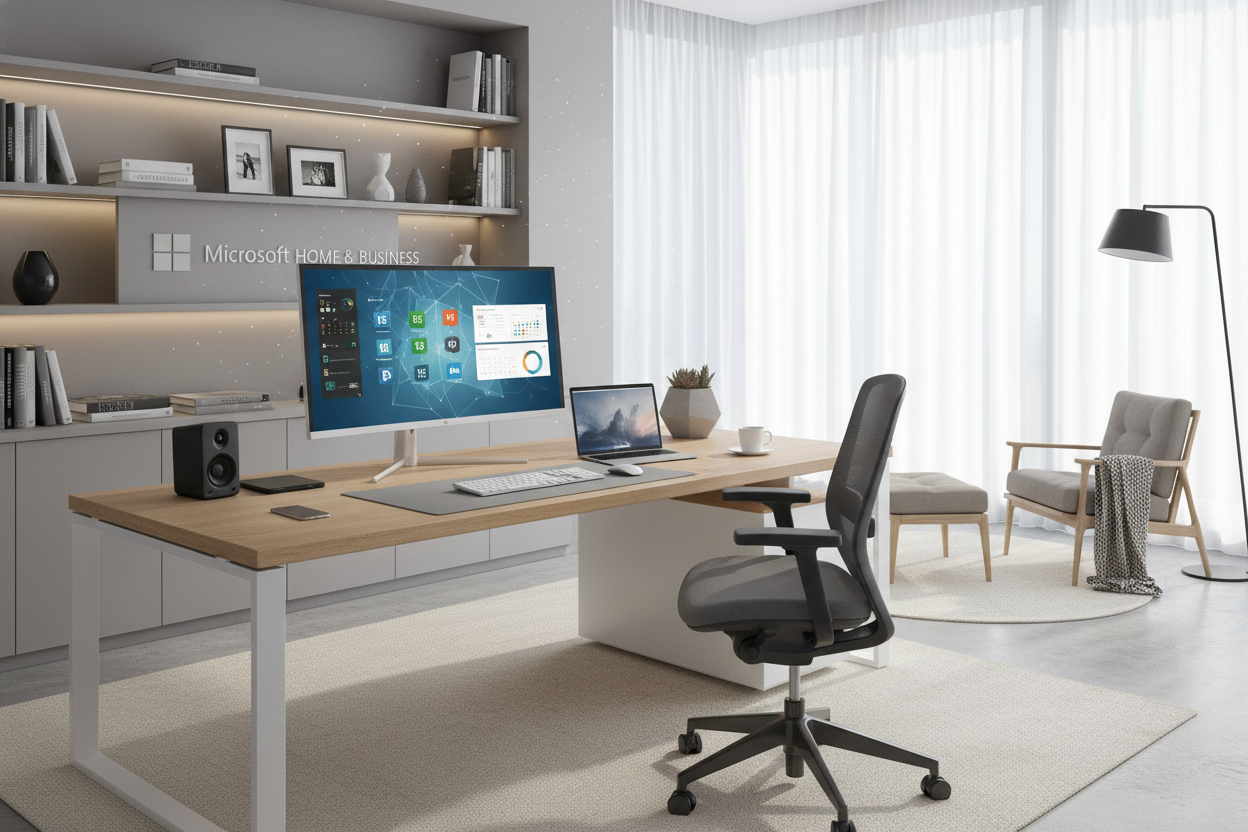
As an interior designer, I frequently walk into residential spaces that look beautiful but fail completely when it is time to actually get to work. You buy a sleek, minimalist writing desk that looks incredible on Instagram, only to realize it cannot hold your dual monitors, ergonomic keyboard, and the hardware required to run your daily software. In the modern work-from-home era, your physical furniture and digital infrastructure—specifically your **microsoft office and business** applications—must be designed to work together seamlessly.
Today, we are going to bridge the gap between interior design and digital productivity. Whether you are outfitting a dedicated suburban room or carving out a corner in a small apartment, understanding how your software needs dictate your physical furniture will save you from costly design mistakes.
Key Takeaways for Your Workspace Setup
- Desk Depth Matters: Running robust software like microsoft office home and business requires screen real estate; always opt for a desk at least 28 to 30 inches deep to maintain proper eye-to-monitor distance.
- Cloud Storage Changes Furniture: Utilizing microsoft 365 home and business means you need fewer physical filing cabinets, allowing for lighter, more modern furniture silhouettes.
- Ergonomics Over Aesthetics: A dining chair is not a desk chair. Prioritize adjustable lumbar support and seat depth for long hours spent in front of the screen.
- Lighting is Crucial: Position your desk perpendicular to windows to reduce screen glare while working in your home and business office.
Space Planning: The Home and Business Office Layout
When designing an office for home and business use, the most common mistake I see is poor spatial planning. A standard North American residential room is often 10x12 feet. If you place a massive executive desk right in the center, you instantly kill the room's flow. Instead, consider the visual weight of your pieces.
Leave at least 36 inches of clearance behind your chair so you can comfortably push back and stand up. If you are managing an office home business that requires client visits, position the desk facing the door to create a welcoming focal point. For smaller apartment setups, a floating desk anchored to the wall can provide the necessary surface area for your laptop and microsoft business and home applications without eating up valuable floor space.
The Digital-Physical Connection
You might wonder why a furniture specialist cares about software. The reality is that choosing microsoft for home and business directly impacts your hardware, which in turn dictates your furniture. If you rely heavily on massive Excel spreadsheets or multitasking across the ms office home and business suite, you likely need dual monitors. Two 27-inch monitors require a desk with serious structural integrity—a flimsy engineered wood top will bow under the weight of heavy monitor arms.
Furthermore, if you are setting up a microsoft office business home hybrid environment, cable management becomes a design priority. Look for desks with built-in grommets and wire management trays. There is nothing worse than pairing a stunning mid-century modern walnut desk with a tangled rat's nest of black cords hanging down the back.
Material Choices: Balancing Aesthetics and Daily Wear
When selecting furniture for an office home and business setup, materials dictate longevity. Solid wood, particularly hardwoods like white oak or walnut, offers incredible durability and a warm, organic feel that softens the sterile look of computer equipment. However, it requires maintenance and coasters for your coffee.
If you prefer an industrial or contemporary look, metal and glass desks are options, but be warned: glass shows every single fingerprint and creates harsh acoustic reflections during video calls. High-quality engineered wood with a thermally fused laminate (TFL) finish is often the sweet spot for a microsoft home business setup. It resists scratches, handles the heat of a running laptop, and provides a smooth surface for writing.
Designer's Honest Take: Lessons from My Own Projects
A few years ago, I designed what I thought was the perfect office home & business space for a financial consultant. I sourced a gorgeous, vintage teak writing desk with shallow drawers. It was a visual masterpiece. But a week after move-in, the client called me in frustration. They had just installed microsoft office home and business 365, brought in their dual-screen setup, and realized the vintage desk was entirely impractical. The 20-inch depth meant the screens were practically touching their nose, and the shallow drawers couldn't even hold a standard ergonomic mouse.
I learned the hard way that form must follow function. We ended up moving the vintage piece to the entryway as a console table and brought in a commercial-grade, height-adjustable standing desk. The matte black finish still coordinated beautifully with the room's transitional decor, but it actually supported their daily workflow. Never sacrifice your physical comfort or digital efficiency for a magazine-worthy photo.
Frequently Asked Questions
What is microsoft home and business and how does it affect my design?
If you are wondering what is microsoft home and business, it is a software suite that includes essential productivity tools. Because it often requires a dedicated computer setup for heavy daily use, it means you need to design your physical space around proper desk ergonomics, monitor placement, and heavy-duty cable management.
What size desk do I need for a microsoft office for home and business setup?
For a standard single-monitor or laptop setup running microsoft office home & business, a desk that is 48 inches wide and 24 inches deep is the absolute minimum. If you use dual monitors, upgrade to a width of 60 inches and a depth of 30 inches to ensure proper eye health and adequate workspace.
How do I manage clutter in a small home and business setup?
Transitioning to cloud-based tools like microsoft office home and business 365 drastically reduces the need for paper storage. Swap bulky filing cabinets for vertical wall shelving. Use closed storage boxes for physical office supplies, keeping the negative space around your desk clear to reduce visual fatigue.


Dejar un comentario
Este sitio está protegido por hCaptcha y se aplican la Política de privacidad de hCaptcha y los Términos del servicio.