










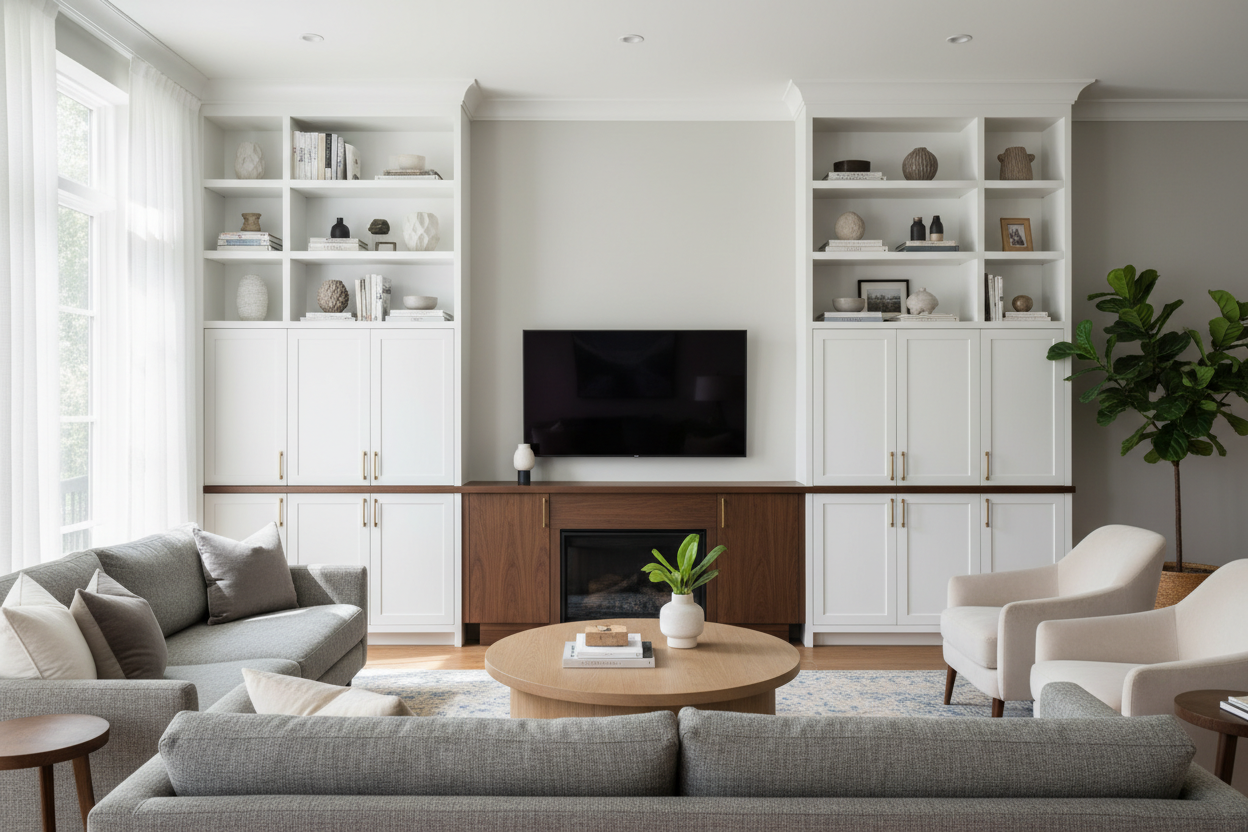
I remember staring at my living room wall for three months, clutching a $12,000 quote from a local carpenter that made my eyes water. I wanted that floor-to-ceiling library look—the kind where the trim meets the ceiling perfectly—but I couldn't justify spending a used car's worth of cash on some shelves. I realized then that the dream of a custom cabinet built in didn't actually require a master craftsman to build every single box from scratch.
The secret is in the 'carcass.' If you can source the right base units, the rest is just fancy trim and a high-quality paint sprayer. After DIYing three different houses, I’ve learned exactly where to spend and where to skimp to get that architectural look for a fraction of the price.
Quick Takeaways
- Use kitchen base cabinets instead of 'media' furniture; they are built to hold heavy countertops and won't sag.
- Prioritize 3/4-inch plywood over particle board if you plan on stacking heavy books.
- The 'custom' look comes from the fillers and crown molding, not the cabinet box itself.
- Always check if your floors are level before you anchor anything to the wall.
The Big Lie About 'Bespoke' Storage Walls
Here is the truth that high-end cabinet shops don't want you to know: many of them aren't hand-cutting every side panel. They are ordering pre-manufactured cabinet boxes and spending their time on the doors and the finishing. You can do the same thing. By using prefab cabinets for built ins, you skip the hardest part of the geometry and focus on the aesthetics.
The magic happens in the 'scribing'—that’s the process of fitting a piece of wood perfectly against your wall's wonky curves. Once you learn how to style IKEA built in cabinets with chunky baseboards and integrated lighting, the 'prefab' origin story completely disappears. It’s about the skin, not the skeleton.
What I Look for in Prefab Cabinets for Built Ins
When you start shopping for base units, do not just buy the first thing you see at a big-box store. You need structural integrity. I look for 3/4-inch plywood sides. Most cheap units use 1/2-inch particle board, which is fine for a spice rack but disastrous for a 100-pound television or a collection of heavy art books.
You also want a flush toe kick or a 'furniture base.' If the cabinet has a recessed toe kick meant for a kitchen, you’ll have to build a custom platform to make it look like a piece of furniture. I also check the back panel. A solid wood or thick plywood back allows you to screw the unit directly into the studs without the whole thing racking or leaning.
The Problem With Extremely Cheap Built In Cabinets
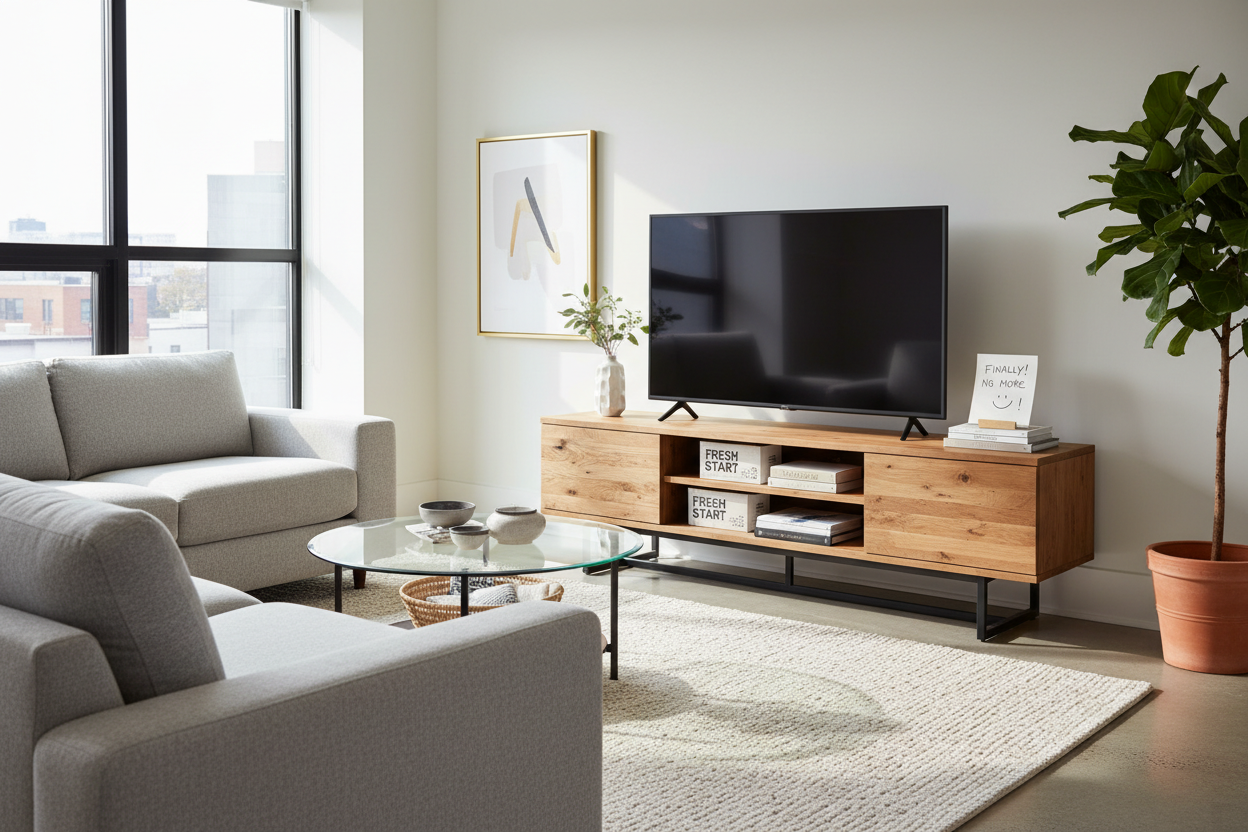
I once tried to save $400 by using ultra-thin flat-pack units for a client’s media wall. Within six months, the top panel had a visible 'smile'—it was bowing under the weight of the soundbar. It looked amateur and, frankly, dangerous. If you are on a razor-thin budget, you are better off buying a sturdy, standalone modern TV stand with cabinets that is engineered for the weight rather than trying to force a flimsy bookshelf to act as a structural base.
Where to Buy Built-In Cabinets That Actually Last
If you want to buy built in cabinets that don't feel like toys, head to the kitchen department. Kitchen cabinets are standardized, modular, and built to withstand a beating. I specifically look for 'Ready to Assemble' (RTA) lines that offer all-plywood construction. These are significantly higher quality than the stuff you find in the office aisle.
For awkward spaces, I’ve found that a corner kitchen pantry cabinet set can be a lifesaver. It solves the 'dead corner' problem in a dining room built-in project without requiring complex joinery. You get the storage depth of a kitchen, but with the right paint, it looks like a custom butler's pantry.
When to Buy Built In Cabinets vs. Hire a Pro
Knowing where to buy cabinets for built ins is only half the battle. You need to know your limits. If your walls are 'out of plumb' (meaning they aren't perfectly vertical) by more than half an inch, or if you have a sloped ceiling, prefab boxes will be a nightmare to level. In those cases, a pro can scribe the units to the floor in ways a DIYer might struggle with.
However, if you have a standard rectangular alcove, using prefab units is a no-brainer. You save roughly 60% on labor costs. I usually tell people: if you can use a level and a miter saw, you can install your own built-ins.
My Go-To Sources: Where to Buy Cabinets for Built Ins
For my own projects, I swear by Barker Cabinets or Cabinet Joint for high-end RTA units. They allow you to customize the width to the quarter-inch, which is the closest you’ll get to a true custom cabinet built in without the shop price tag. If I'm on a budget, I'll go to a local architectural salvage yard or buy unfinished oak bases from a supply house and prime them myself.
Once the boxes are in, the fun part starts. Whether you're adding brass hardware or integrated LED strips, the finish is what sells the luxury. If you're stuck on the final touches, I always recommend looking at how to style built in office cabinets to make sure your workspace doesn't just look functional, but intentional. Stop overthinking the boxes and start focusing on the trim.
FAQ
Is it cheaper to build or buy built-in cabinets?
It is almost always cheaper to buy prefab kitchen 'carcasses' and trim them out yourself. Building the actual boxes requires a table saw, a lot of space, and perfect 90-degree cuts that are harder than they look.
Can I use kitchen cabinets for a living room built-in?
Yes, and you should. Kitchen cabinets are 24 inches deep, which is great for closed storage. If you want something shallower for books, look for 'upper' kitchen cabinets and mount them on a base platform on the floor.
What is the best wood for built-ins?
If you are painting them, use Maple or Birch plywood for the boxes and MDF for the doors. MDF doesn't expand and contract like solid wood, so your paint won't crack at the joints over time.


Dejar un comentario
Este sitio está protegido por hCaptcha y se aplican la Política de privacidad de hCaptcha y los Términos del servicio.