










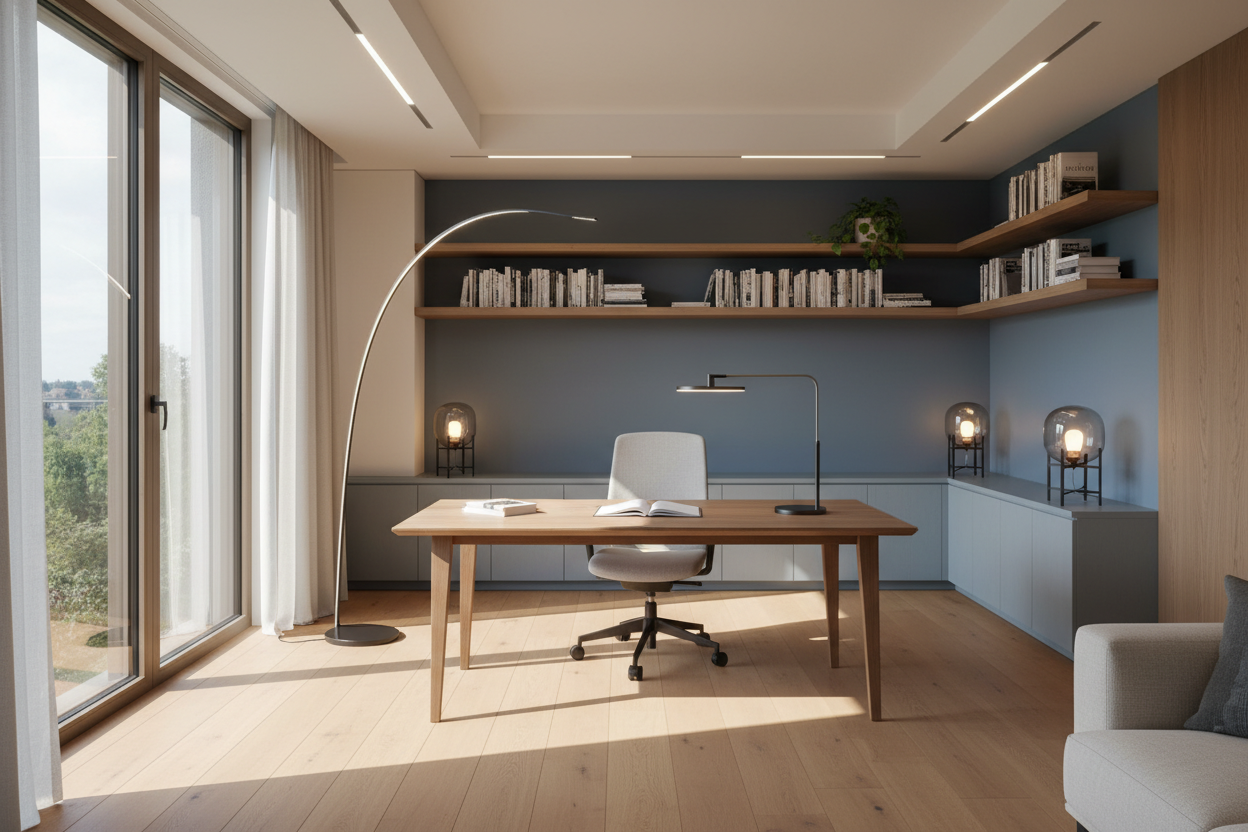
We often obsess over the ergonomic chair or the solid wood desk, yet we frequently ignore the quality of light hitting our retinas for eight hours a day. If you are hunting for office lamp ideas, you are likely battling late-afternoon eye fatigue or simply realizing your workspace feels clinically cold. Lighting is not merely a utility; it is the architectural element that defines the mood and functionality of your study. As a designer, I see lighting as the tool that bridges the gap between a sterile cubicle feel and a sophisticated, productive sanctuary.
Key Features to Look For
Before selecting a fixture based solely on its silhouette, consider these technical specifications to ensure longevity and visual comfort:
- Color Temperature (Kelvin): Aim for 3000K to 4000K for task work; anything higher becomes too blue, while lower creates drowsiness.
- Color Rendering Index (CRI): Look for a CRI of 90+. This ensures wood grains and paint colors look accurate, not washed out.
- Adjustability: An articulating arm or pivoting head is non-negotiable for directing light away from monitor screens to reduce glare.
- Base Weight: A heavy, stable base prevents the lamp from wobbling when you adjust the arm or bump the desk.
Layering for Depth and Function
The biggest mistake homeowners make is relying on a single overhead source. To achieve cozy office lighting that is also functional, you must layer your illumination. This involves balancing ambient light (the general glow) with task lighting (focused beams).
The Task Light: Function Meets Form
Your primary desk lamp is the workhorse. When browsing home office light ideas, prioritize the "cut-off" angle. You want the light to hit your documents or keyboard, not your eyes. Architectural boom arm lamps are excellent here; they offer a wide reach and a mid-century modern aesthetic that creates a strong focal point without cluttering the desk surface.
The LED Revolution in Workspace Design
Gone are the days of hot, buzzing incandescent bulbs. Modern led office lighting ideas have shifted toward integrated fixtures where the diode is built into the frame. This allows for ultra-slim profiles that were previously impossible.
Choosing the Right LED Specs
When evaluating home office led lighting ideas, look for dimmability. The light you need at 9:00 AM is different from what you need at 4:00 PM in winter. A high-quality LED desk lamp should offer a smooth dimming curve without flickering, which is a subtle but common cause of headaches.
Materiality and Visual Weight
The finish of your lamp dictates the room's character. If your desk is a heavy walnut or mahogany, a matte black or oil-rubbed bronze fixture absorbs light and grounds the space. Conversely, if you are working in a smaller footprint, consider glass or polished chrome. These materials reflect light and have less "visual weight," making the desk appear less cluttered.
Lessons from My Own Projects
I want to share a specific detail regarding office lamp ideas that rarely makes it into product descriptions: the "knuckle test." Years ago, I specified a stunning, high-end Italian desk lamp for a client. It looked sculptural and perfect.
However, within a week, the client called me. The issue wasn't the light output; it was the heat and the switch placement. The on/off switch was located on the cord, which had fallen behind the heavy oak desk. Every morning, he had to fish for the cord. Furthermore, the metal shade got scorching hot because we used a retro-fit bulb rather than an integrated LED. Now, I always check two things personally: Does the lamp have a tactile, weighted switch on the base (or a touch sensor)? And does the shade remain cool to the touch after three hours? These tactile nuances define your daily interaction with the piece.
Conclusion
Your workspace lighting should be a deliberate choice, not an afterthought. By selecting the right color temperature and investing in articulated, high-CRI fixtures, you protect your vision and elevate the aesthetic value of your home. Treat your lamp as you would a piece of art—one that just happens to help you work smarter.
Frequently Asked Questions
What is the best position for a desk lamp to avoid screen glare?
Place the lamp on the opposite side of your dominant hand (left side if you are right-handed) to reduce shadows while writing. To avoid screen glare, the light source should be positioned below your eye level and angled away from the monitor screen.
How many lumens do I need for a home office desk lamp?
For focused task lighting, aim for 450 to 800 lumens. If the lamp is your only source of light in the room (which isn't recommended), you may need the higher end of that spectrum. However, 500 lumens is usually the sweet spot for computer work.
Are smart lamps worth the investment for a home office?
Yes, particularly for the ability to adjust color temperature. Being able to shift from cool, energizing light in the morning to warmer, softer light in the evening helps maintain your natural circadian rhythm during long workdays.

Dejar un comentario
Este sitio está protegido por hCaptcha y se aplican la Política de privacidad de hCaptcha y los Términos del servicio.