










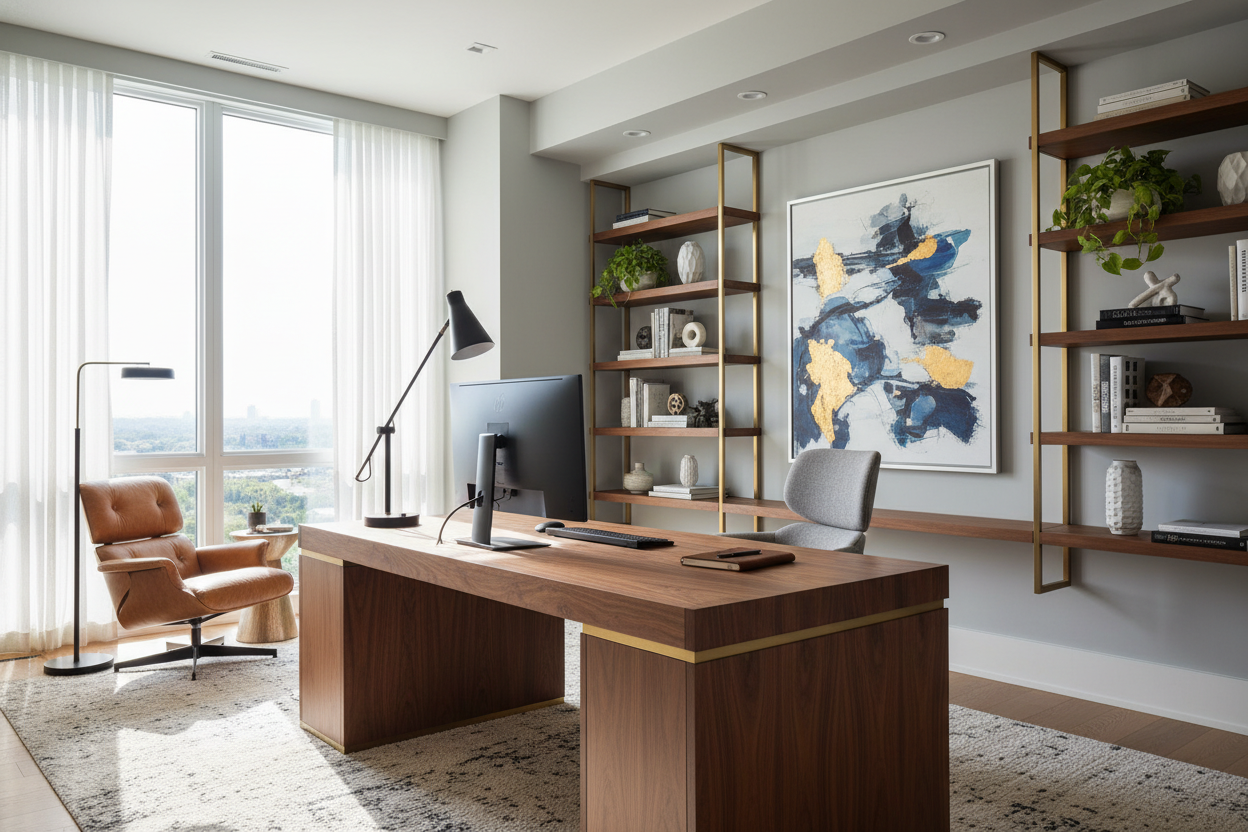
We have all been there: you set up your laptop on the dining table, or perhaps you finally cleared out that awkward spare room, only to realize the space feels more like a storage closet than a place of inspiration. If your current setup is draining your focus, you are likely hunting for office studio ideas that actually bridge the gap between a highly functional workspace and a beautifully curated room.
Whether you are drafting architectural plans, editing video, or simply needing a quiet sanctuary for deep work, a successful studio requires more than just a desk and a chair. By the end of this guide, you will know exactly how to plan your layout, select the right materials, and avoid the common ergonomic mistakes that plague modern workspaces.
Quick Decision Guide
- Establish clear zones: Separate your computer-focused tasks from your creative or analog work to maintain mental clarity.
- Prioritize task lighting: Overhead recessed lights cast harsh shadows; layer ambient lighting with adjustable desk lamps.
- Invest in ergonomics over aesthetics: A sculptural chair looks great on social media, but an adjustable, high-density foam seat saves your back.
- Utilize vertical negative space: Keep your footprint open by moving storage to floating shelves or tall, narrow cabinetry.
Space Planning & Layout
Zoning Your Work and Creative Areas
When looking at home office studio ideas, the most crucial step is establishing flow. In North American homes, spare bedrooms often measure around 10x12 feet. Instead of pushing a desk flat against the wall, consider floating it in the center of the room facing the door. This creates a 'command position' that feels authoritative and opens up the walls for secondary zones. Dedicate one wall to deep computer work and another to a standing height layout table or a comfortable reading chair for reviewing physical documents.
Navigating Small Footprints
If you are working within an apartment alcove or an open-concept living area, visual weight matters. Choose desks with open, metal bases rather than heavy, solid wood pedestals. This allows light to pass through the furniture, making the room feel larger. Leave at least 36 inches of clearance behind your desk chair to ensure you can push back and stand up without hitting a wall or a bookshelf.
Style & Coordination
Balancing Inspiration with Professionalism
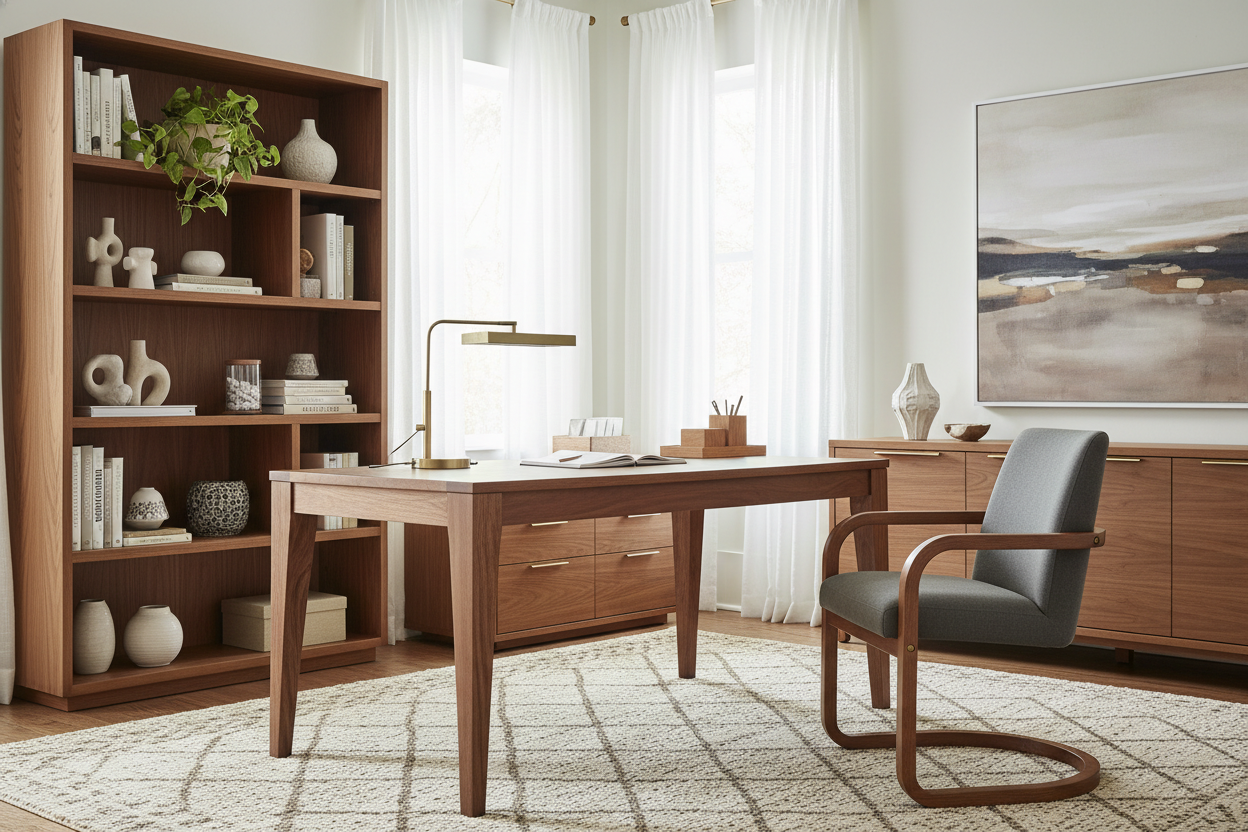
A successful design studio office needs to spark creativity without causing visual fatigue. Start with a neutral base palette—warm whites, soft grays, or muted sages—and introduce texture through materials rather than loud patterns. A natural walnut desk paired with a matte black metal filing cabinet grounds the space in a transitional style. If you want to display inspiration boards or material samples, contain them within a framed pinboard to prevent the room from looking cluttered.
Comfort & Ergonomics
The Truth About Desk Heights and Seating
Browsing studio office design ideas online often yields photos of beautiful, antique dining chairs repurposed for desks. Do not fall for this trap. Standard dining chairs are pitched for eating, not typing. Look for a desk with a standard height of 29 to 30 inches, and pair it with an ergonomic chair that offers adjustable lumbar support and seat depth. Your feet should rest flat on the floor, and your elbows should form a 90-degree angle when typing. If you opt for a standing desk, a high-quality anti-fatigue mat is non-negotiable.
Designer's Honest Take
Over the last 15 years of planning home studio office design layouts, I have made my fair share of mistakes. Early in my career, I designed a stunning, custom built-in oak desk for a client's studio. It looked architectural and flawless—until they moved their dual monitors, printer, and chargers in. I had completely underestimated the sheer volume of cables. We had to retrofit the beautiful woodwork with unsightly plastic grommets and under-mount wire trays just to make it functional.
I also learned that while open shelving looks incredibly chic when styled with a few art books and a trailing pothos plant, it is a nightmare for a working studio. Real work requires binders, printer paper, and miscellaneous supplies. Always include at least 50 percent closed storage in your design. Your future, less-organized self will thank you.
Frequently Asked Questions
How much space do I need for a studio office?
Ideally, you want a minimum footprint of 5x7 feet for a basic desk and chair setup. However, for a true studio that accommodates both digital work and physical projects, an 8x10 foot space allows for a desk, a secondary work surface, and adequate storage.
What is the best lighting for a home workspace?
Layered lighting is essential. Start with ambient light (like a flush mount or natural window light), add task lighting (an adjustable desk lamp for focused work), and include accent lighting (like an LED strip behind your monitor) to reduce eye strain during evening hours.
How do I hide messy cables and supplies?
Cable management trays that screw into the underside of your desk are the most effective solution. Pair these with a power strip mounted out of sight. For supplies, utilize rolling drawer pedestals that can tuck under the desk, keeping the surface clear while maintaining easy access.

Dejar un comentario
Este sitio está protegido por hCaptcha y se aplican la Política de privacidad de hCaptcha y los Términos del servicio.