










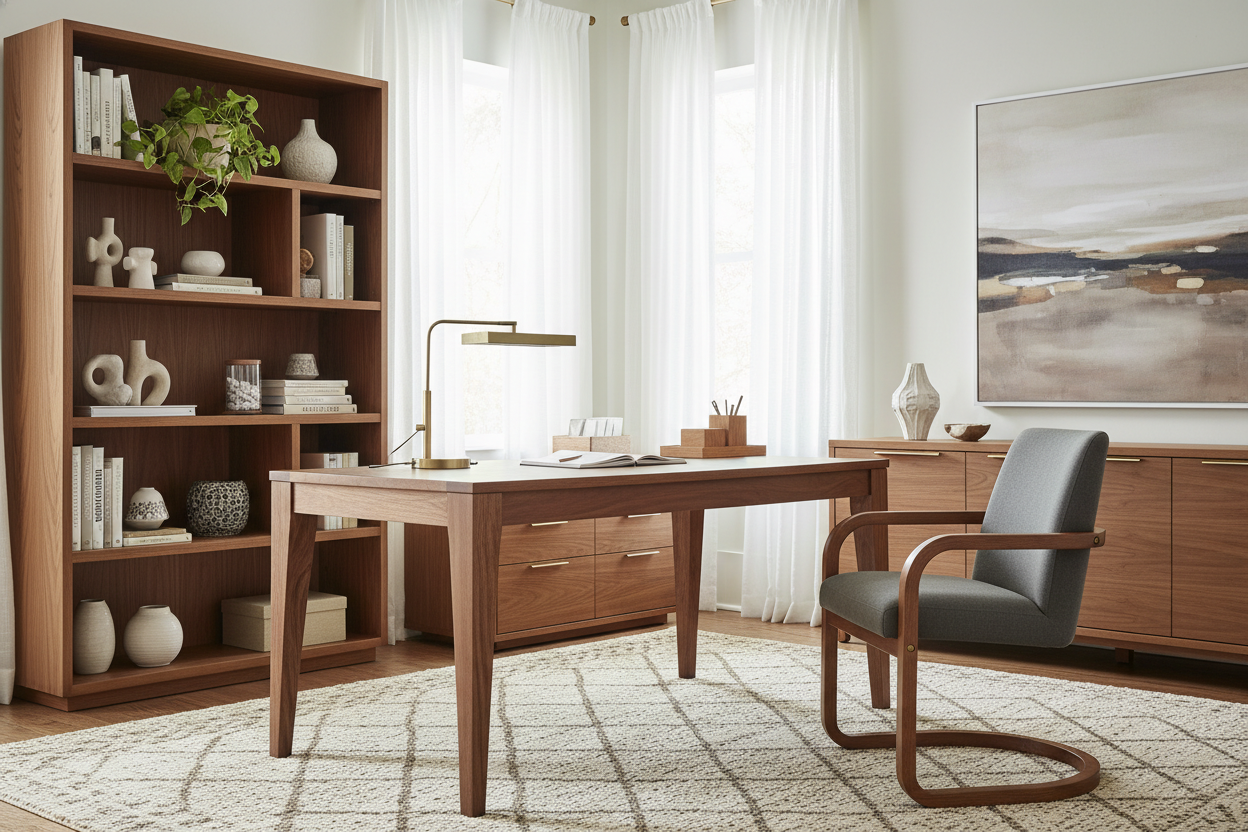
The era of the sterile, laminate-filled workspace is fading. As we spend more hours at our desks, the tactile experience of our environment becomes just as critical as functionality. Many clients come to me feeling that their workspace lacks soul or gravitas, a problem often solved by introducing the warmth and organic texture of wooden furniture for office interiors. Whether you are outfitting a corporate corner office or a dedicated room at home, choosing wood is a commitment to longevity and aesthetic depth.
Quick Decision Guide: What Matters Most
Before investing in a new suite, review these critical factors to ensure your selection stands the test of time.
- Material Composition: Distinguish between solid wood (durable, repairable) and veneers (cost-effective, consistent grain).
- Joinery Techniques: Look for dovetail drawers and mortise-and-tenon joints rather than staples or glue alone.
- Finish Durability: Ensure the surface is sealed with a high-quality lacquer or oil to resist coffee rings and ink stains.
- Ergonomic Compatibility: Verify that desk heights standard (29-30 inches) and chair clearances work with modern ergonomic seating.
Defining Quality: Real Wood vs. Veneer
One of the first conversations I have with clients centers on the difference between real wood office furniture and engineered alternatives. While solid wood offers undeniable prestige and the ability to be refinished over decades, high-quality veneers are not to be dismissed. A veneer allows for complex grain matching—like book-matching—that creates a stunning visual continuity across a solid wood office furniture set that might otherwise be impossible (or prohibitively heavy) with solid planks.
Understanding Wood Hardness
For a desk surface, hardness is non-negotiable. Softwoods like pine can dent simply from the pressure of a ballpoint pen. I always recommend hardwoods such as Oak, Walnut, or Cherry for primary work surfaces. These species resist daily wear and develop a rich patina rather than looking "worn out."
Styling Wooden Office Furniture for the Home
Integrating office pieces into a residential setting requires a delicate hand. Wooden office furniture for the home should bridge the gap between professional utility and residential comfort. If your office is visible from the living area, avoid the heavy, blocky silhouettes typical of corporate banks.
Instead, opt for pieces with tapered legs or floating tops to maintain visual lightness. A mid-century modern walnut desk can serve as a sculptural focal point. When selecting wood office furniture sets, be wary of the "matchy-matchy" trap. Buying the desk, credenza, and bookshelf all from the same line can make a room feel like a showroom. Try mixing a heavy oak desk with a lighter, metal-framed shelving unit to add texture and break up the visual weight.
The Ergonomic and Functional Balance
A beautiful desk is useless if it hinders workflow. Traditional wooden desks often lack modern cable management. When sourcing vintage or artisanal pieces, I look for discreet grommets or plan for a modification to hide cords. Furthermore, ensure the "apron" (the wood strip beneath the desktop) isn't so deep that it prevents you from crossing your legs or sliding your chair armrests under the table.
Lessons from My Own Projects
I want to share a specific realization I had while specifying a custom walnut executive desk for a client in a historic brownstone. We were focused entirely on the visual impact of the grain.
However, once installed, we realized a practical nuance: optical mice struggle on highly polished, dark wood surfaces. The glossy finish reflected the laser, causing the cursor to jump. We had to introduce a leather desk blotter immediately. It was a functional necessity, but it actually elevated the look.
Another thing to consider is the "breathing" of the material. In that same project, during a humid July, a drawer on the solid wood credenza swelled slightly and became sticky. This is the reality of natural materials—they are alive. We simply applied a little beeswax to the runners, and it glided perfectly again. Don't view these quirks as defects; view them as proof you own something real, though you must be prepared to care for it.
Conclusion
Investing in wood furniture is an investment in your daily well-being. It grounds the room, offers tactile comfort, and ages gracefully alongside your career. By balancing the aesthetic appeal of natural grain with the practicalities of modern work, you can curate a space that commands respect and inspires creativity.
Frequently Asked Questions
How do I maintain the finish on my wood office furniture?
Dust weekly with a microfiber cloth. For deeper cleaning, use a dedicated wood cleaner that is silicone-free. If the finish is oil-based, you may need to re-oil it once a year to prevent drying or cracking.
Can I mix different wood tones in one office?
Absolutely. In fact, layering wood tones creates a more curated, designer look. The trick is to keep the undertones consistent. For example, mix warm walnut with warm cherry, but avoid mixing cool, gray-washed oak with reddish mahogany.
Is solid wood furniture too heavy for a home office?
It can be significant. A solid oak executive desk can weigh over 200 pounds. Always measure your doorways and stairwells before purchasing large wood office furniture pieces, and consider modular sets that can be assembled in the room.



Dejar un comentario
Este sitio está protegido por hCaptcha y se aplican la Política de privacidad de hCaptcha y los Términos del servicio.