










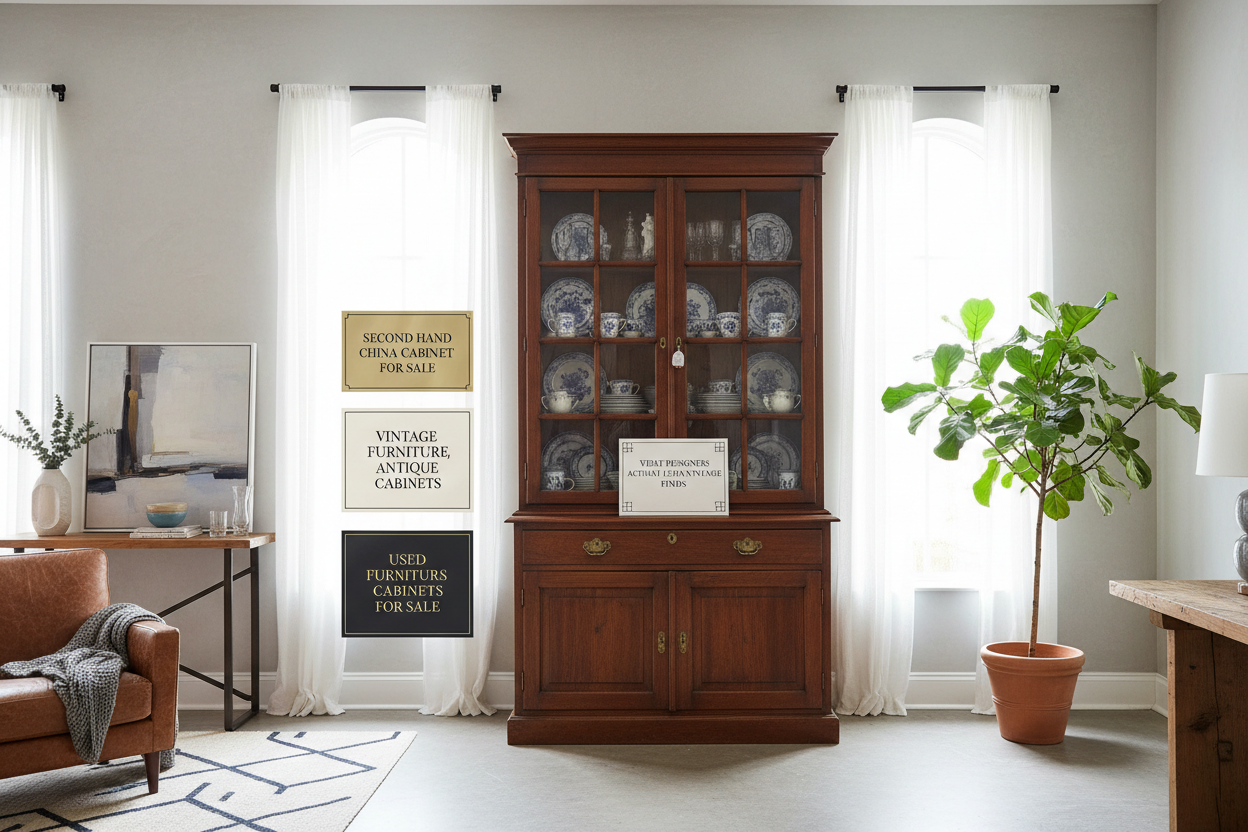
I remember helping a client who'd just bought her first home. She had a beautiful, empty dining room and a budget that didn't stretch to brand-new, solid wood furniture. She found a second hand china cabinet for sale online and sent me a picture, asking, 'Is this a good deal, or a disaster waiting to happen?' That's the exact moment I want to help you navigate.
After furnishing over 200 homes, I've learned that the hunt for vintage pieces is part art, part science. Let's walk through what I actually look for, so you can shop with confidence.
Quick Takeaways
- Check for solid wood construction and dovetail joinery—these are signs of lasting quality.
- Value depends heavily on wood type, brand, and original condition, not just age.
- Always measure your space and the cabinet's dimensions before committing.
- Integrate a vintage piece by contrasting its style with modern decor around it.
Why Second Hand China Cabinets Are Worth the Hunt
Let's be honest. A new, solid wood china cabinet from a quality retailer can easily cost $2,000 to $5,000. The used market often offers similar craftsmanship for a fraction of that price. I recently sourced a stunning 84-inch solid oak hutch for a client's 12x14 dining room for under $800.
Beyond savings, you're buying character. Machine-made furniture today often lacks the subtle variations in grain, the hand-carved details, or the patina that tells a story. These pieces were built to last generations, with frames made from kiln-dried hardwoods like oak, maple, or walnut, not the engineered plywood common in many modern flat-pack options.
A common worry is that 'used' means 'worn out.' In my experience, it's often the opposite. Furniture from the mid-20th century was built during a peak of American craftsmanship. With a careful inspection, you can find pieces that need nothing more than a gentle cleaning to shine.
How to Spot Quality in a Used China Cabinet
When I'm evaluating a piece, I have a mental checklist. First, construction. Open the doors and drawers. Look for dovetail joints in the drawers—interlocking 'fingers' of wood. This is a hallmark of quality joinery that resists pulling apart. Check that drawers slide smoothly without wobbling.
Next, materials. Tap on the sides. A hollow sound often indicates veneer over particleboard, while a solid 'thunk' suggests solid wood or quality plywood. For a deeper dive into assessing materials, especially in popular woods like oak, see our guide on Oak China Cabinet — What Designers Actually Look For.
Inspect the glass. Are the panes in the doors original, wavy glass, or have they been replaced? Original glass can add to the charm and value. Check for cracks or chips. Finally, examine the hardware. Are the handles and hinges original? Sometimes, replaced hardware is a red flag for other repairs, but it can also be an easy fix.
How Much Is a Used China Cabinet Worth?
This is the million-dollar question, or more accurately, the $200 to $2,000 question. Value isn't just about age. A 1970s pressboard hutch is worth less than a 1920s solid mahogany piece. Key factors are: brand (look for stamps from makers like Thomasville, Henredon, or Drexel), wood type (solid walnut > pine), condition (original finish with minor wear vs. major structural damage), and style (mid-century modern is very hot right now).
As a rough guide: a sturdy, no-name 1980s oak china hutch in good shape might sell for $300-$600. A pristine, branded antique from the early 1900s could command $1,500+. Always check completed listings on auction sites to see what similar items actually sold for, not just what sellers are asking.
When negotiating, point out factual flaws politely—'I notice this drawer runner is cracked'—rather than just saying 'it's too expensive.' Most private sellers expect some haggling, especially for cash-and-carry sales.
Where to Find Second Hand China Cabinets for Sale
Your hunting grounds matter. Online marketplaces (Facebook Marketplace, Craigslist) offer the largest selection and potential for deals, especially for 'used china cabinets for sale by owner.' The downside? You must be diligent about inspections. Photos can hide a lot.
Estate sales are goldmines for quality, well-maintained pieces, often sold on the final day at a discount. Antique shops and curated vintage stores offer pre-vetted items, but you pay a premium for that service. I often recommend starting local. A bulky china cabinet is expensive to ship, so sellers nearby are often motivated.
Styling Your Vintage China Cabinet in a Modern Home
The key to making an antique china cabinet work today is contrast. Don't try to create a full period room. Place a ornate, dark wood Victorian cabinet against a light, neutral wall. Use modern, minimalist tableware inside it. For display inspiration, I love the Elegant Ideas For Showcasing Your Treasures.
Lighting is crucial. If the cabinet has a lighted top, ensure the bulbs work and consider switching to warm LED strips for a cleaner look. If not, place a small picture light above it or use adjustable track lighting to highlight your displays.
Leave breathing room. A large antique china cabinet needs space. Maintain at least 36 inches of walkway clearance around your dining table. For a more contemporary take on the glass-door look, the Black Cabinet With Glass Doors Collection shows how sleek lines can work with traditional display concepts.
Common Pitfalls to Avoid When Buying Used
My biggest advice: measure twice, buy once. Know the dimensions of your doorway, hallways, and the intended wall space. I've seen clients fall in love with a piece only to discover it won't fit through their front door.
Beware of major structural issues. Rock the cabinet gently. If it wobbles, the frame or legs may be compromised. Check for water damage—soft spots or dark staining on the bottom edges or top. Smell it. A strong musty odor can indicate mold or mildew that's hard to eradicate.
Finally, don't get swept away by the idea of a 'steal.' Factor in the cost and effort of any needed repairs, refinishing, or professional moving. A $100 cabinet that needs $500 of work isn't always a bargain.
FAQ
How much is my antique china cabinet worth?
It depends. Start by identifying the wood, looking for maker's marks, and assessing its condition without restoration. Then, search for comparable sold items online or consult a local appraiser for a formal valuation.
What's the difference between a china cabinet and a hutch?
Traditionally, a hutch is a two-piece unit with a base of drawers or cabinets and a top display section. A china cabinet is often one tall, unified piece. The terms are used interchangeably now, but knowing the difference can help in specific searches.
Is it safe to move a used china cabinet myself?
For anything larger than a small cabinet, I strongly recommend hiring movers. They are heavy, awkward, and the glass is extremely fragile. Professional movers have the equipment and insurance to handle it safely.
Can I paint an old wood china cabinet?
You can, but know that it will significantly affect the value to collectors. If it's a quality solid wood piece in good shape, consider just cleaning and waxing the original finish first. If it's damaged or you simply prefer a new look, proper prep—sanding, priming—is essential for a lasting paint job.


Dejar un comentario
Este sitio está protegido por hCaptcha y se aplican la Política de privacidad de hCaptcha y los Términos del servicio.