










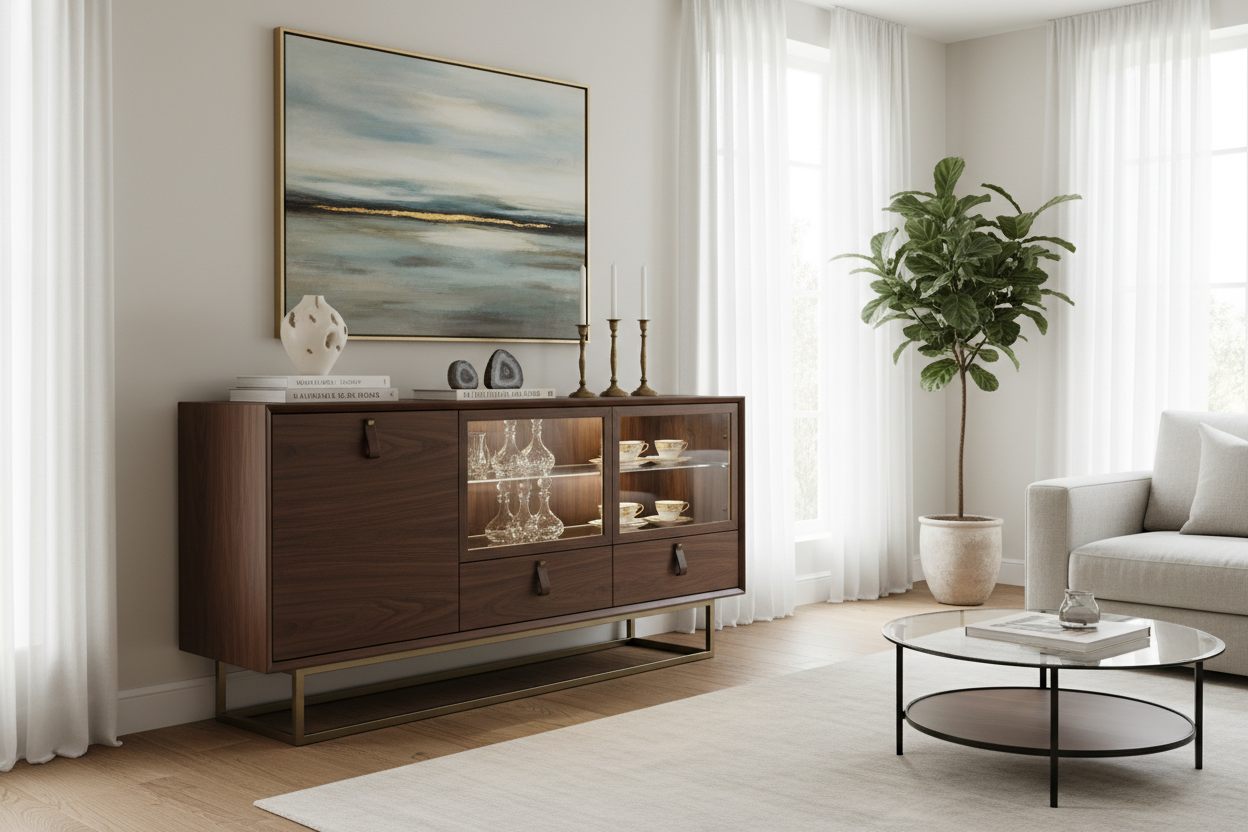
We have all stared at that long, blank wall in the dining room and wondered what to do with it. A standard buffet often feels too heavy, while open shelving can quickly look like a cluttered afterthought. Enter the sideboard display cabinet—the hardworking hybrid that solves both problems at once.
By the end of this guide, you will know exactly how to choose, scale, and style this piece so it looks intentional rather than imposing, balancing the need for hidden storage with the desire to showcase your favorite items.
Quick Decision Guide
- Mind the clearance: Always leave at least 36 inches between your dining table and the cabinet doors so guests can push their chairs back comfortably.
- Check the glass type: Insist on tempered glass for the display section, especially in high-traffic family homes.
- Balance the visual weight: Keep heavy, bulky items (like slow cookers or stacks of plates) behind the solid doors, and reserve the glass sections for lighter, curated pieces.
- Watch the depth: A standard depth is 18 to 22 inches; anything deeper risks swallowing your floor plan.
Space Planning: Making It Fit Your Floor Plan
Nailing the Proportions
One of the most common mistakes I see in North American homes is buying a display sideboard that is completely out of scale with the room. If your dining table seats eight, a tiny 48-inch cabinet will look lost on the wall. Conversely, a massive unit in a cozy apartment will make the room feel like a furniture showroom.
As a general rule, your cabinet should be roughly two-thirds the length of the wall it sits on. If you are working with an open-concept living area, use the cabinet to define the dining zone. Just remember to account for door swing—if the glass doors open outward, you need an extra 15 to 20 inches of clearance on top of the standard walkway.
Styling Your Cabinet Without the Clutter
Mastering the Rule of Thirds
Styling a sideboard with display cabinet features requires a bit of restraint. It is tempting to fill every inch of the glass-fronted shelves with wine glasses and family heirlooms, but negative space is your best friend here. I like to use the rule of thirds: one-third books or solid objects, one-third glassware or ceramics, and one-third empty space.
If you are pairing a standalone display cabinet and sideboard together, ensure their finishes relate to one another without being overly perfectly matched. A warm walnut base with a matte black metal upper creates a beautiful transitional tension that feels collected over time.
Lessons from My Own Projects
A few years ago, I sourced a stunning, custom-built oak piece for a client's suburban home outside of Chicago. It had beautiful reeded glass uppers and deep, soft-close drawers below. In the showroom, it was flawless.
Once installed, however, we hit a snag. I had not accounted for the home's afternoon sunlight, which hit the glass doors directly, turning every speck of dust and single fingerprint into a glaring focal point. My client, who had two toddlers, was wiping it down daily. I also learned that internal LED puck lighting is unforgiving—it cast harsh shadows on their everyday stoneware, making it look dusty rather than dramatic. We ended up retrofitting the lighting with soft, diffused strip LEDs and swapping the clear glass for a frosted option on the lower display shelves. It was a costly lesson in understanding how light and lifestyle impact a piece of furniture.
Frequently Asked Questions
How do I clean the glass on my cabinet without leaving streaks?
Skip the harsh chemical sprays. Use a mixture of equal parts distilled water and white vinegar in a spray bottle, and wipe with a flat-weave microfiber cloth. Spray the cloth, not the glass, to prevent moisture from seeping into the wood frame.
What size cabinet do I need for a small dining room?
For tighter spaces, look for a shallow profile around 15 to 16 inches deep. Choose sliding doors rather than hinged ones, which eliminates the need for door-swing clearance entirely.
Should my cabinet match my dining table?
Not necessarily. While they should share a common design language—like similar leg styles or complementary hardware—matching them perfectly can make the room look like a generic catalog set. Try mixing a painted cabinet with a wood table to add depth.


Dejar un comentario
Este sitio está protegido por hCaptcha y se aplican la Política de privacidad de hCaptcha y los Términos del servicio.