











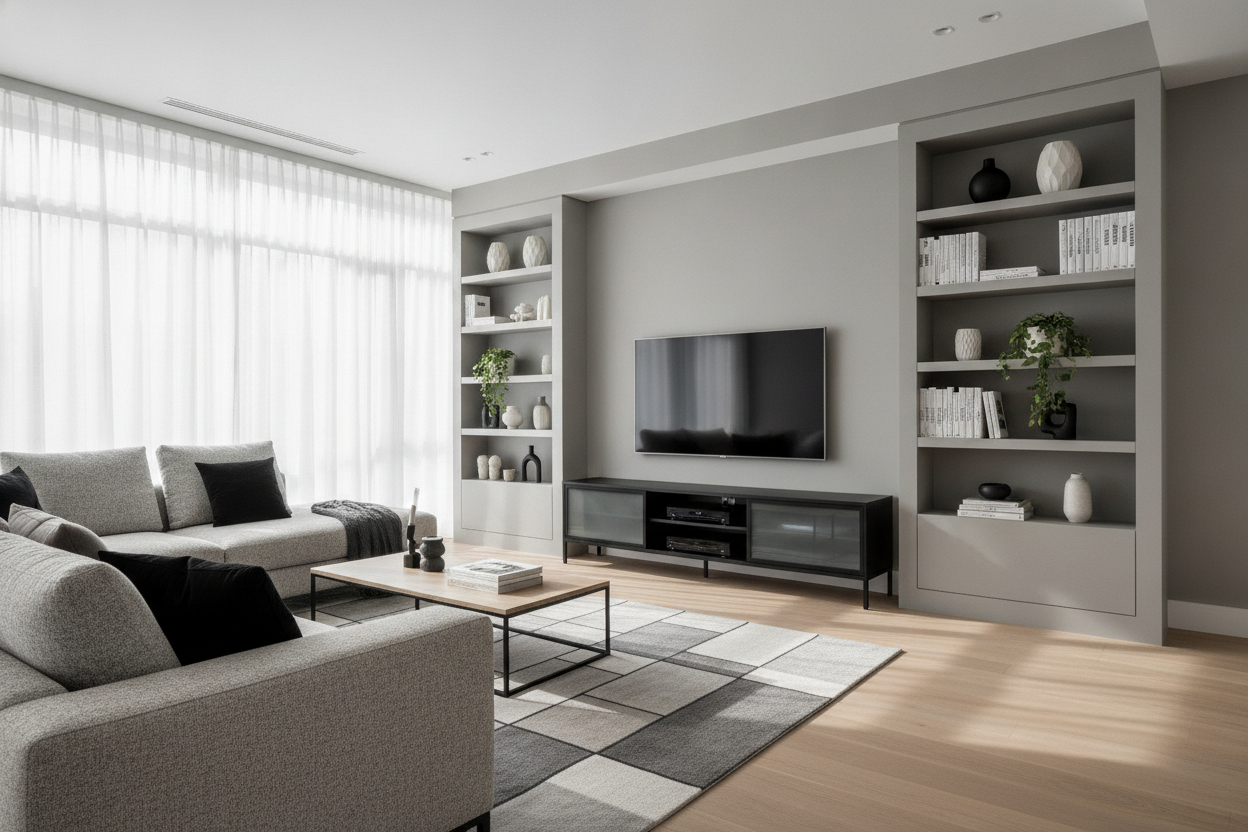
I spent three months staring at my living room feeling like I was living in a high-security server room. Everything was black, white, or 'industrial' grey, and my 65-inch OLED sat against the wall like a literal void. I realized that the gray and black tv stand I’d been eyeing wasn't just a design compromise—it was the bridge I needed to make my home feel like a home again instead of a concrete bunker.
- Two-tone finishes break up the 'monolith' look of large televisions.
- Grey surfaces are significantly more forgiving with dust and fingerprints than matte black.
- The black accents tie into the TV screen so the tech feels integrated, not just 'placed' there.
- It’s a neutral palette that allows for much easier accent color swaps later on.
The 'Giant Black Hole' Problem in Modern Living Rooms
We’ve all been there. You buy the biggest TV your budget allows, and suddenly your living room revolves around a massive, dark rectangle. If you’ve spent three hours browsing for new TV stands, the instinct is often to match the console to the TV. You think: 'The TV is black, so the stand should be black.'
That is a trap. When you put a black TV on an all-black console, you create a visual 'dead zone' that sucks the life out of the room. It’s too heavy, too dark, and it makes your 12x14 living room feel half its actual size. You need something to ground the tech without letting it take over the entire zip code.
Why the Two-Tone Approach Actually Works
The magic of a two-tone piece is all about the gradient. A grey and black tv stand acts as a visual middle ground. The black elements of the furniture—whether it's the legs, the frame, or the hardware—speak the same language as your TV screen. They acknowledge the tech is there.
The grey elements, however, do the heavy lifting of softening the blow. Grey is a transition color. It takes that harsh, obsidian black of the screen and eases it down into the lighter tones of your rug or hardwood floors. It’s a design trick that makes a 70-inch screen look like a deliberate choice rather than a giant appliance that crashed into your house.
It Softens the Tech Without Fighting It
Using a grey and black tv stand allows you to play with materials. I’m a huge fan of mixed textures, like a concrete-look grey top paired with powder-coated black steel. It feels intentional. If you look at a large console with black metal handles, you’ll see how those small pops of dark hardware are enough to 'anchor' the TV without the whole unit feeling like a lead weight.
The Unexpected Benefit: Hiding Dust
Let’s be real: black furniture is a part-time job. I once owned a matte black media unit that showed a fingerprint if I even thought about touching it, and every speck of dust looked like a neon sign. A black and grey tv stand is the ultimate 'lazy designer' hack. The grey surfaces—especially if they have a slight wood grain or stone texture—hide the inevitable dust bunnies that live behind your electronics. You can actually go a week without a microfiber cloth and not feel like a failure.
How to Style a Black and Grey TV Stand So It Doesn't Look Cold
The biggest risk with this color combo is that it can lean a bit 'corporate office' if you aren't careful. To avoid the sterile vibe, you have to bring in some warmth. Think of your console as a canvas. Similar to styling a dark wood and black console, you want to contrast the cool tones with organic textures.
I always recommend a trailing plant—like a Pothos or a Heartleaf Philodendron—on one end. The green pops beautifully against the grey. Then, swap out any cool-white LED strips for warm 2700K bias lighting behind the TV. It creates a soft glow that makes the grey tones look rich and inviting rather than flat. Finally, add a stack of books or a ceramic vase in a warm terracotta or brass to break up the monochrome palette.
My Own 'Bunker' Mistake
I once bought a solid black, high-gloss TV bench because it looked 'sleek' in the showroom. Within two days, I hated it. It felt like a black hole in the corner of my room, and I could see every cat hair from ten feet away. I eventually swapped it for a grey unit with black steel legs, and the room instantly felt five feet wider. It’s a small shift that makes a massive psychological difference.
Final Thoughts: Is It Worth the Swap?
If you're tired of your living room looking like a tech showroom, stepping away from monochromatic furniture is the easiest fix. A dual-toned stand gives you the best of both worlds: the modern edge of black accents with the airy, forgiving nature of grey. It’s the ultimate compromise for anyone who loves their big screen but loves their decor more.
FAQ
Does grey and black go with brown furniture?
Yes, but you need a 'bridge' piece. Use a rug that has both cool and warm tones to tie your grey console to your brown leather sofa or wood floors.
What color walls look best with a grey and black stand?
Crisp whites or deep navy blues look incredible. Avoid 'muddy' beiges, which can make the grey look a bit dirty by comparison.
Is a matte or glossy finish better?
Always go matte or textured. High-gloss finishes on grey and black furniture tend to look dated and are absolute magnets for smudges.

Dejar un comentario
Este sitio está protegido por hCaptcha y se aplican la Política de privacidad de hCaptcha y los Términos del servicio.