










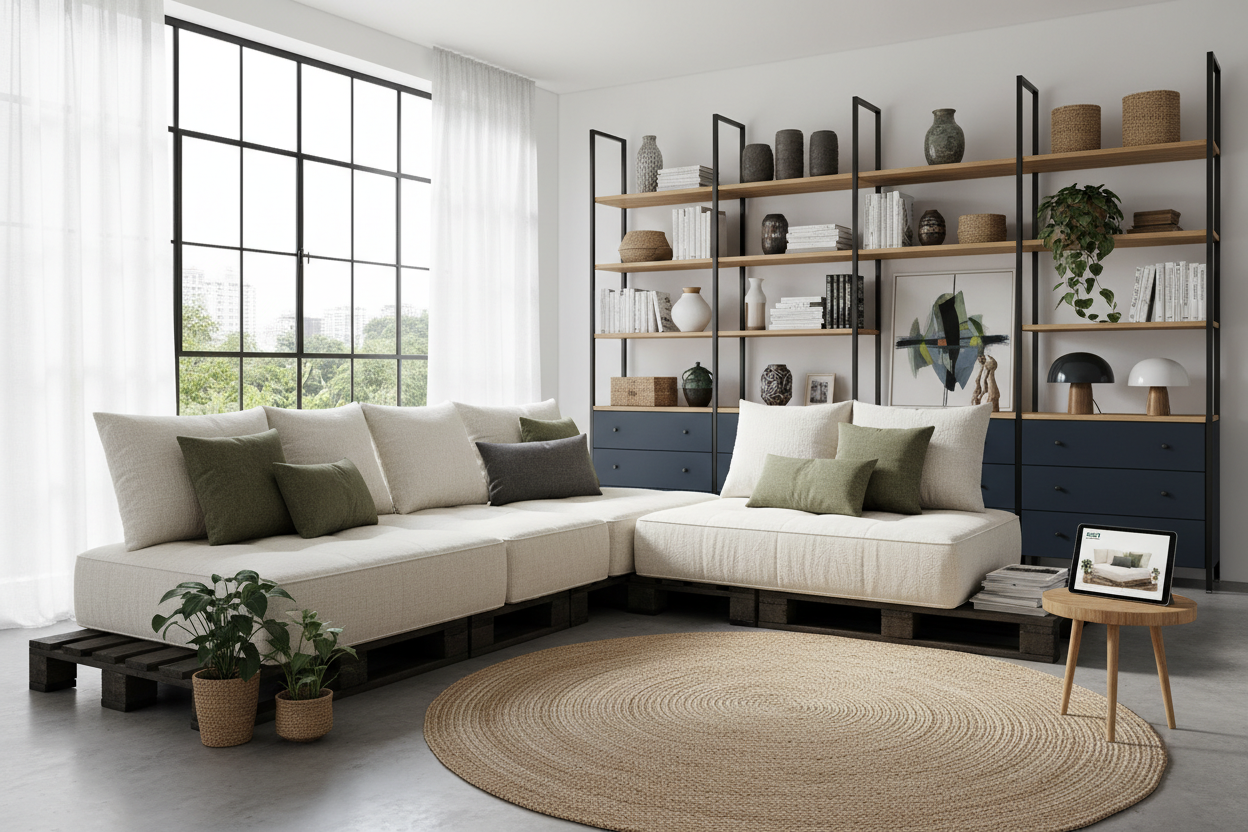
Standing in the middle of the warehouse aisle, staring at flat-pack boxes, often feels less like interior design and more like a gamble. You are balancing the immediate need for seating against the long-term desire for a piece that holds its shape and aesthetic appeal. When considering an ikea foam couch, the dilemma is usually twofold: will the silhouette hold up over time, and can the comfort level compete with higher-end bespoke pieces?
As a designer, I frequently specify these pieces for specific use-cases—guest rooms, first apartments, or media lounges—but there are critical structural and aesthetic nuances you must understand to avoid that dreaded "dorm room" look within six months.
Quick Decision Guide: Key Features to Look For
Before you commit to a purchase, review these critical factors to ensure the piece meets professional standards for longevity and style:
- Foam Density: Look for "High Resilience" (HR) foam or cold foam (30kg/m3 or higher) rather than standard polyurethane to prevent sagging.
- Frame Composition: Ensure the underlying structure is solid wood or plywood, not just particleboard, to support the foam blocks.
- Fabric Martindale Score: Check for a rub count above 25,000 for everyday durability.
- Removable Covers: Essential for maintaining a crisp look; fixed upholstery on budget foam often wrinkles permanently.
- Modular Depth: deeper seats (over 60cm) disguise the budget nature of the piece better than shallow, upright profiles.
Decoding the Foam: Material Quality & Ergonomics
The core of any ikea foam sofa is, naturally, the cushioning. In the design world, we talk about "bottoming out"—the sensation of sitting through the cushion onto the frame. This is the most common complaint with lower-tier foam furniture.
Cold Foam vs. Polyurethane
Not all foam is created equal. When browsing, prioritize models that utilize Cold Foam (molded foam). It has a rapid recovery rate, meaning when you stand up, the couch snaps back to its original silhouette immediately. Standard low-density polyurethane tends to retain the "imprint" of the sitter, leading to a sloppy visual appearance after just a few weeks of use.
The Ergonomic Sit
From an ergonomic standpoint, foam sofas offer a firmer, more supportive sit than down-filled alternatives. This is excellent for posture but can lack that inviting "sink-in" feeling. To counter this, I often advise clients to layer the sofa with textured throw pillows filled with feather down. This provides a tactile softness against the back while the foam seat maintains the structural integrity required for long-term support.
Elevating the Aesthetic: Visual Balance & Styling
A major challenge with mass-produced foam furniture is the generic visual weight. They can look blocky and heavy. To integrate these pieces into a sophisticated design scheme, you need to manipulate the visual balance.
Customizing the Silhouette
The easiest way to upgrade the look is by swapping the legs. IKEA foam couches often come with low, black plastic or generic birch legs that sit too close to the floor, making the room feel crowded. Replacing these with taller, tapered wooden legs or sleek brass options lifts the piece, allowing light to pass underneath. This increases the sense of space in the room and mimics the profile of mid-century modern luxury brands.
Texture and Light Absorption
Foam creates very sharp, geometric lines. To soften this, choose covers with a heavy weave or a velvet finish. Flat cotton blends on a foam block can look clinical. A textured fabric absorbs light rather than reflecting it, hiding the starkness of the foam edges and adding necessary warmth to your living area.
My Personal Take on the IKEA Foam Couch
I want to share a lesson from a project I worked on in a high-traffic urban loft. We installed a popular modular ikea foam couch (the Kivik series) to stay within a tight budget while maximizing seating.
Here is the unpolished truth that product descriptions won't tell you: The seat cushions held up incredibly well, but the back cushions were a different story. Because they are often filled with a looser foam/fiber mix to provide comfort, they began to slouch significantly faster than the seats. I found myself having to "karate chop" and rotate them every single time I visited the site to take photos.
Another detail was the friction sound. When we chose a synthetic polyester cover, the friction between the foam block and the fabric cover created a distinct "swishing" noise every time someone sat down. It’s a small sensory detail, but in a quiet luxury space, it matters. We eventually solved this by batting the cushion cores with a thin layer of dacron wrap before putting the covers back on—a hassle, but it silenced the noise and smoothed out the corners.
Conclusion
An IKEA foam couch does not have to be a temporary solution. By selecting high-resilience foam, upgrading the hardware, and styling with intention, you can curate a space that feels intentional and high-end. It is about looking past the flat-pack box and seeing the potential for a structured, modern focal point in your home.
Frequently Asked Questions
How long does an IKEA foam couch typically last?
With daily use, a standard density foam couch will maintain its shape for about 3 to 5 years. However, models using High Resilience (HR) cold foam can last upwards of 7 to 10 years before the seat cushions begin to lose significant support.
Can I replace just the foam if it starts to sag?
Yes, this is one of the benefits of the design. Because the covers are usually removable, you can purchase custom-cut high-density foam from a local upholstery shop to replace the original IKEA cores, effectively renewing the sofa without buying a new frame.
Is a foam sofa comfortable for sleeping?
Generally, yes. Foam offers a consistent, flat surface without the lumpy texture of tufted buttons or shifting feathers. However, ensure you choose a deeper model, as standard depth sofas may be too narrow for a comfortable night's sleep.

Dejar un comentario
Este sitio está protegido por hCaptcha y se aplican la Política de privacidad de hCaptcha y los Términos del servicio.