










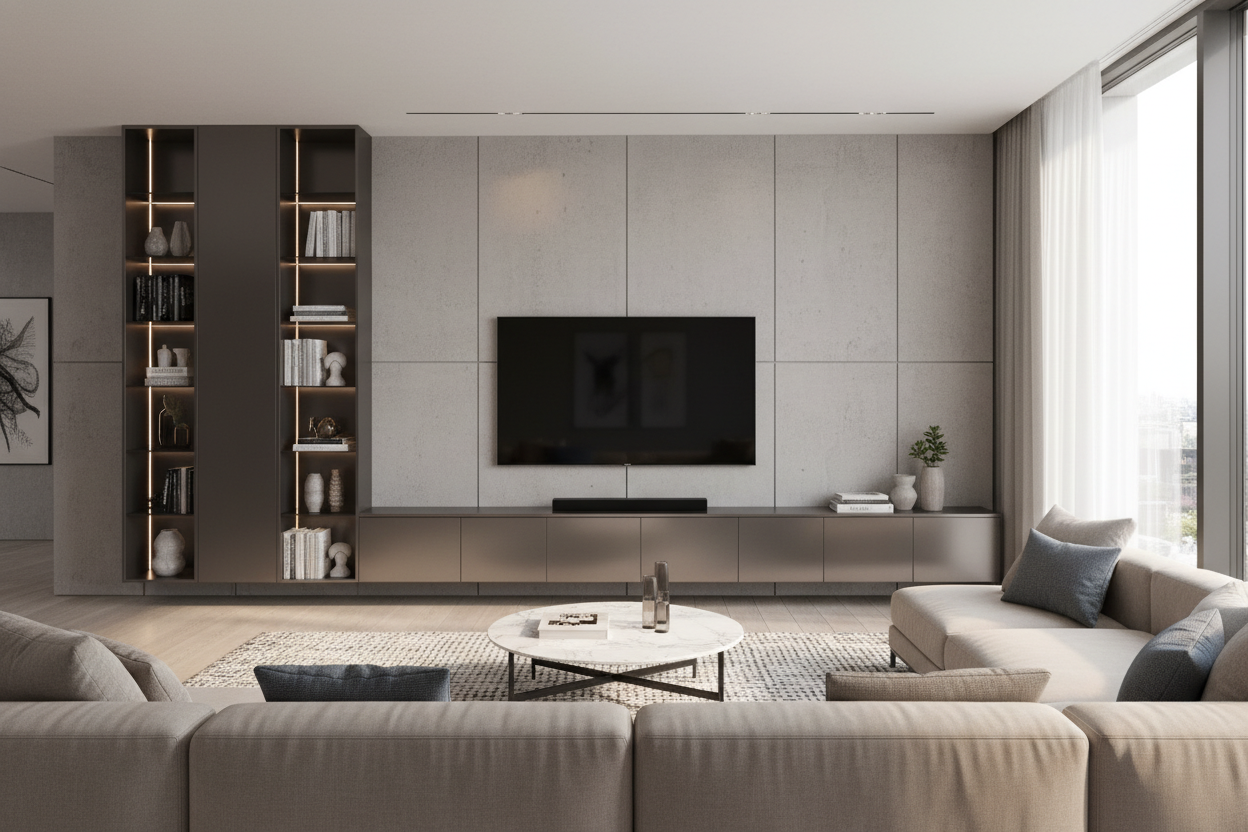
I have spent more time than I would like to admit staring at a TV perched on a unit that was clearly meant for a dorm room. You know the one—those low-slung benches that are actually just two planks of particle board held together by hope and four plastic legs. It is the first thing people see when they walk into your living room, and if your modern entertainment units look like they are struggling to hold the weight of your PlayStation, the whole room feels temporary.
- Scale is king: Your unit should be at least 10 inches wider than your TV frame.
- Closed storage is non-negotiable for a 'grown-up' look that hides cable nests.
- Ventilation matters: Ensure your cabinet has slatted doors or back cutouts.
- Materials matter: Real wood veneers beat cheap laminate that peels in six months.
The 'Bachelor Pad' TV Setup (And Why We Need to Move On)
We have all been there. You move into a new place, spend all your money on the security deposit and a decent mattress, and end up buying a generic 48-inch tv console bench because it was on sale and fit in the back of your car. But as you start to actually care about your space, that tiny bench becomes an eyesore. It is not just about the size; it is about the presence. A flimsy stand makes your expensive 65-inch screen look like an afterthought.
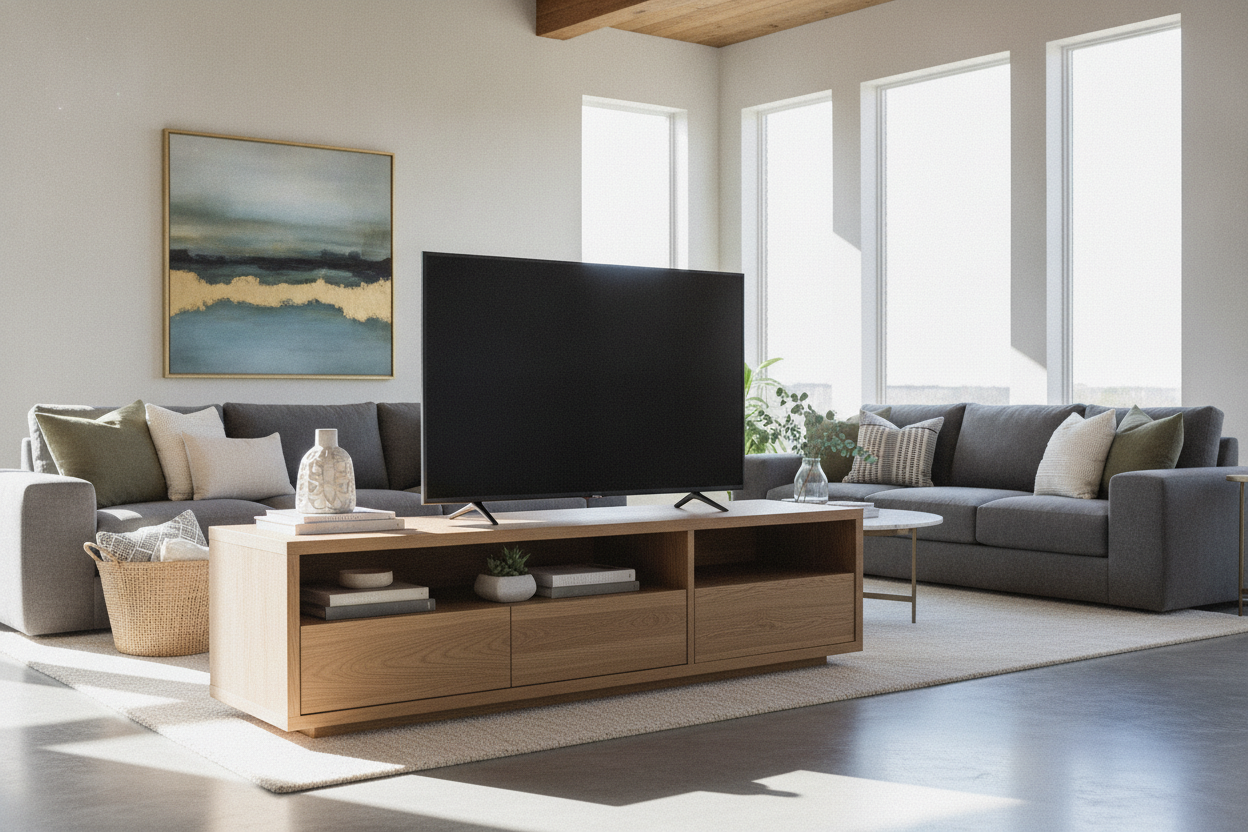
Modern tv setups have moved away from the 'shelf on legs' vibe. We are seeing a shift toward pieces that actually anchor the wall and provide a visual foundation. When you choose a unit that has some weight to it, you are doing more than just holding a TV; you are creating a focal point. My first real upgrade was a heavy, low-profile oak piece, and suddenly my living room did not look like a collection of random furniture. It looked like a home. The difference between a modern tv unit that works and one that does not is often just a matter of intentionality.
What Actually Makes Modern Tv Cabinets for Living Room Spaces Look Expensive?
It is not always about a massive price tag, though a custom build certainly helps. It is about proportions and texture. Most cheap modern tv cabinet options are too shallow. They are barely 15 inches deep, which makes them look like they are clinging to the wall for dear life. A high-end piece usually has a bit more depth—around 18 to 20 inches—which gives it a sense of permanence and allows for better equipment storage.
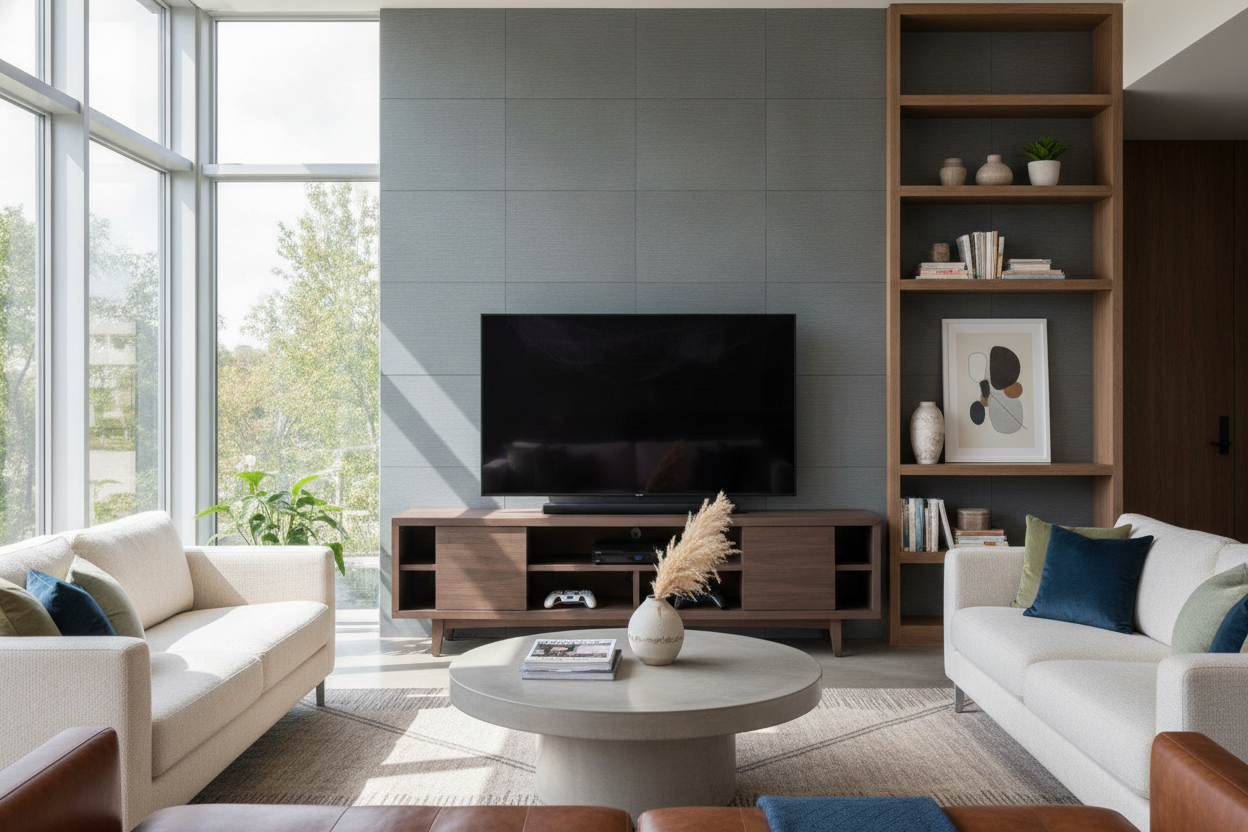
Then there is the material. If it is high-gloss white plastic, it is going to look like a medical lab. If it is paper-thin wood-look laminate, it will peel at the corners within a year. Look for real wood veneers or 'soft-touch' matte finishes. I am a huge fan of mixed materials—think a walnut body with matte black steel legs. If you really want to go big, a 3 piece entertainment center is the move. It uses vertical space and creates a 'built-in' look without the contractor bill. It is that combination of height and closed storage that makes modern tv cabinets for living room layouts feel architectural rather than just functional.
Hiding the Clutter Without Suffocating Your Router
The biggest enemy of a clean aesthetic is the 'cable waterfall'—that mess of black wires spilling out from behind the console. If your modern tv entertainment unit has open shelving, you are basically volunteering to look at your dusty router and a tangled mess of HDMI cables every night. Closed-door storage is the only way to go if you want a space that feels calm.
But here is the catch: electronics get hot. I once ruined a perfectly good receiver by shoving it into a cabinet with zero airflow. When shopping, look for units with slatted doors or perforated back panels. This allows the heat to escape while keeping the clutter hidden. Swapping to a modern wall cabinet for living room storage was the best decision I made for my sanity. It hid the Xbox and the mesh of wires, but the slatted front meant my remote still worked and nothing overheated. If you can find a unit with built-in cable channels, buy it immediately.
My Golden Rule for Styling Modern Tv Tables
The mistake most people make with modern tv tables is trying to fill every square inch of the surface. If you have a 70-inch unit and a 55-inch TV, you have some 'shelf real estate' on the ends. Resist the urge to put a tiny succulent and a stack of coasters there. It looks cluttered and small-scale.
My rule? Go big and go asymmetrical. Put one large, chunky vase or a tall lamp on one side. Leave the other side mostly empty or with one very low-profile object. This 'negative space' is what makes a modern tv unit look like it was styled by a professional. You want the eye to rest, not jump around between fifteen different knick-knacks. Keep the decor clean and bold—no tiny figurines that look like they belong in a curio cabinet.
Before You Add to Cart: The Measurement That Matters Most
Scale is where most people fail. They measure the TV, they measure the wall, but they forget the 'breathing room.' A TV should never be wider than the stand it is sitting on. In fact, you want at least 6 to 8 inches of clearance on either side of the screen. If your TV is 55 inches wide, your unit should be at least 70 inches long to look balanced.
Before you commit, browse standard TV stands to get a feel for common heights. Most modern units are lower—around 18 to 22 inches high—to keep the TV at eye level when you are seated. If you buy a tv cabinet modern in style but it sits 30 inches high, you will be craning your neck like you are in the front row of a movie theater. Measure your seating height first, then shop.
How high should my TV unit be?
For most standard sofas, you want the center of the TV to be at eye level. This usually means a unit between 18 and 24 inches tall. Anything higher usually requires a very deep sofa where you are leaning back.
Can I put a 65-inch TV on a 50-inch stand?
Technically yes, if the legs fit, but it will look terrible. It creates a top-heavy look that makes the whole room feel unstable. Aim for a stand that is at least 20% wider than the TV itself.
Do I need a 'media-specific' unit or can I use a sideboard?
Sideboards are great because they are usually deeper and have better storage, but they lack cable management holes. You will have to drill your own holes in the back for wires, which can crack the wood if you are not careful.

Dejar un comentario
Este sitio está protegido por hCaptcha y se aplican la Política de privacidad de hCaptcha y los Términos del servicio.