










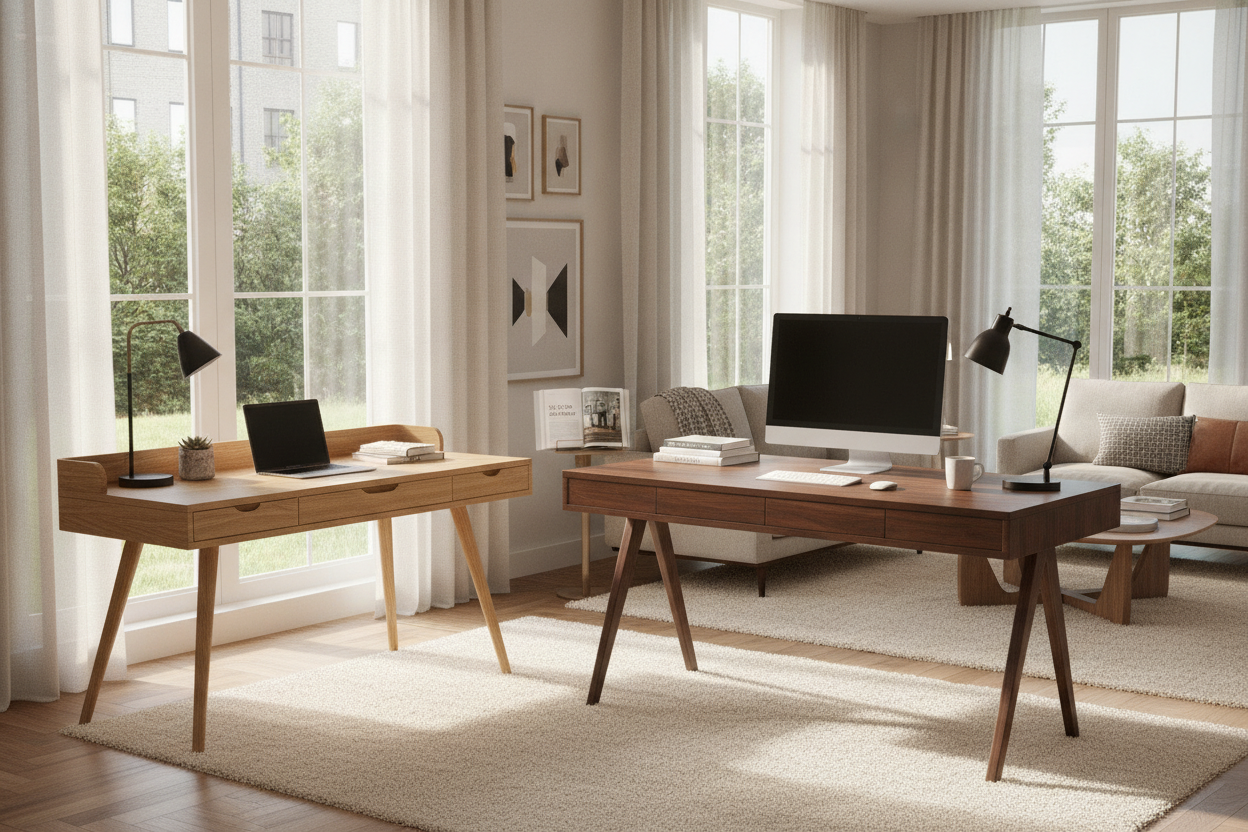
When planning a functional workspace in a modern home, selecting the right furniture footprint is critical. Searching for a 22 inch desk often leads to two distinct structural categories: an ultra-compact workstation defined by its narrow width, or a streamlined home office surface defined by its shallow depth. Clarifying how this specific measurement applies to your available floor plan ensures that your setup supports daily computing tasks, study routines, and creative projects without overcrowding your living environment.
Understanding 22-Inch Dimensions: Width vs. Depth
The primary distinction when evaluating compact work surfaces comes down to spatial orientation. A 22 inch wide desk represents a specialized micro workstation created for extremely narrow wall segments, closet conversions, utility nooks, and architectural alcoves. In this configuration, the primary objective is minimizing the lateral footprint while providing just enough surface area for a compact laptop, a writing tablet, or daily correspondence materials. These micro desks serve exceptionally well in multi-use rooms where space is at a premium and computing tasks are brief or focused.
Conversely, a desk 22 inches deep represents an intentional balance between front-to-back floor clearance and comfortable working reach. When a desk uses this measurement for its depth while extending wider horizontally along the wall, it easily accommodates standard computer monitors, full-sized keyboards, desk pads, and reference documents while preserving central walkway clearance. For homeowners weighing whether an ultra-narrow width or a slightly broader footprint suits their layout best, reviewing a detailed wide desk guide can help clarify how subtle footprint differences impact everyday comfort and workflow.
Evaluating Room Fit and Spatial Clearance
Careful floor planning prevents compact furniture from feeling congested or obstructing natural movement paths. Because a 22-inch dimension occupies minimal floor area, it opens up flexible placement opportunities across various living zones:
- Bedroom Corners: Placing a shallow or narrow desk parallel to a window or alongside a wardrobe maintains an open walking path while establishing a dedicated study zone away from common household noise.
- Hallway and Landing Nooks: Architectural recesses, under-stair areas, and transitional landings often accommodate shallow work surfaces without disrupting normal foot traffic.
- Living Room Work Zones: A desk with restrained proportions blends effortlessly into open-concept living spaces, serving as a functional laptop hub without dominating decorative seating arrangements.
- Dual-Purpose Guest Rooms: Compact surfaces ensure secondary bedrooms remain versatile, allowing easy transformation between a private workspace and a comfortable guest suite.
When assessing tight layouts, examining dedicated designs such as an integrated corner desk product can reveal whether an angular corner configuration or a straight linear top makes the most practical use of your perimeter walls.
Comparing Compact 22-Inch Desk Layouts
Understanding the functional differences between compact width and shallow depth configurations helps you match your furniture choice to your daily routine and equipment needs:
- Micro-Width Workstations: Best suited for ultra-small alcoves, temporary study spots, and short-duration computing tasks. They prioritize minimal lateral space and often rely on wall organizers or floating shelves to maintain a clear working top.
- Shallow-Depth Extended Surfaces: Best suited for multi-hour home office work, remote employment, and creative projects. They provide broad lateral elbow room, easily support dual screens or writing pads, and keep room traffic lanes unobstructed.
Ergonomics and Equipment Management on a 22-Inch Surface
Maintaining physical comfort on a smaller surface requires deliberate accessory organization and ergonomic alignment. When using a shallow-depth desktop, placing a large monitor directly on the main surface can consume valuable front-to-back room and push your keyboard too close to your body. Utilizing an elevated monitor riser or an adjustable clamp-on monitor arm raises your display to a natural eye level while freeing up the surface beneath for notebooks, pens, or a tucked-away keyboard.
Cable management also plays a vital role in keeping small-scale setups functional and tidy. Routing power strips and adapter cords along rear structural channels or mounting them beneath the desktop prevents tangled wires from encroaching on legroom. Choosing low-profile peripherals, such as compact wireless keyboards and slim ergonomic mice, preserves open surface area and promotes comfortable forearm positioning during extended work sessions.
Maximizing Storage and Organization in Slim Workstations
Because compact desks feature limited built-in surface area, organizing vertically prevents daily clutter from accumulating on your primary work surface. Pairing your workstation with tall floating wall shelves, modular pegboards, or overhead cabinets keeps reference binders, ambient task lamps, and office accessories within arm reach without taking up desktop space.
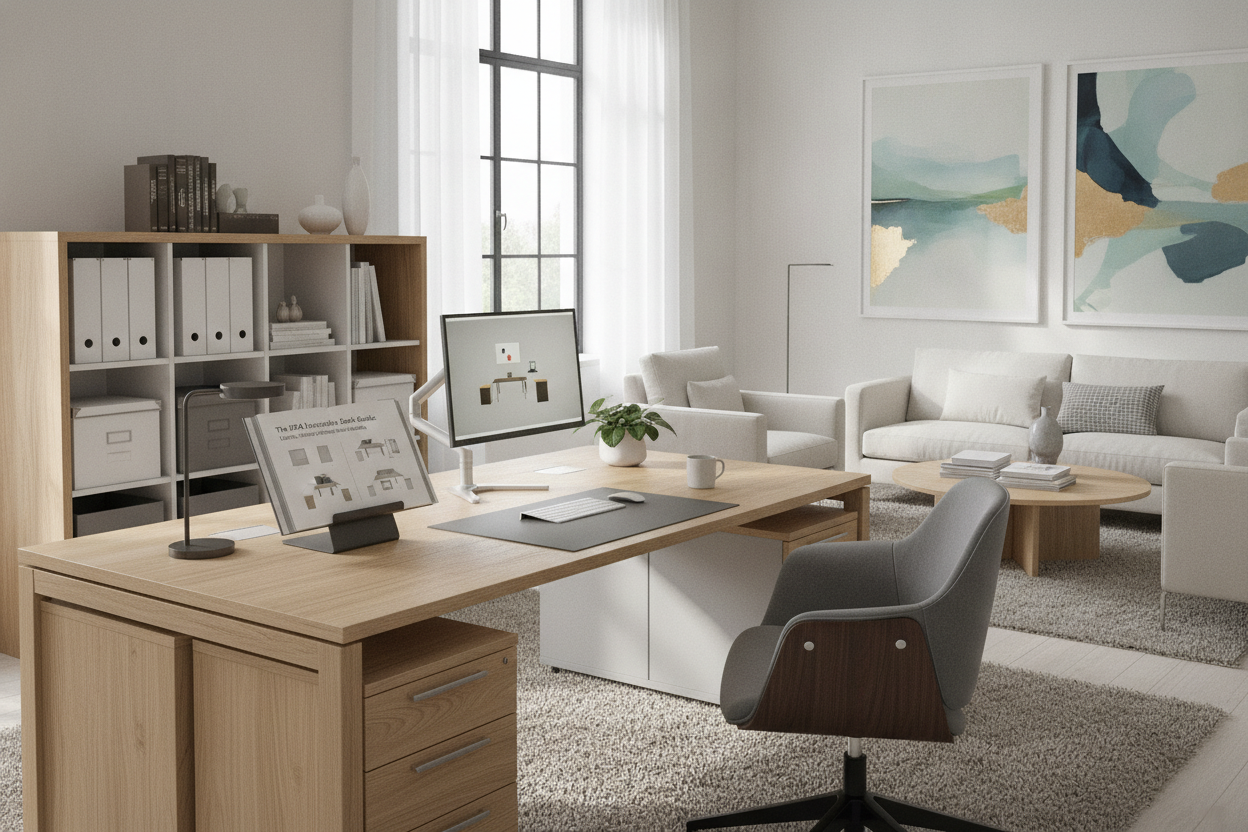
If you prefer concealed organization, incorporating a standalone modular storage cabinet alongside your desk provides dedicated drawer capacity for files, charging hubs, and office hardware. Exploring modular layout strategies through a dedicated wide guide illustrates how slim auxiliary cabinetry can neatly complement compact office furniture while preserving floor flow.
Material Selection and Structural Stability
The structural integrity and longevity of a compact desk depend heavily on its core materials and base engineering. Engineered wood panels with high-pressure laminate finishes offer dependable scratch and water resistance for daily home office use, while solid wood tops deliver natural grain texture and classic visual warmth. Supporting these tops with welded steel frames, powder-coated metal legs, or reinforced side panels ensures wobble-free stability, even when typing actively or supporting heavier equipment.
For rooms that serve multiple functions, contrasting a minimal workstation with an expansive wide desk product highlights how different frame dimensions balance open room movement against expansive built-in cabinetry. Selecting a well-braced, thoughtfully proportioned desk ensures an orderly, stable workspace that elevates your productivity and complements your home decor.

Dejar un comentario
Este sitio está protegido por hCaptcha y se aplican la Política de privacidad de hCaptcha y los Términos del servicio.