










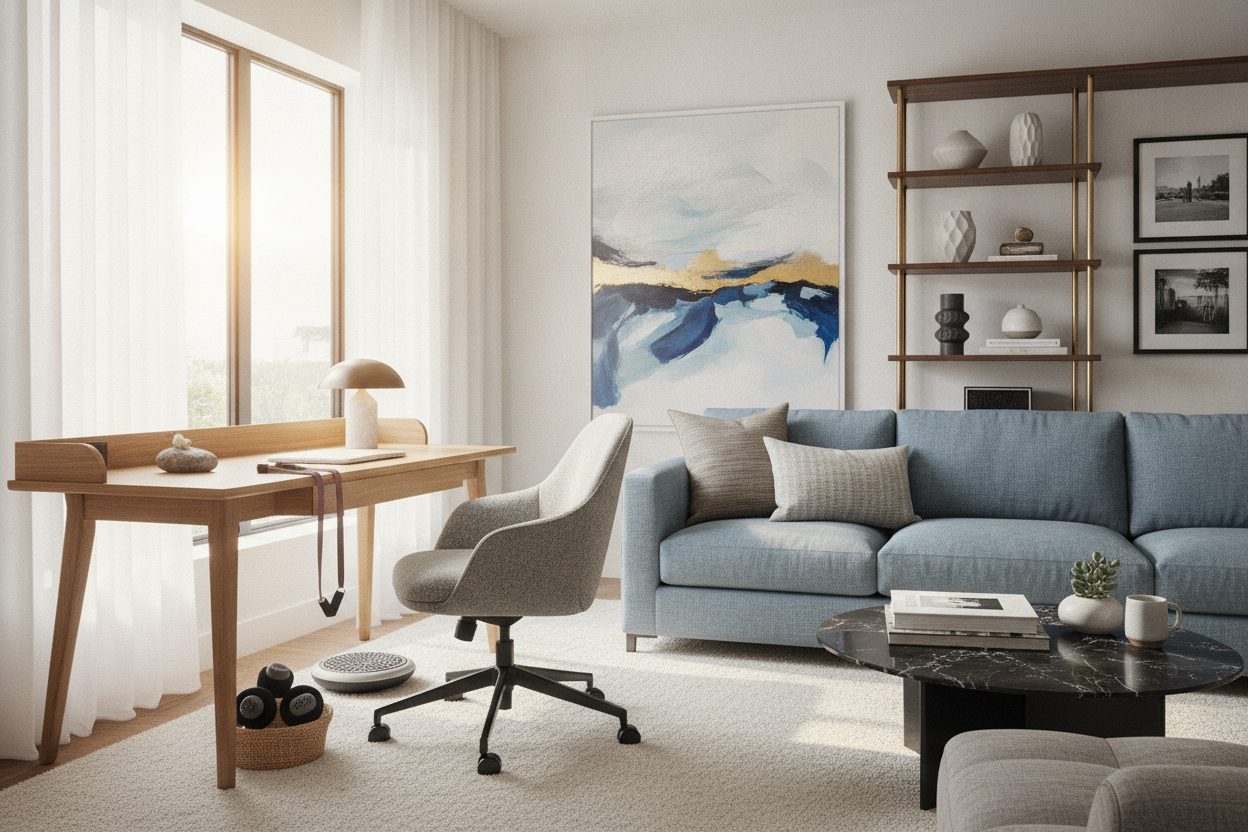
Maintaining physical engagement throughout the workday often comes down to intentional workstation design and subtle movement patterns. Rather than requiring specialized fitness gear or intense routines that disrupt an office environment, effective desk exercises rely on consistent, low-profile activations that blend seamlessly into standard computer tasks. By aligning chair adjustments, leg-well dimensions, and tabletop stability, anyone working a seated position can sustain joint comfort and postural awareness.
Understanding Workspace Clearance for Low-Profile Desk Exercises
Before introducing any movement pattern, examining the physical dimensions of the knee-well is essential. A cramped under-desk environment creates friction, causing knees to bump against crossbars, cable clusters, or storage drawers. Achieving fluid desk exercises while sitting requires an unobstructed path for feet and knees throughout their natural range of motion.
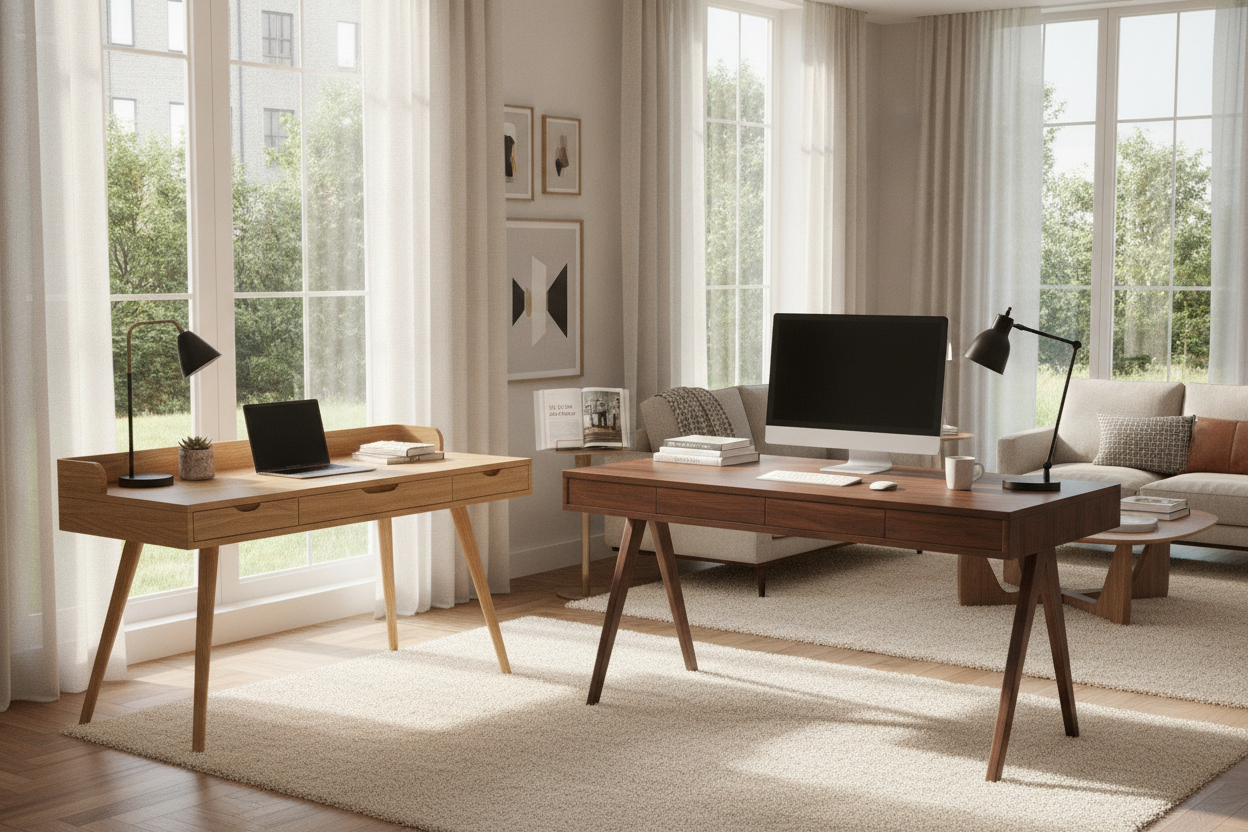
When selecting a workstation, prioritizing an open architecture helps facilitate continuous leg adjustments. Models found in a versatile computer desk collection often feature streamlined leg framing that preserves deep knee clearance, preventing accidental impacts during lower-limb repositioning. Furthermore, verifying that keyboard trays or lower apron beams sit comfortably above the thighs ensures that seated posture remains adaptable rather than rigidly locked into one fixed angle.
Subtle Seated Lower-Body Movements for Everyday Workstations
Lower-body mobility can occur without drawing attention or requiring sudden adjustments to desk height. Subtle muscular engagements help maintain leg circulation and reduce prolonged static stiffness during extended typing sessions.
- Seated Heel and Toe Lifts: Keeping feet flat on the floor, gently elevate the heels while engaging the calf muscles, hold briefly, then lower the heels and raise the toes toward the shins.
- Under-Desk Seated Leg Extensions: While seated upright, extend one foot forward until the leg straightens beneath the desk frame, pause briefly to engage the quadriceps, and return gently to the starting position without striking desk supports.
- Ankle Circles and Flexion: Hover one foot slightly above the floor and trace small, controlled circles in both directions to mobilize the joint and relieve ankle tension.
- Seated Glute and Thigh Engagements: Contract the gluteal or thigh muscles while seated upright, hold for several steady breaths, and release smoothly without shifting the upper torso.
These lower-limb habits fit effortlessly into standard work routines, making them dependable choices for anyone seeking seated desk exercises that remain completely undetectable to nearby coworkers.
Upper-Body Postural Resets and Subtle Torso Mobility
Working closely with monitors and keyboards can encourage forward head posture and rounded shoulders. Integrating small micro-movements into regular computer breaks counters static slouching while keeping peripheral desk arrangements orderly. Scheduling structured pauses, similar to the planning detailed in an out office when guide, reinforces daily mobility habits alongside boundary management.
Subtle upper-body techniques focus on spinal decompression and joint resets within a small footprint:
- Shoulder Blade Retractions: Gently draw the shoulder blades down and back toward the spine, opening the chest without arching the lower back or moving the chair.
- Seated Torso Decompression: Rest one hand on the desk edge, place the opposite hand against the outer thigh, and initiate a gentle, controlled rotational stretch through the ribcage.
- Forearm and Wrist Extensions: Extend one arm forward with the palm facing outward, gently easing the fingers backward with the opposing hand to alleviate tension from constant typing.
- Chin Tucks and Neck Releases: Align the head directly over the shoulders, gently draw the chin inward to lengthen the back of the neck, and tilt the ear toward the shoulder with controlled pacing.
Executing these movements periodically restores natural alignment, transforming standard sitting routines into opportunities for steady physical care.
Discreet Standing and Desk-Edge Stability Movements
Transitioning between seated posture and standing balance checks adds dynamic variety to a daily routine. When performing standing activations, relying on a stable desk frame ensures balanced support without stressing structural joinery.
Gentle standing calf raises can be performed while reading documents or participating in audio calls. Placing fingertips lightly along the desk edge offers stability while lifting onto the balls of the feet. Similarly, engaging in a light desk-edge hip hinge allows for a gentle stretch through the hamstrings: simply step a foot back from the desk, place hands flat on the surface, and soften the knees while hinging at the hips with a flat spine. Ensuring the desk surface is solid and level prevents wobbling or surface shifting during these brief posture resets.
Configuring Furniture Layout and Storage to Support Active Desk Routines
A cluttered work surface often discourages physical movement. When papers, external drives, and peripheral cables crowd the perimeter of a workspace, workers naturally restrict their movements to avoid knocking items over. Thoughtful furniture organization directly impacts how freely you can move throughout the day.
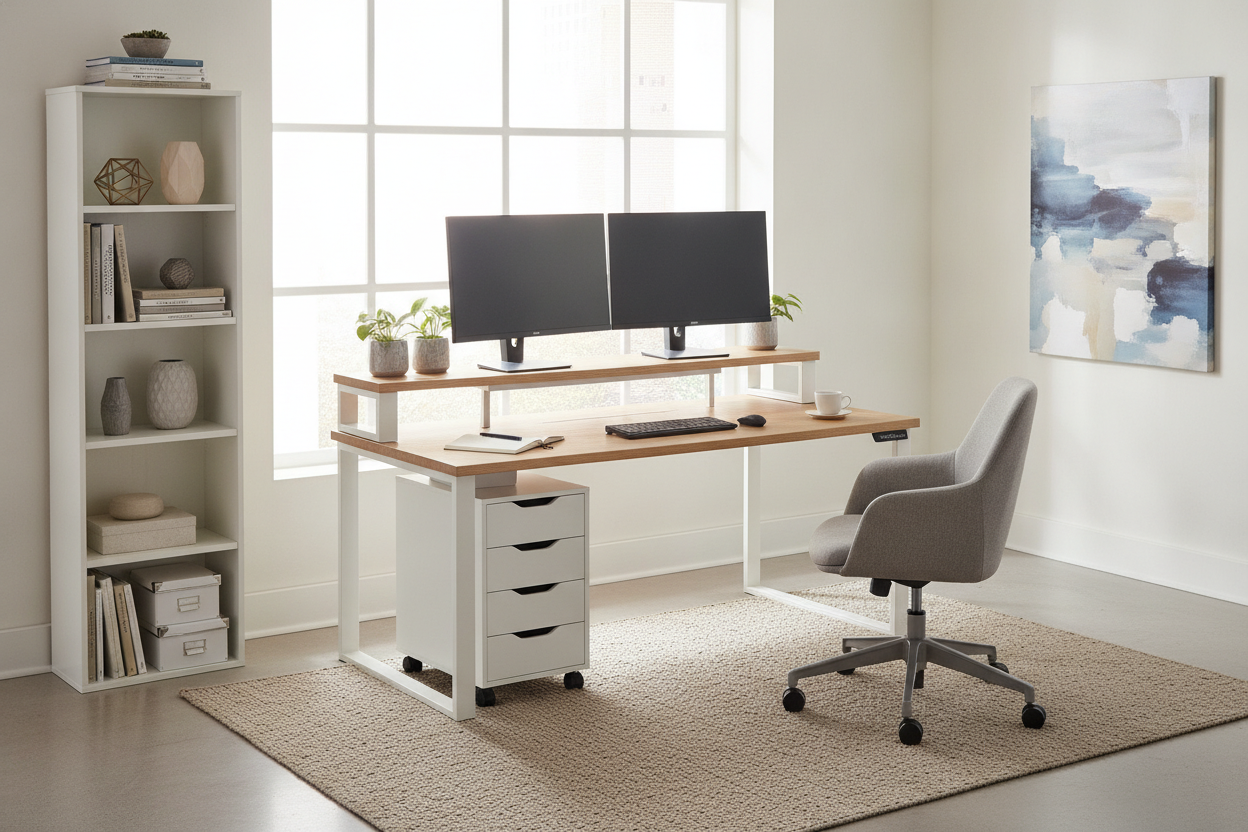
Integrating dedicated organization, such as a specialized office computer desk product, keeps reference materials, CPUs, and office supplies contained in designated storage compartments rather than encroaching on leg space. Routing power strips along structural backplates and securing cables to frame legs prevents foot tangles during seated leg extensions.
Workstation Selection: Matching Desk Form Factors to Movement Needs
Different desk designs offer unique spatial advantages for active working habits:
- Open-Frame Desks: Maximize side-to-side legroom, making them ideal for wide leg positioning, foot-pedal accessories, or unobstructed ankle rotations.
- L-Shaped Corner Desks: Create distinct zones for computing and manual writing, allowing smooth rotational shifts between tasks that naturally encourage hip and torso movement.
- Credenza and Storage Desks: Provide enclosed cabinetry for books and peripherals, ensuring the central seating bay remains entirely open for lower-body movement.
Selecting a workstation that balances robust surface support with spacious leg-well clearance provides the foundation for sustainable movement habits, keeping your workday productive, comfortable, and active.

Dejar un comentario
Este sitio está protegido por hCaptcha y se aplican la Política de privacidad de hCaptcha y los Términos del servicio.