










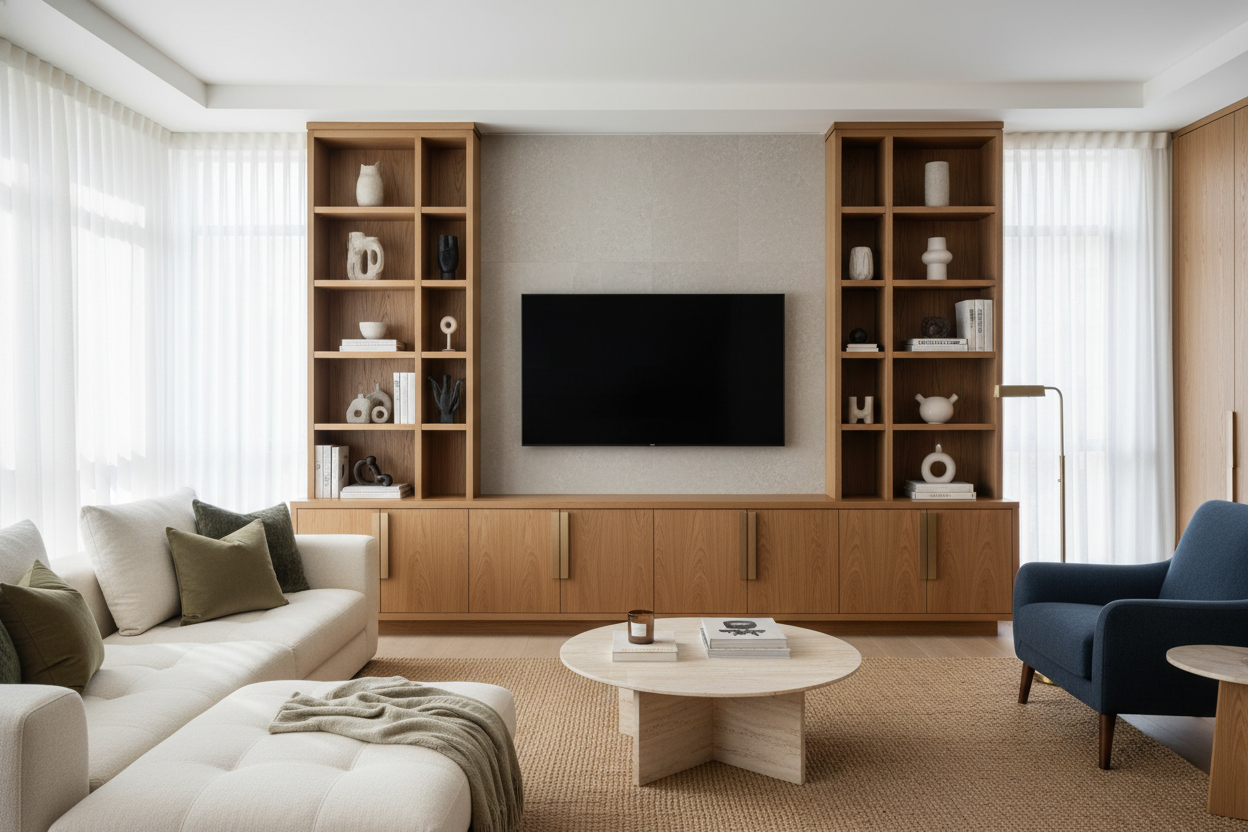
I spent three years staring at a 65-inch TV perched on a $40 particle-board stand from a big-box store. It was the first thing you saw when you walked in—a giant black rectangle supported by a piece of furniture that was literally bowing under its own weight. My living room didn't feel like a home; it felt like a dorm room for someone who really likes Netflix. Finding the right entertainment center ideas is less about finding a place to put your TV and more about reclaiming your living room from the 'electronics showroom' vibe.
- Go wider than your TV: Your unit should be at least 6-12 inches wider than the screen on both sides to avoid looking top-heavy.
- Closed storage is king: Hide the routers, the tangled HDMI cables, and the dusty PlayStation behind solid doors.
- Eye level matters: Most people mount their TVs way too high. The center of the screen should be at eye level when you're seated on your sofa.
- Mix materials: Pair wood tones with matte black accents or stone tops to keep the unit from looking like a giant wooden monolith.
Why Your TV Area Always Feels Like an Afterthought
The mistake most of us make is buying a generic, flimsy TV stand as a 'temporary' fix that stays for five years. These pieces are usually too small, too short, and made of materials that scream 'I don't care about this room.' When the furniture is dwarfed by the screen, the TV becomes a shrine. It sucks the soul out of your living room entertainment center ideas and makes the whole space feel unbalanced.
If your media center feels like a cluttered mess, it’s usually because of visual noise. Exposed wires, blinking lights from the cable box, and a lack of verticality make the whole area look messy. You need something with enough visual weight to anchor the wall, otherwise, that big screen just looks like it's floating in a sea of beige drywall. I've found that choosing a unit with a bit of depth—at least 16 to 18 inches—gives the room a grounded, professional look.
The Magic of Modern Built-In Entertainment Centers
A modern built-in entertainment center isn't just for people with $10,000 to spend on custom millwork. I’ve seen incredible results using modular pieces that span wall-to-wall. When you fill the space from floor to ceiling—or at least a significant chunk of the horizontal wall—it starts to look like architecture instead of just a box you bought. It changes the room's entire profile.
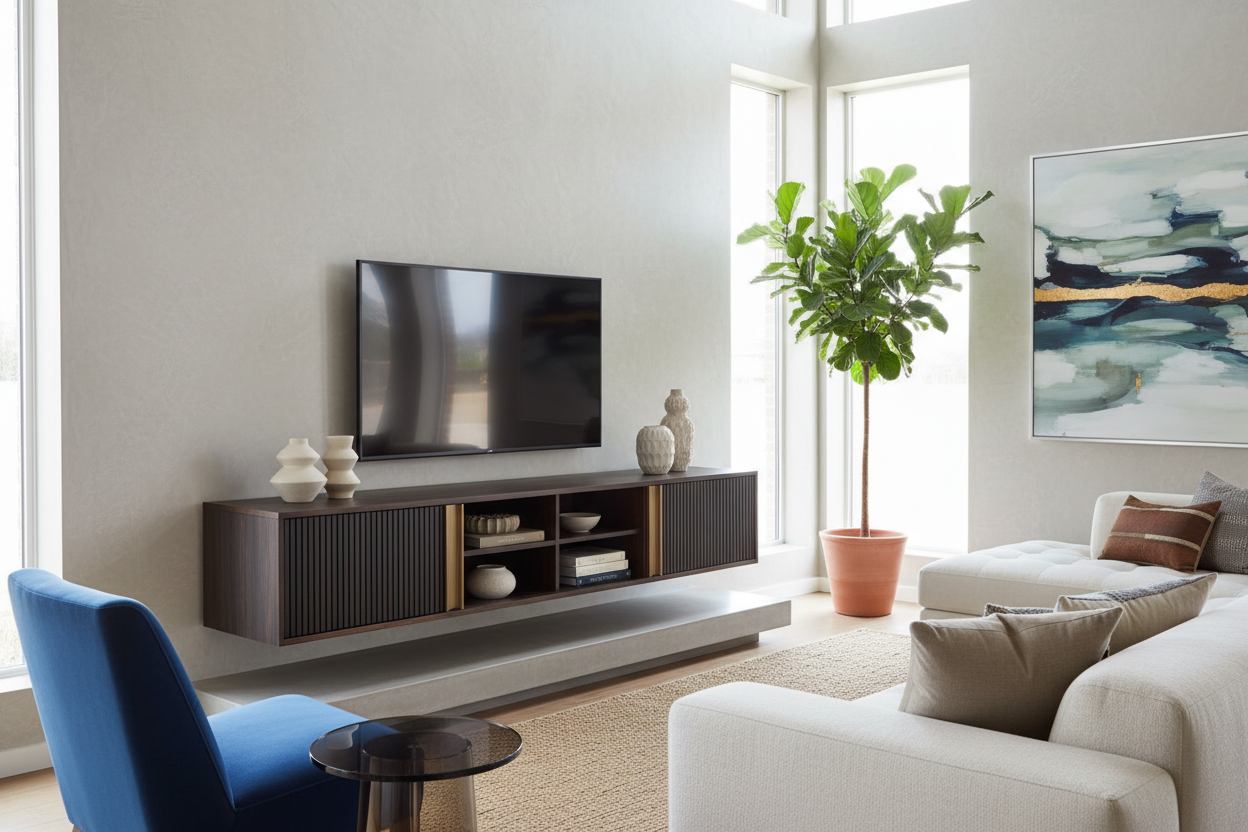
I often debate with clients about built in versus floating entertainment center setups. While floating units are great for a minimalist, airy look, a built-in style offers a sense of permanence and much-needed storage. Custom built entertainment center ideas don't have to be permanent, either; high-end modular units can give you that floor-to-ceiling look while still being able to move with you to your next home. It’s about creating a 'wall' rather than just a 'stand.'
Handling the Giant Screen Sucking Up Your Wall Space
Let's talk about the 85-inch elephant in the room. We all want the theater experience, but a massive screen can easily overwhelm family room entertainment center ideas. The trick is to balance that black void with shelving and decor. If you have a huge TV, you need even bigger furniture around it to make the proportions work. If the stand is the same width as the TV, it looks like a T-shape, which is a design disaster.
I’m a big fan of using entertainment shelving ideas to flank the screen. By placing books, ceramics, or even a few plants on either side, you draw the eye away from the screen when it's off. If you’re struggling with a massive display, there are specific solutions for a giant TV wall that involve using dark paint colors or textured wallpaper behind the unit to help the screen 'disappear' when it’s not in use. It’s all about camouflage.
When to Choose Closed Cabinets Over Open Shelving
I’ve learned this the hard way: open shelving is a trap for anything with a power cord. Unless you are a master of cable management with a lot of zip ties and patience, your entertainment cabinet ideas should lean heavily toward closed doors. There is a specific kind of luxury in knowing that your messy router and tangled web of wires are hidden behind a beautiful walnut or oak door.
A modern 3 piece entertainment center is often the sweet spot for most homes. It gives you the closed base for the 'ugly' tech and the open upper shelving for the 'pretty' stuff like your vintage camera collection or favorite hardcovers. I personally prefer cabinets with soft-close hinges and integrated wire management ports. If the piece doesn't have a hole for cables, I’m taking a hole saw to it before I even put the TV on top. Never let a piece of furniture dictate your cable mess.
My Go-To Formula for a Cohesive Media Setup
When I’m planning an entertainment center design, I follow a strict 3:1 ratio. For every one piece of tech visible, I want three pieces of 'life' visible—books, art, or textures. Start by measuring your wall and aiming for a unit that covers at least two-thirds of that width. Anything smaller looks like a postage stamp on a billboard. It makes the room feel small and the TV feel accidental.
I once bought a 'minimalist' glass and metal stand that looked great in a studio photo. In reality, it was a nightmare. Every speck of dust was visible, and the 'minimalism' disappeared the second I plugged in my soundbar. I eventually swapped it for a solid wood unit with mesh doors that let the IR remote signal through but hid the blinking blue lights. It changed the entire mood of my evenings. If you're ready to stop living in a tech-shrine, I'd suggest you browse complete entertainment center collections to find a piece that actually matches your style rather than just your screen size.
Is a built-in better than a standalone console?
It depends on your budget and how long you plan to stay. Built-ins look integrated and high-end, but a high-quality standalone console is easier to take with you and often costs significantly less for a similar visual impact.
How do I hide my TV wires without cutting into the wall?
Use a cable raceway that you can paint the same color as your wall. Or, choose an entertainment center with a solid back panel that has built-in wire management channels to keep everything tucked away.
What color should my entertainment center be?
If you want the TV to blend in, go with a dark wood or charcoal finish. If you want the furniture to be a focal point, go with a lighter oak or even a bold painted finish like navy or forest green to add personality.


Dejar un comentario
Este sitio está protegido por hCaptcha y se aplican la Política de privacidad de hCaptcha y los Términos del servicio.