










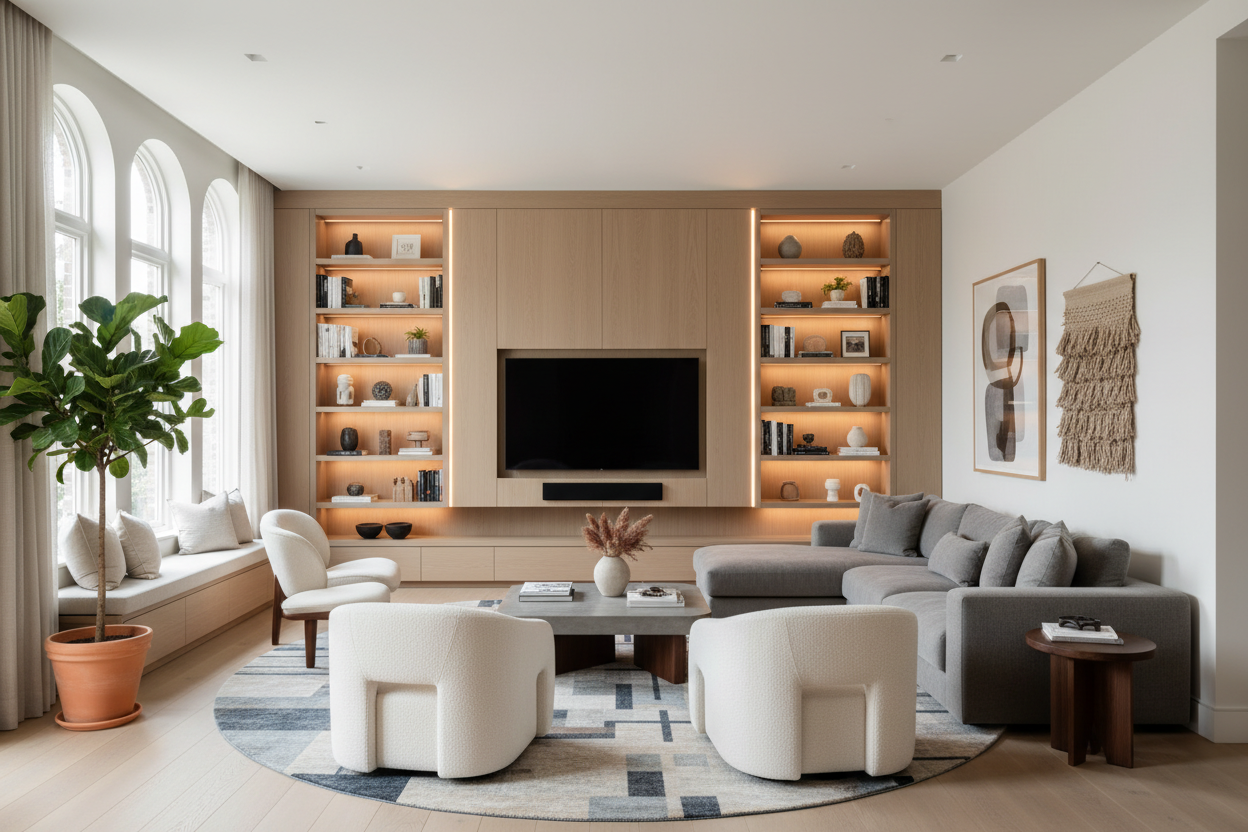
I remember staring at my first 'grown-up' apartment—a 10-foot wide, 25-foot long rectangle—and realizing I basically lived in a glorified hallway. I did what everyone does: I shoved the sofa against one long wall and a tiny TV stand against the other. Suddenly, I was living in a literal bowling alley. It wasn't just awkward; it felt temporary, like I was waiting for the real furniture to arrive. The fix wasn't a smaller sofa or a different rug. It was a massive home entertainment wall.
- Stop the 'hallway' effect by anchoring the short wall of the room.
- Avoid 'postage stamp' syndrome—scale your furniture to the wall, not just the TV.
- Use vertical height to draw the eye up and away from narrow floor paths.
- Create distinct zones to prevent your lounge from bleeding into your workspace.
The 'Bowling Alley' Living Room Dilemma
The long, narrow living room is an architectural prank played on renters and homeowners alike. When you have a space that is twice as long as it is wide, the natural instinct is to keep the center clear for traffic. You line up your bookshelves, your sofa, and your media console like soldiers on parade. The result? An echo chamber that feels more like a transit hub than a home.
I spent three years in a place like this, and no amount of throw pillows could hide the fact that the room felt stretched. The problem is visual momentum. Your eyes track the long lines of the walls and floor, never finding a place to rest. You need a 'stop'—a visual anchor that tells your brain, 'The room ends here, and the living starts now.'
Why Dinky TV Stands Just Make It Worse
I see this mistake in almost every narrow apartment I visit. Someone buys a 40-inch mid-century console for a 15-foot wall. It looks like a postage stamp stuck on a billboard. Small furniture in a long room actually emphasizes the distance. It makes the far wall look miles away, stretching the 'tunnel' effect even further. If your media setup is dwarfed by the wall it sits on, the whole room feels disjointed and unfinished.
How a Home Entertainment Wall Changes the Room's Geometry
By installing a full home entertainment wall, you are performing a bit of interior design magic. Instead of the eye sliding down the long walls into infinity, it hits a structured, substantial piece of furniture that commands the entire end of the room. This visually pulls that far wall forward, effectively 'squaring off' the space. It turns a corridor into a destination.
Sourcing the Right Entertainment Walls Furniture
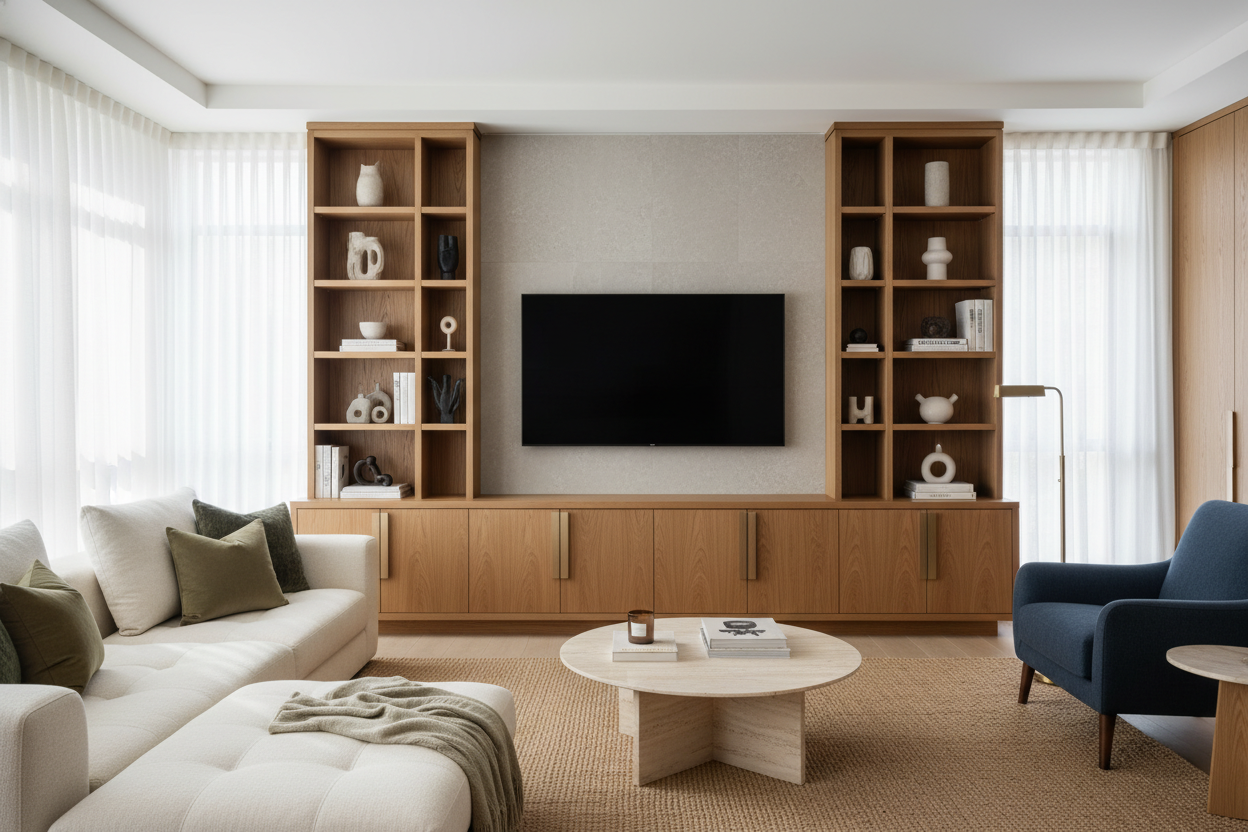
When you are looking for entertainment walls furniture, think about the ratio of height to depth. In a narrow room, you want something wide and tall, but relatively shallow. I usually look for units that are 14 to 16 inches deep. This gives you plenty of room for a soundbar and some books without eating up the precious floor space you need for a coffee table or an ottoman. I'd skip the heavy, 24-inch deep monsters from the early 2000s; they'll make your room feel like a cave.
Floating vs. Grounded: Reclaiming Your Floor Space
If your room is so narrow that you're worried about feeling claustrophobic, go vertical. A floating tv stand wall mounted media console is my go-to recommendation for tight quarters. When you can see the floor extending all the way to the wall under the furniture, your brain perceives the room as being wider than it actually is. It’s a trick I’ve used in three different apartments, and it works every single time.
Grounded units have their place—especially if you have a massive collection of vinyl or heavy tech—but they can feel like a heavy anchor in a small space. If you do go with a floor-based unit, make sure it has legs rather than a solid plinth base. That extra four inches of 'air' underneath makes a world of difference.
Creating Zones So You Don't Feel Like You're Living in a Corridor
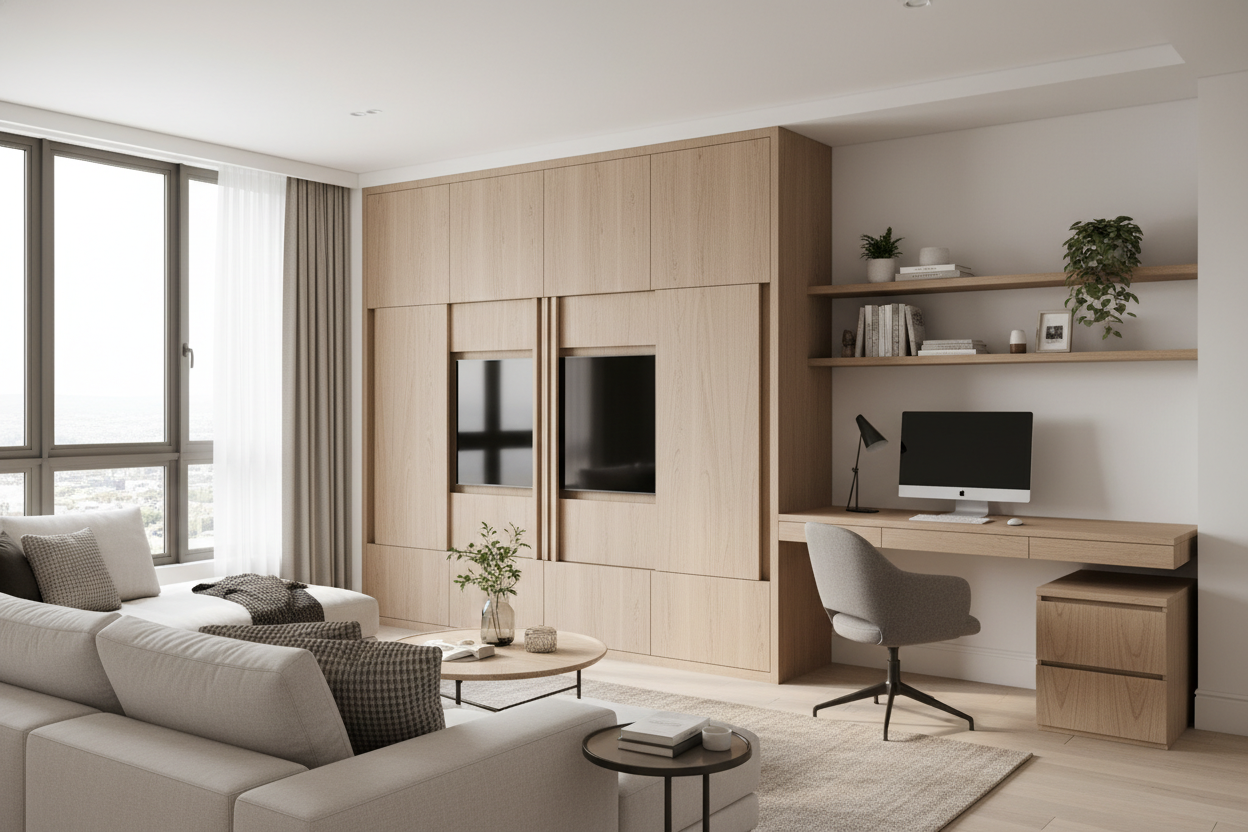
A long room needs to be chopped up into functional zones. Your media setup should define the 'lounge.' Once that anchor is in place, you can comfortably transition into other areas. For example, the space behind your sofa can finally become a dedicated home office without feeling like your desk is just floating in the middle of nowhere. Each zone needs its own identity so the room stops feeling like one big, confusing blur.
Defining the living zone also helps you manage the 'drop zone' by the door. When your entertainment area is clearly marked, you can easily figure out the right entryway furniture for your home to catch keys and mail before they migrate to the coffee table. It’s all about creating boundaries where the architecture failed to provide them.
Personal Experience: The Measurement Fail
I once bought a gorgeous modular wall unit on clearance. I was so excited I didn't account for the three-inch thick baseboards in my old pre-war apartment. The unit was exactly 72 inches wide, and my alcove was 72.5 inches. With the baseboards, it wouldn't fit. I ended up having to use a jigsaw to notch out the bottom of a $900 piece of furniture. It was stressful, messy, and totally avoidable. Always measure at the floor, the middle, and the top of the wall. Walls are never as straight as you think they are.
FAQ
Does a large wall unit make a room look smaller?
Actually, no. One large, cohesive piece usually looks much cleaner and more spacious than four or five small, mismatched pieces of furniture cluttering up the same wall.
How high should I mount my TV on a wall unit?
The center of the screen should be at eye level when you're sitting on your sofa. For most people, that's about 42 inches from the floor. Do not be the person who mounts their TV near the ceiling; your neck will thank you.
Can I do a full entertainment wall in a rental?
Yes. Look for modular units that lean against the wall or 'floating' looks that use a few heavy-duty toggles. You’ll have to patch some holes when you move, but the visual upgrade is worth the 20 minutes of spackling.

Dejar un comentario
Este sitio está protegido por hCaptcha y se aplican la Política de privacidad de hCaptcha y los Términos del servicio.