










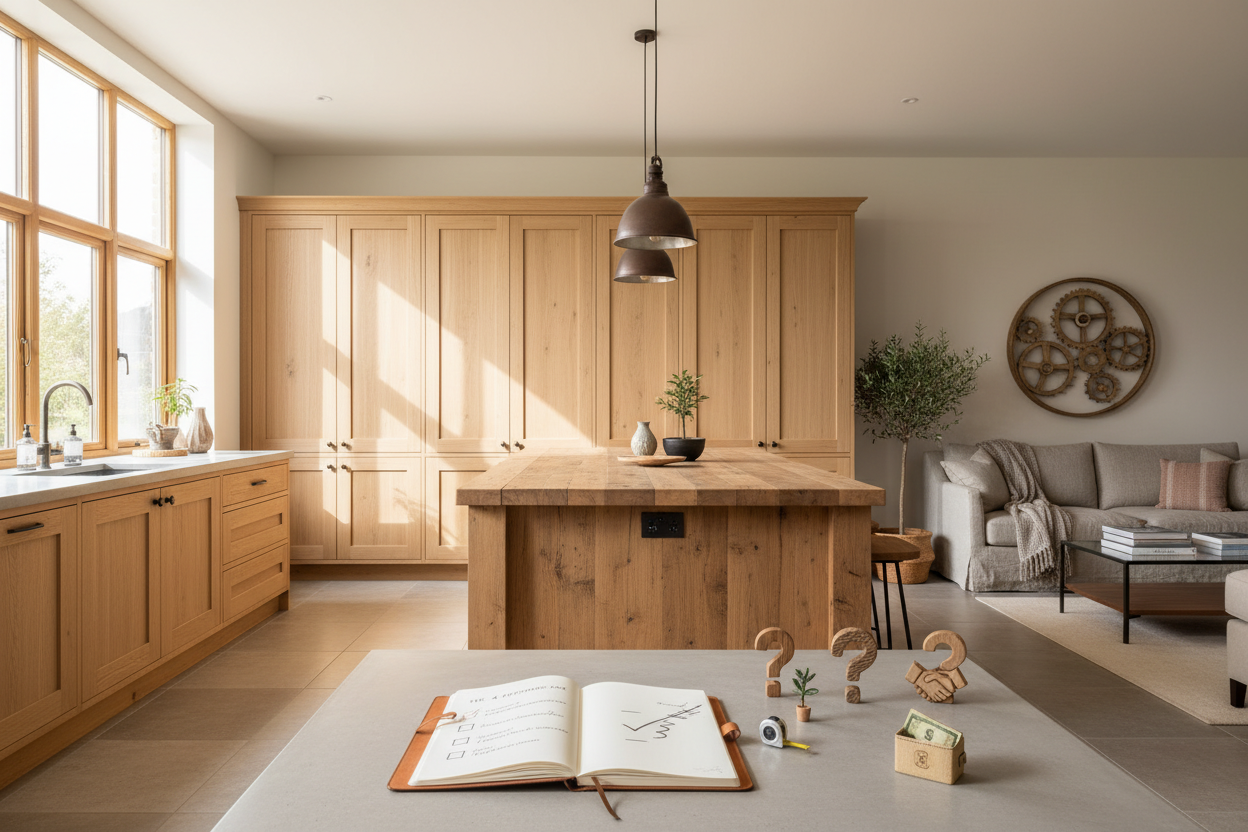
I remember staring at a 'semi-custom' kitchen layout from a big-box store and realizing my 114-year-old walls were so crooked that a standard 36-inch box would leave a massive gap of wasted space. It is infuriating to pay thousands for filler strips that just hide poor planning. That was the moment I stopped looking at glossy brochures and started hunting for cabinet makers in my area who actually knew how to handle a scribe tool and a piece of kiln-dried maple.
- Check the hardware: If they aren't using Blum or Grass slides, they are cutting corners.
- Visit the shop: A messy, unorganized shop usually leads to a messy, delayed project.
- Ask about wood movement: Real wood breathes; your builder needs a plan for that.
- Budget wisely: Use custom for the 'weird' corners, but buy retail for freestanding storage.
Why I Finally Gave Up on Big Box Home Centers
Big-box stores sell you a brand name, but they don't sell you the person who actually builds the thing. When I looked into independent cabinet makers, the difference in quality control was night and day. Most retail cabinets use 1/2-inch particle board for the sides. One minor pipe leak under your sink and that box is toast—it swells up like a sponge.
Seeking out cabinet builders in my area allowed me to demand 3/4-inch plywood construction. More importantly, it solved my 'wonky room' problem. In an old house, nothing is square. A local shop can build a cabinet that is 34 and 3/8 inches wide to fit a specific nook, whereas a retail store would force you to buy a 33-inch cabinet and a 1-inch filler strip that looks like an afterthought. Custom isn't just about aesthetics; it's about not wasting every square inch of your floor plan.
How I Narrowed Down the Cabinet Makers in My Area
My first mistake was trusting the first page of Google. The best custom cabinet makers in my area usually don't have time to manage an Instagram account or pay for ads; they are too busy in the shop. I found my best leads by calling a local high-end countertop fabricator and asking which shops consistently have their boxes level and ready for stone. If the boxes aren't level, the stone cracks, so fabricators know exactly who the hacks are.
I also spent time looking at Cabinet Stores in My Area — What Actually Makes Them Worth Visiting to distinguish between showrooms that just resell factory boxes and actual manufacturing shops. You want the person who owns the saws, not just the person who owns the showroom. I looked for nearby cabinet shops that had been in business for at least a decade. In this industry, if you're bad at your job, word-of-mouth kills you long before the ten-year mark.
The Crucial 'Shop Visit' Test
Before I hand over a 50% deposit, I always ask to see the shop. I'm not looking for a fancy lounge. I'm looking for dust management. If there is a three-inch layer of sawdust on everything, that dust is getting into your final finish. A pro shop has a dedicated spray booth and a clean environment.
I also check the 'work in progress' pile. Are the cabinet makers close to me currently working on projects that look like what I want? I look at the joinery on the drawer boxes. If I see staples instead of dovetails, I walk out. You are paying for craftsmanship, and staples are the hallmark of a weekend hobbyist trying to play in the big leagues.
The 4 Questions That Instantly Expose a Bad Contractor
When interviewing custom cabinet shops in my area, I use these four questions to filter out the flakes. First: 'How do you account for wood movement?' If they say wood doesn't move because it's 'high quality,' they are lying. Solid wood expands and contracts with humidity; a pro knows how to build floating panels to prevent cracking.
Second: 'What brand of drawer slides are standard?' If they don't say Blum or Grass, it's a red flag. Cheap slides feel crunchy after two years. Third: 'Is your finish pre-catalyzed lacquer or conversion varnish?' You want a finish that can stand up to a spilled glass of wine or a leaky bottle of olive oil. Finally: 'What is your realistic lead time?' If they say three weeks, they are lying. A real pro is usually booked out 3-6 months. I'd rather wait for quality than get a rush job that peels in a year.
When Local Custom Makes Sense (And When to Just Buy It)
I love custom work, but I'm also a realist about my bank account. You don't need kitchen cabinet makers in my area to build every single piece of furniture in your house. I save the custom budget for the 'hard' stuff: the kitchen island, the floor-to-ceiling library, or the awkward alcove under the stairs. For everything else, I look for high-quality retail pieces that look custom but cost half as much.
For example, if you just need a place to show off your heirloom china, buying a solid black cabinet with glass doors is a much smarter move than commissioning a one-off piece. Similarly, a large display cabinet corner shelf can solve a storage problem in a dining room for a fraction of the price of custom millwork. Use the money you save on freestanding pieces to pay for the high-end drawer slides in your kitchen. That’s how you get a high-end home without the $100k price tag.
Cabinet Maker FAQs
Is it cheaper to go with a local cabinet maker?
Usually, no. You'll pay 20-40% more than big-box 'stock' cabinets, but you're getting 100% usable space and better materials. In the long run, it's cheaper because you won't be replacing them in ten years when the hinges fail.
How do I find independent cabinet makers?
Skip the big ads. Go to a local lumber yard (not a home center) and ask the guys at the pro desk who is buying the most high-grade walnut and maple. They know exactly who the busy, talented shops are.
What is the most durable finish for cabinets?
Look for conversion varnish. It's a chemical-cure finish that is incredibly tough. If a shop tells you they just 'paint' them with house paint, run away. That finish will chip within months of daily use.


Dejar un comentario
Este sitio está protegido por hCaptcha y se aplican la Política de privacidad de hCaptcha y los Términos del servicio.