










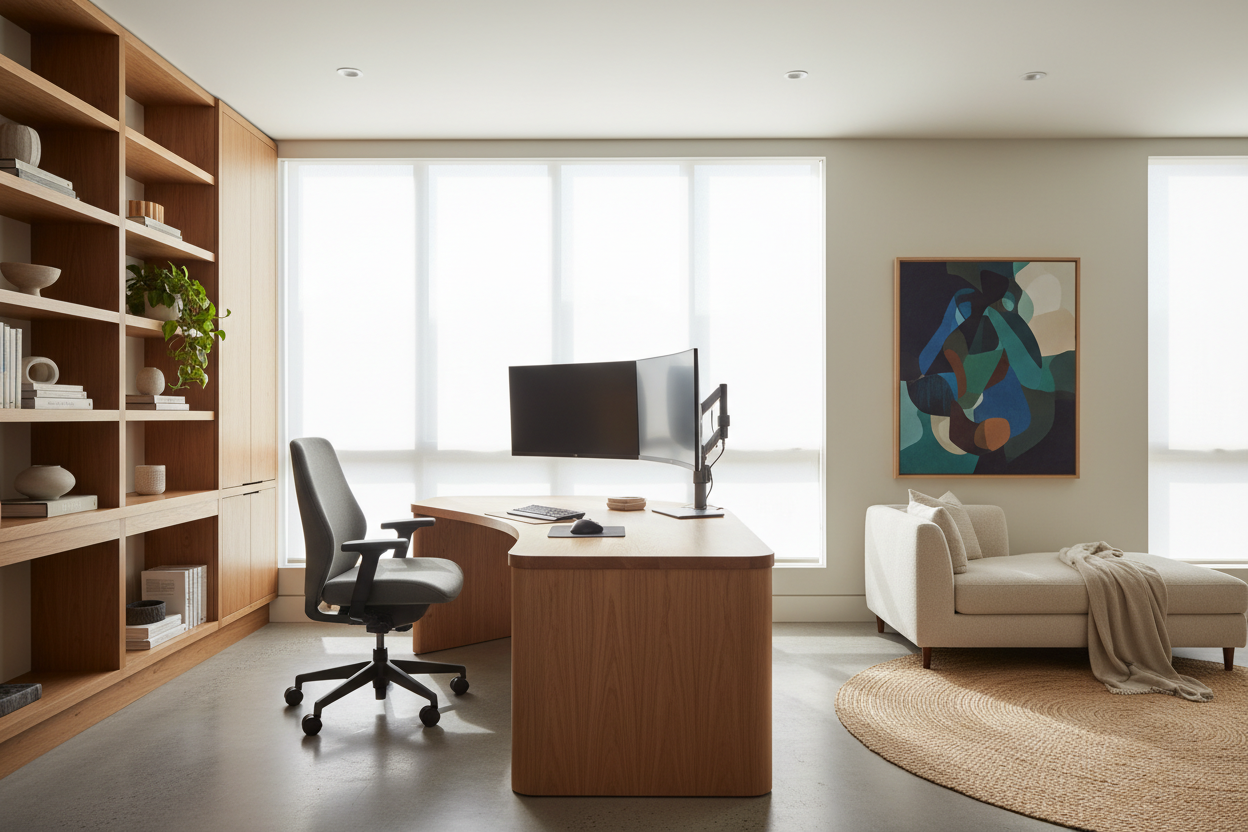
Designing a workspace is rarely just about selecting a desk and a chair; it is about curating an environment that sustains focus while reflecting your personal aesthetic. As a designer, I often see clients struggle with makeshift setups that hinder productivity. The best office solution is one that harmonizes ergonomic science with sophisticated interior design principles, ensuring that your workspace works as hard as you do.
Quick Decision Guide: Defining Your Ideal Workspace
Before committing to a purchase, evaluate these core elements to ensure the furniture meets professional standards.
- Ergonomics & Adjustability: Look for seating with lumbar support and desks that accommodate sit-stand transitions without wobbling.
- Surface Materiality: Choose high-pressure laminates for durability or sealed solid wood for a warmer, executive feel.
- Spatial Footprint: Ensure a minimum of 36 inches of clearance behind your chair for fluid movement.
- Cable Management: The best designs feature integrated grommets and channels to maintain visual minimalism.
Structuring the Layout for Focus
The placement of your furniture dictates the flow of the room. A common error is pushing the desk against a wall, which can feel confining. Instead, consider 'floating' the desk in the center of the room or positioning it perpendicular to a window. This command position allows you to manage the visual field of the entry while benefiting from natural light, reducing eye strain.
Material Selection: Durability Meets Design
When curating the best office solution, the tactile experience is paramount. A glass desk may look sleek and modern, but it often lacks the warmth required for long hours of work and can be a magnet for fingerprints.
Wood vs. Synthetics
For an executive aesthetic, walnut or oak veneers offer a timeless silhouette. However, if your workflow involves heavy sketching or crafting, a thermal-fused laminate provides a non-porous, scratch-resistant surface that mimics the grain of wood without the maintenance anxiety.
Sourcing Locally vs. Global Brands
Quality often hides in the construction details—dovetail joinery, soft-close drawer slides, and weight-bearing capacities. Whether you are browsing high-end showrooms in a metropolitan design center or scouting for the best office solutions Waynesboro GA has to offer, the litmus test remains the same: stability and finish quality. Local suppliers often provide better customization options for specific room dimensions compared to big-box retailers.
Integrating Tech without the Clutter
In modern interior design, technology should be accessible but invisible. High-end office systems now include modesty panels that hide wiring and under-mount power strips. Visual balance is disrupted by chaotic cabling; therefore, selecting pieces with built-in wire management logic is non-negotiable for a polished look.
Lessons from My Own Projects: The "Texture" Mistake
I once designed a home office for a client where we prioritized a reclaimed wood desk with a heavy, rustic grain. It was visually stunning and served as a beautiful focal point. However, two weeks later, the client called me. Every time they tried to write on a single sheet of paper, the pen poked through the paper because of the wood's deep texture.
It was a humbling reminder that the best office solution must function first. We ended up having to commission a custom leather blotter to smooth out the writing surface. Now, I always advise clients: if you do analog work (writing, drawing), smooth matte finishes are superior to heavily textured organic materials, no matter how good they look in the catalog.
Conclusion
Your workspace should be a destination, not an obligation. By prioritizing ergonomic flow, durable materials, and integrated technology, you create a foundation for success. Don't settle for generic setups; curate a space that respects both your body and your business.
Frequently Asked Questions
1. How much space do I need for an executive office setup?
Ideally, you need a room that allows for a desk (approx. 60" x 30") plus at least 48 inches of clearance for the chair to roll back and swivel without hitting a wall or bookshelf.
2. Is a standing desk actually worth the investment?
From a design and health perspective, yes. Modern standing desks now come in finishes that rival fixed executive desks. They break the sedentary cycle, which is crucial for long-term comfort.
3. How do I choose the right chair fabric?
Mesh is superior for breathability and temperature regulation, making it the practical choice for 8-hour workdays. Leather or high-performance velvet offers a more luxurious aesthetic but retains more heat.

Dejar un comentario
Este sitio está protegido por hCaptcha y se aplican la Política de privacidad de hCaptcha y los Términos del servicio.