










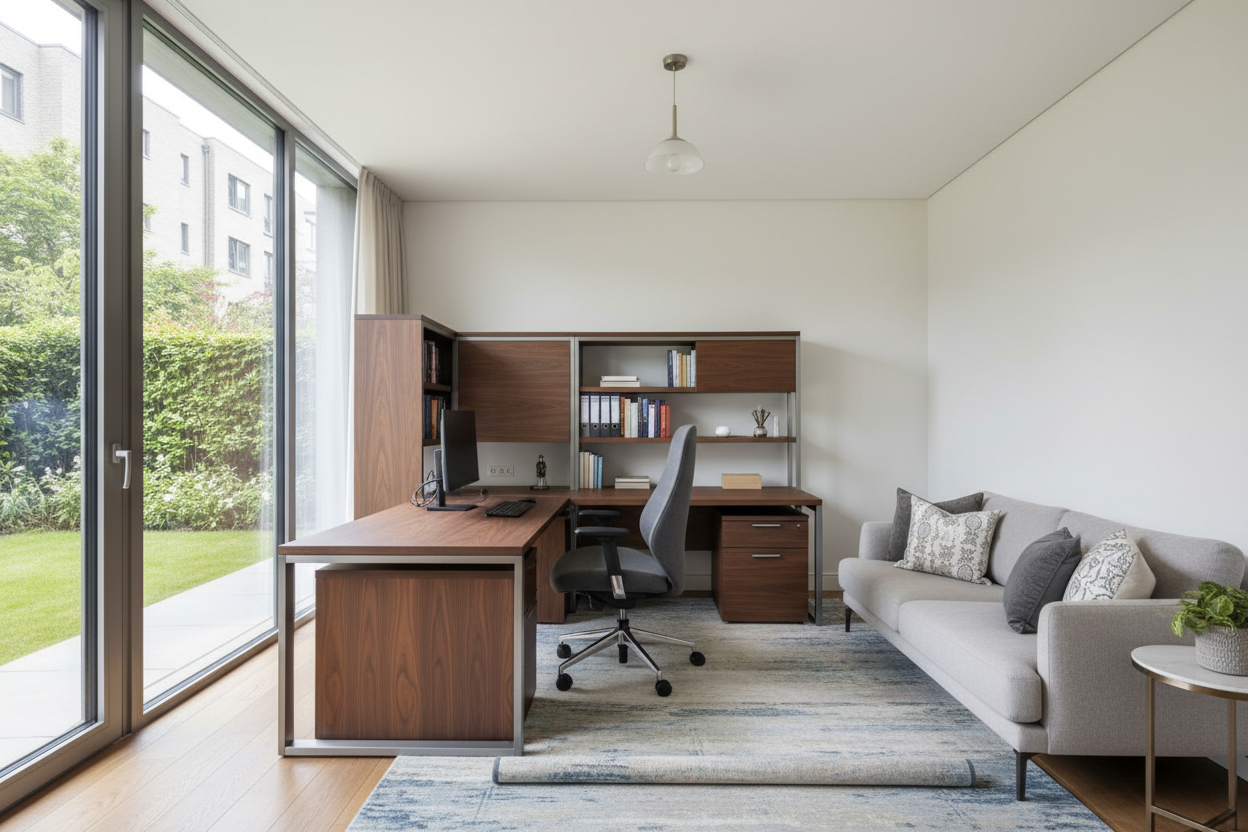
Merging professional function with residential comfort is a delicate balancing act. When clients approach me, they often struggle to separate the sterile aesthetic of a corporate cubicle from the warm, inviting atmosphere of their living space. The goal is not just to buy a table and a chair, but to curate furniture for office in the home that enhances productivity without disrupting the visual harmony of your sanctuary.
Key Features to Look For
- Ergonomics First: Prioritize lumbar support and adjustable seat depth over purely sculptural shapes.
- Material Integrity: Look for solid wood or high-grade veneers that age well, rather than cheap laminates that peel.
- Scale and Proportion: Ensure the desk furniture for home office use doesn't overwhelm the room's footprint.
- Cable Management: Integrated channels are essential to keep the "tech mess" hidden from view.
Defining the Aesthetic: Home or Office Furniture?
The biggest challenge in selecting furniture office home setups is the "corporate creep." You want the space to feel like a seamless extension of your home, not a satellite branch of your employer. When browsing home or office furniture, avoid the standard gray melamine unless it is heavily textured or offset by warmer elements.
I always advise clients to lean toward materials that mirror the rest of the house. If your living room features walnut accents and brass hardware, your office furniture at home should speak that same design language. A mid-century modern desk with tapered legs often transitions better than a bulky metal workstation.
Selecting the Right Desk Furniture for Home
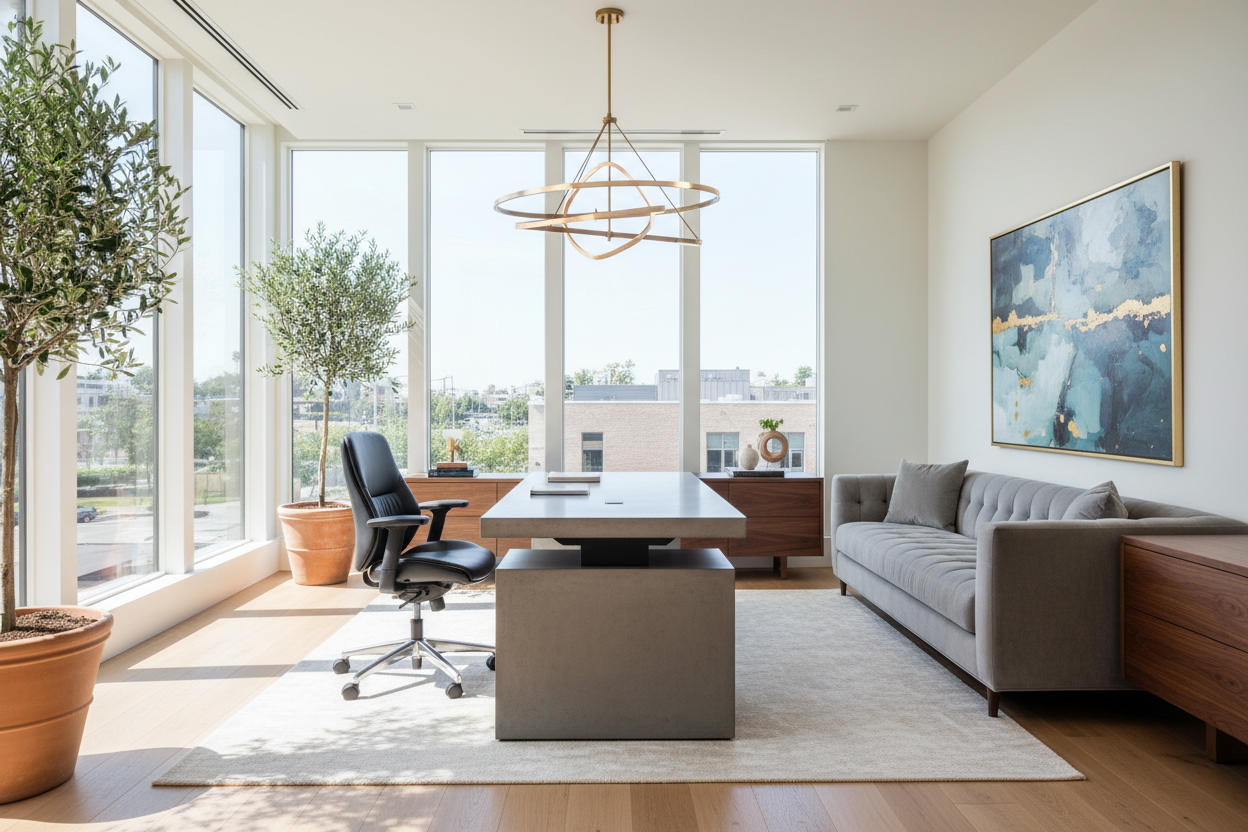
The desk is the anchor. When evaluating desk furniture for home, consider the visual weight. In a dedicated room, a heavy executive desk commands authority. However, in a multi-use space, such as a bedroom corner or a nook in the living area, you want home desk furniture with a lighter silhouette—think glass tops or open-frame metal bases that allow light to pass through, making the room feel larger.
Ergonomics vs. Style
While that vintage parson’s table looks incredible, it likely lacks the correct height for eight hours of typing. If you choose a non-adjustable desk, your chair becomes the critical variable. High-quality desk furniture for home office setups must pair a static surface with a highly adjustable chair to prevent repetitive strain injuries.
Storage Solutions for the Home Study
Clutter is the enemy of focus. Furniture for home study environments must include concealed storage. Open shelving is beautiful for displaying books and artifacts, but sensitive documents and office supplies should be tucked away in credenzas or rolling pedestals. Look for pieces with soft-close drawers and finished backs, allowing you to float the furniture in the center of the room rather than pushing everything against the walls.
Lessons from My Own Projects
I want to share a specific mistake I made early in my career so you don't have to. I once specified a gorgeous, reclaimed barn-wood desk for a client who was a graphic designer. Visually, it was a masterpiece—rich texture, incredible history, and a perfect focal point.
However, I neglected the practical reality of office furniture at home. Within a week, the client called me. The surface was so heavily textured that she couldn't write on a piece of paper without the pen punching through, and her optical mouse kept skipping over the wood grain. We had to rush-order a custom leather blotter to make the surface usable. It taught me that tactile beauty never trumps the actual function of the work surface. Always run your hand across the desk; if it feels like a rustic dining table, it might not work for a 9-to-5.
Conclusion
Investing in the right pieces transforms work from a chore into a ritual. By selecting high-quality materials and prioritizing ergonomic design, you create a space that respects both your professional ambition and your personal style. Choose wisely, and your office will become your favorite room in the house.
Frequently Asked Questions
What is the ideal depth for a home office desk?
For a standard setup with a laptop or monitor, aim for a depth of at least 24 to 30 inches. This provides enough distance for your eyes to focus comfortably on the screen while leaving room for a keyboard and notepad.
Can I mix wood tones in my office furniture?
Absolutely. In fact, matching every piece of wood perfectly can make the room look flat and "catalog-bought." Try to keep the undertones (warm vs. cool) consistent, but feel free to mix a dark walnut desk with lighter oak shelving for depth.
Is a standing desk worth the investment for a home setup?
If you work full-time from home, yes. The ability to change posture reduces fatigue significantly. Look for motorized legs that can be attached to a custom top so you don't have to sacrifice style for health.

Dejar un comentario
Este sitio está protegido por hCaptcha y se aplican la Política de privacidad de hCaptcha y los Términos del servicio.