










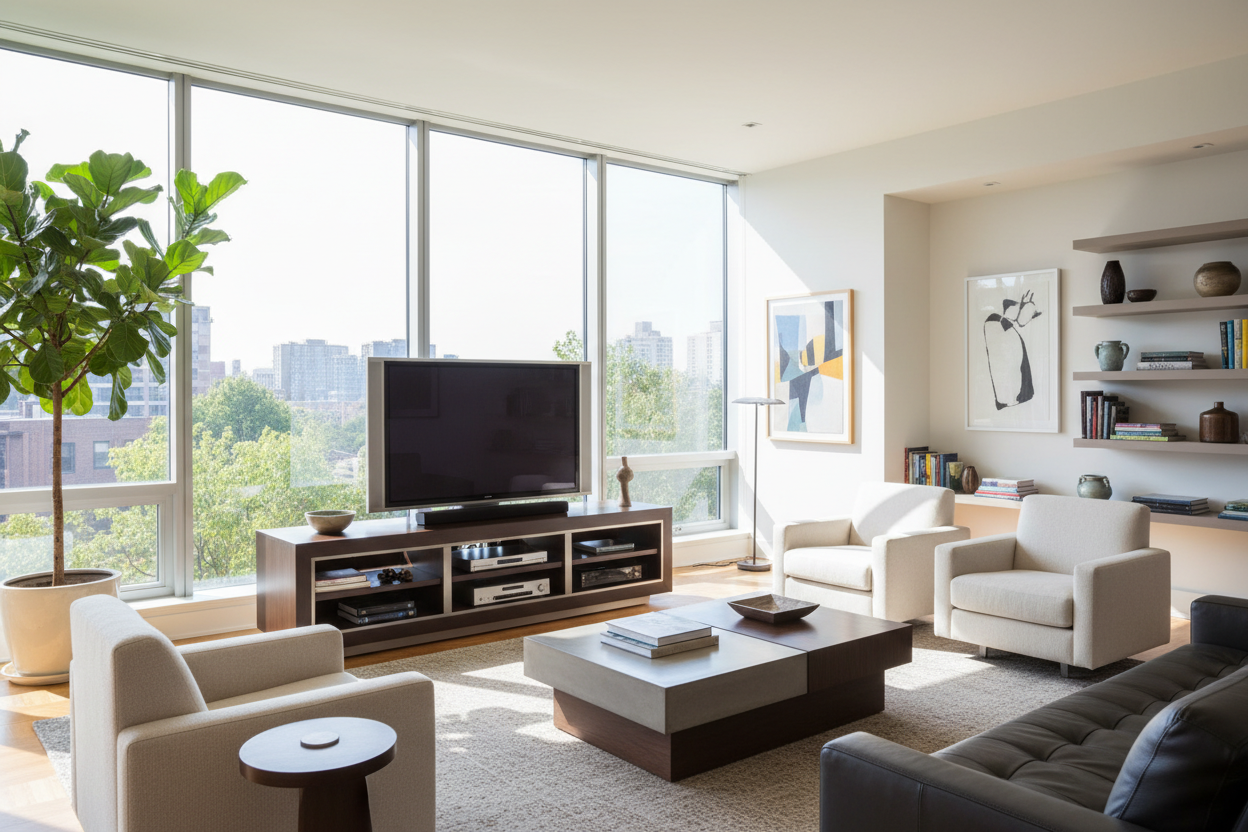
I remember unboxing my first 75-inch TV and feeling like a king until I realized my $150 flat-pack console was literally groaning under the pressure. Two weeks later, the middle of the unit was bowing so hard it looked like a smiley face. That was my wake-up call: the modern furniture market has a massive weight problem, and the solution is often hunting down a plasma tv stand.
- Most modern consoles are rated for 50-70 lbs, while 85-inch TVs can easily exceed 100 lbs.
- Center-support legs are non-negotiable for any screen over 65 inches.
- Ventilation is critical for gaming consoles and receivers tucked inside.
- Steel or solid wood frames beat MDF every single time for long-term stability.
The 'Console Sag' Epidemic (And Why It Happens)
We’ve all seen it. You walk into a friend's house and their massive screen is sitting on a piece of furniture that looks like it’s doing a slow-motion Olympic dive. This 'console sag' happens because most 'fits up to 80 inches' marketing is based on width, not weight. If you’re using a flimsy unit for a plasma tv and stand setup, you’re playing a dangerous game with your expensive electronics.
Cheap particle board and thin MDF simply aren't structural materials. When you place a heavy-duty screen on a long span of unsupported wood, gravity wins. I've seen $2,000 home theater setups ruined because the owner didn't want a 'bulky' base. Trust me, a pile of shattered glass and warped wood looks way worse than a sturdy console.
Why a True Plasma TV Stand is Built Different
Back when plasma TVs were the undisputed kings of the living room, they were heavy. I mean 'call your cousin and his truck' heavy. Because of that, a dedicated stand for plasma tv setups had to be engineered like a tank. These pieces were built with thicker gauge steel or solid kiln-dried hardwood frames that didn't flinch at a 120-pound load.
Searching for heavy-duty TV stands often leads you back to these industrial-grade designs. They typically feature a fifth or sixth leg right in the center to prevent that mid-point collapse. When you're choosing the perfect TV stand, you want that over-engineered peace of mind. Older-style plasma stands also prioritize ventilation, which is a godsend for modern 4K gaming consoles that run hot enough to cook an egg.
What to Look For If You Have a Massive Screen
If you're rocking an 85-inch beast, you need to ignore the pretty pictures and start reading the spec sheets. Look for internal steel reinforcement or a solid wood spine. If the back panel is just a piece of cardboard held on by tiny nails, it’s not going to provide the lateral stability you need.
Check the Weight Capacity (Not Just Screen Size)
The 'fits up to 80 inches' label is often a marketing lie. It just means the TV won't hang over the edges; it says nothing about whether the top will cave in. I’ve seen plasma tv stands rated for 200 lbs, which is what you should aim for. I’d rather have a modern TV stand with cabinets that explicitly lists a high weight capacity than a trendy 'minimalist' shelf that wobbles when you walk past it. A proper plasma tv center should feel like a permanent fixture, not a temporary solution.
Wait, Do I Need a Dedicated Plasma TV Shelf?
Your TV isn't the only heavy hitter. Between a beefy soundbar, a 4K receiver, and a couple of gaming consoles, your plasma tv shelf is carrying a small library's worth of weight. Cheap shelves will warp under the heat and weight of a high-end receiver. I always recommend a stand with an adjustable center shelf made of reinforced materials. This allows you to customize the airflow and ensure your expensive audio gear doesn't bake itself to death.
How to Make a Bulky Stand Look Intentional
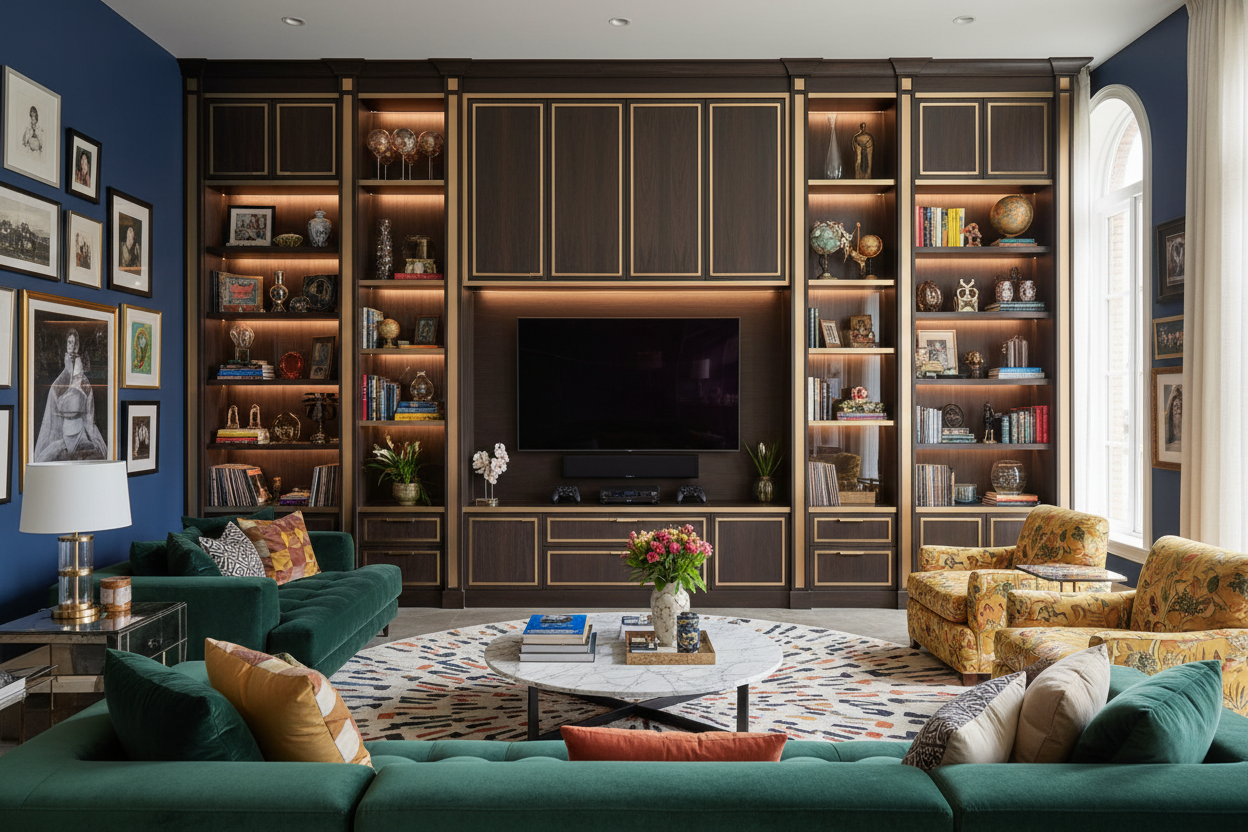
I get it—nobody wants their living room to look like a 2005 electronics showroom. But you can hide that bulk with a bit of design trickery. Instead of letting a heavy plasma tv and stand float alone on a wall, anchor it. Try styling a bookcase and TV stand together by flanking the console with tall, matching shelving units. This creates a 'built-in' look that makes the heavy-duty console feel like custom millwork rather than a bulky necessity.
I once tried to use a vintage teak sideboard as a TV base. It was gorgeous, but it had no center support. Within a month, the middle drawer wouldn't open because the frame had sagged 3/4 of an inch. I ended up having to screw a 4x4 block of wood under the center just to save it. Learn from my mistake: buy the heavy-duty option first.
FAQ
Can I use a regular dresser as a TV stand?
Only if it's solid wood and you've checked the weight limit. Most modern dressers use thin tops that will bow immediately under a large screen.
Why does my TV stand have a hole in the back?
That's for cable management and, more importantly, heat dissipation. Don't block those holes if you're running a gaming console or a receiver.
How wide should my stand be compared to the TV?
Ideally, the stand should be at least 3-6 inches wider than the TV on both sides. This isn't just for looks; it prevents the TV from being easily bumped or knocked over.


Dejar un comentario
Este sitio está protegido por hCaptcha y se aplican la Política de privacidad de hCaptcha y los Términos del servicio.