










I once spent three hours assembling a flat-pack media console only to realize my 65-inch TV looked like a giant, wobbling lollipop on top of it. It was a classic rookie mistake. I’d measured the TV diagonally, bought a stand that matched that number, and completely ignored the visual weight. My living room felt nervous, like the whole setup might tip over if someone sneezed too hard.
Finding the right entertainment set for living room layouts isn't just about finding a piece of furniture that fits your screen. It’s about balance, math, and acknowledging that your TV is probably the biggest, blackest object in the room. If you don't anchor it correctly, it’ll dominate the space for all the wrong reasons.
- The Golden Ratio: Your console should be at least 25% wider than your TV screen.
- Eye Level: The middle of the screen should sit at 42 inches from the floor for standard sofas.
- Depth Matters: Budget at least 18 inches of depth for receivers and cable management.
- Verticality: Use tall shelving to balance high ceilings in narrow rooms.
The 'Top-Heavy' Mistake Ruining Your Space
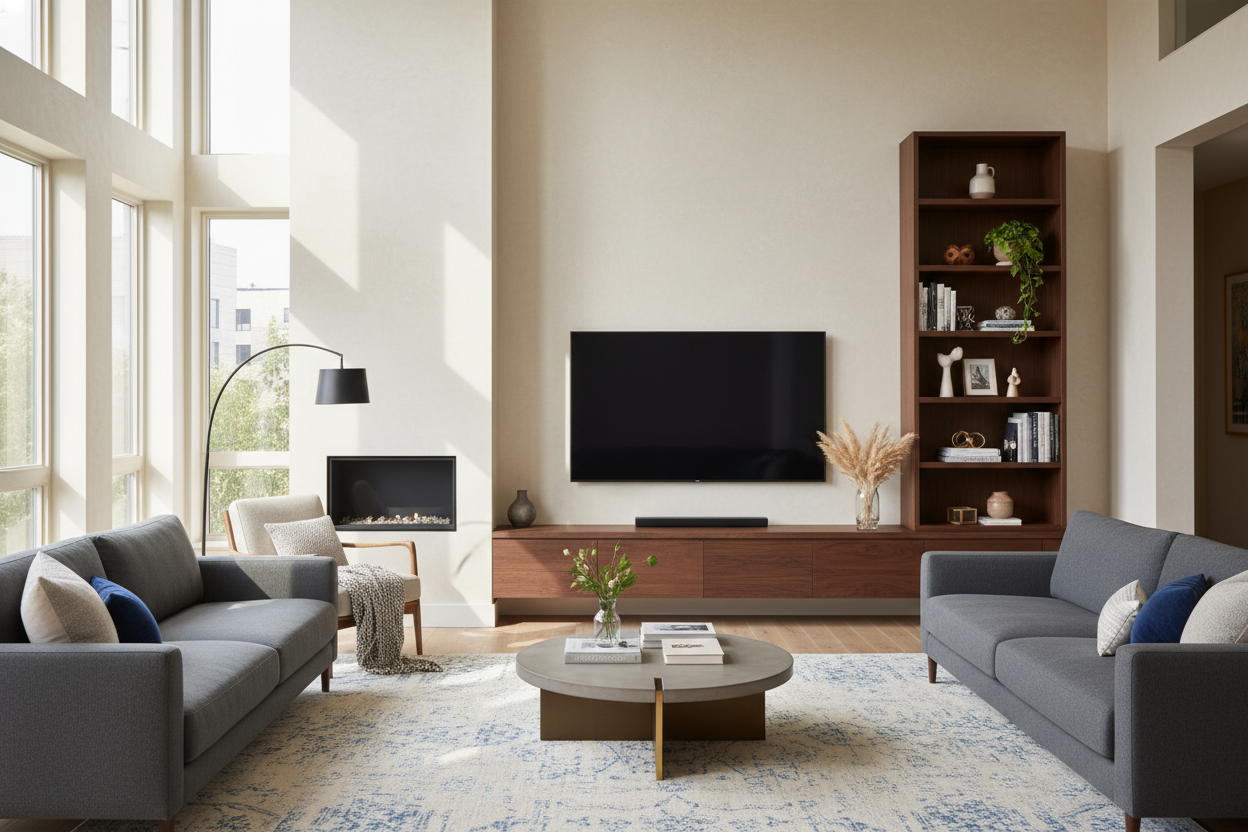
The most common error I see is the '1:1 ratio'—buying a console that is the exact same width as the television. Visually, this is a disaster. It creates a top-heavy silhouette that makes your expensive tech look like a temporary fixture. A proper living room entertainment set should act as a literal and visual anchor. You want the furniture to extend past the edges of the screen to create a sense of stability.
When the furniture is too narrow, the TV feels like it's hovering. It makes the wall look unfinished. If you have the space, I always advocate for going bigger than you think you need. A full-wall entertainment center is often the best solution for large rooms because it turns the TV into a component of the architecture rather than just a screen slapped on a wall. It fills the 'white box' void and gives your eyes somewhere to rest besides the glowing rectangle.
Think about the materials, too. A flimsy plywood unit with a 1.2-inch top will eventually bow under the weight of a modern OLED or a heavy soundbar. I look for kiln-dried hardwoods or reinforced steel frames. If you can see the shelf sagging even a millimeter, return it. It’s not just an aesthetic issue; it’s a safety hazard for your tech.
The Golden Ratio: TV Width vs. Console Width
Let’s talk math, because your eyes will lie to you in a showroom. A '65-inch TV' is a diagonal measurement. The actual physical width is usually around 57 inches. If you put that on a 60-inch console, you only have 1.5 inches of clearance on either side. That is a recipe for a cramped, cluttered look. My golden rule? Your entertainment center set needs to be at least 25% wider than the actual width of the TV.
For that 57-inch wide TV, you should be looking at a console that is at least 71 or 72 inches wide. This extra 'runway' on the ends does two things. First, it allows you to place a lamp, a small plant, or a couple of books to soften the transition from the screen to the wall. Second, it balances the 'black hole' effect of the screen. If you’re working with a massive blank wall, don’t be afraid to go even wider. I’ve styled 85-inch TVs on 100-inch consoles, and the result feels intentional and high-end.
If you choose a smaller unit, you're forcing the TV to be the star. By choosing a larger set, you’re making the furniture the star, and the TV is just a guest. It’s a subtle psychological shift that makes a home feel like it was designed by a pro rather than assembled from a catalog on a whim. Always measure the physical width of the TV frame, not the screen size marketed on the box.
What About Height? Eye Level is Everything
Ergonomics are the least sexy part of furniture shopping, but they’re the most important for your neck health. The biggest mistake people make is mounting their TV too high—the 'TV over the fireplace' syndrome. Unless you’re sitting in a bar, you shouldn't be looking up. For most standard sofas with a 17-to-20-inch seat height, the center of your screen should be roughly 42 inches from the floor.
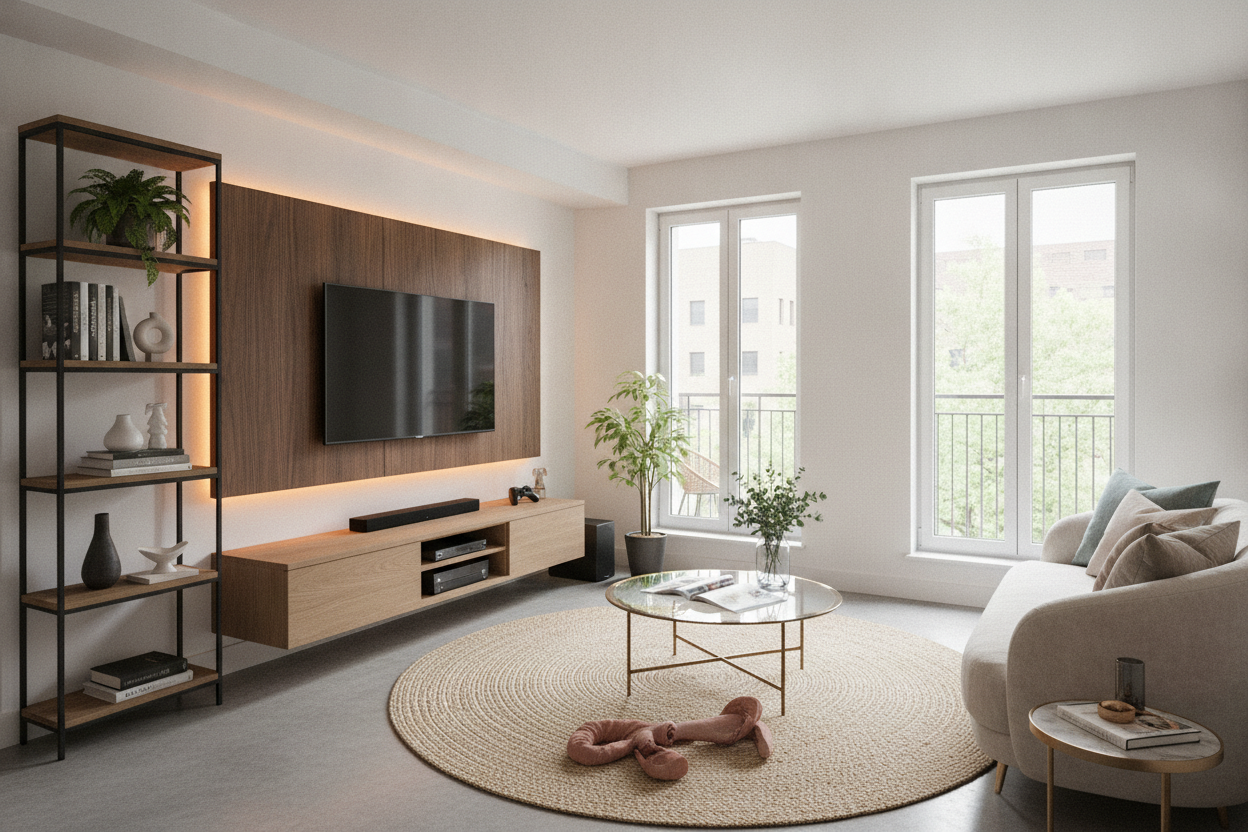
This is why a low-profile tv entertainment set is so popular right now. Modern, deep, sink-in sofas put your eye level much lower than a traditional formal wingback chair. If you have a 'cloud' style sofa, you might want a console that sits only 18 to 22 inches off the ground. Conversely, if you have a more upright, traditional seating arrangement, you can go slightly taller. An adjustable TV stand for living room use is a smart move if you’re prone to swapping out furniture or moving homes frequently, as it lets you dial in that perfect height regardless of your sofa’s plushness.
I’ve tested units that were 30 inches high, and within a week of watching movies, I had a dull ache in my neck. Don't sacrifice your vertebrae for a look. Sit on your sofa, have someone hold a piece of tape on the wall where your eyes naturally land, and that’s your target. Buy the furniture that supports that height.
Don't Forget Depth (And Breathing Room for Cords)
We live in a wireless world, except for the 14 wires currently tangled behind your TV. A functional entertainment set up must account for the physical depth of your gear. A PlayStation 5, for instance, is nearly 16 inches deep when you factor in the cables sticking out the back. If you buy a sleek, 14-inch deep mid-century console, that console is going to sit two inches off the wall, or your PS5 is going to hang off the front.
I always look for units with at least 18 inches of internal depth. This gives your receiver room to breathe. Heat is the silent killer of electronics; if your cabinet doesn't have ventilation or enough clearance, your gear will cook. I’m a big fan of a black TV stand entertainment center for this reason—the dark finish camouflages the shadows of the cable holes and hides the inevitable dust that settles around electronics. Plus, black units tend to make the screen blend in when it's turned off.
Check for 'cord management' features. If the unit doesn't have pre-drilled holes or a recessed back for a power strip, skip it. You don't want to be the person drilling jagged holes into a brand-new piece of furniture on a Saturday afternoon because you realized your HDMI cables have nowhere to go.
When to Go Vertical Instead of Horizontal
If you live in a loft or an older home with 10-foot ceilings but a narrow floor plan, a long, horizontal console can make the room feel squashed. This is when you ditch the low-slung look and go vertical. An entertainment center with display shelves uses that dead air space above the TV to draw the eye upward. It balances the proportions of the room by mirroring the height of the walls.
Vertical sets are also great for people who hate the look of a 'tech-heavy' room. By surrounding the TV with books, ceramics, and personal items, you're integrating the screen into a larger gallery. It becomes part of a collection rather than a shrine to Netflix. When you browse entertainment center options, look for modular pieces. I love sets where you can add or remove towers on the sides. It gives you the flexibility to grow your setup if you move to a bigger place later.
Personally, I used to be a minimalist, but I’ve converted to the vertical camp. My current setup has open shelving on the left and a closed cabinet on the right. It hides my router and messy chargers while letting me show off my vintage camera collection. It makes the living room feel like a library that happens to have a TV, rather than a home theater that happens to have a chair.
Personal Experience: The Particle Board Disaster
A few years ago, I bought a very cheap, very pretty 'scandi-style' entertainment set. It was made of 1.5-lb density fiberboard. Within six months, the weight of my center-channel speaker caused the top shelf to smile—and not in a good way. The middle sagged nearly half an inch. I had to reinforce it with a 2x4 I painted black, which totally defeated the purpose of buying 'nice' furniture. Now, I only buy units with a center support leg or those made from solid timber. Learn from my cheapness: if the span is more than 50 inches without a support leg, it will sag.
FAQ
Should my entertainment set match my coffee table?
They don't need to be twins, but they should be siblings. If you have a walnut entertainment set, a black metal or glass coffee table works great. Avoid mixing two different wood grains that are too similar but not identical—it looks like an accident.
Can I put a TV on a dresser?
You can, but dressers are usually 30-36 inches tall. Unless you’re watching TV from a high-top bar stool or a very tall bed, your neck will hate you. Dressers also lack the depth and cord holes needed for media gear.
How do I hide the wires if the back is open?
Use adhesive cable clips to run the wires down the back of the furniture legs. Or, buy a decorative box to sit on the bottom shelf and tuck the power strip inside it. Never just let them hang; it ruins the look of even the most expensive set.

Dejar un comentario
Este sitio está protegido por hCaptcha y se aplican la Política de privacidad de hCaptcha y los Términos del servicio.