










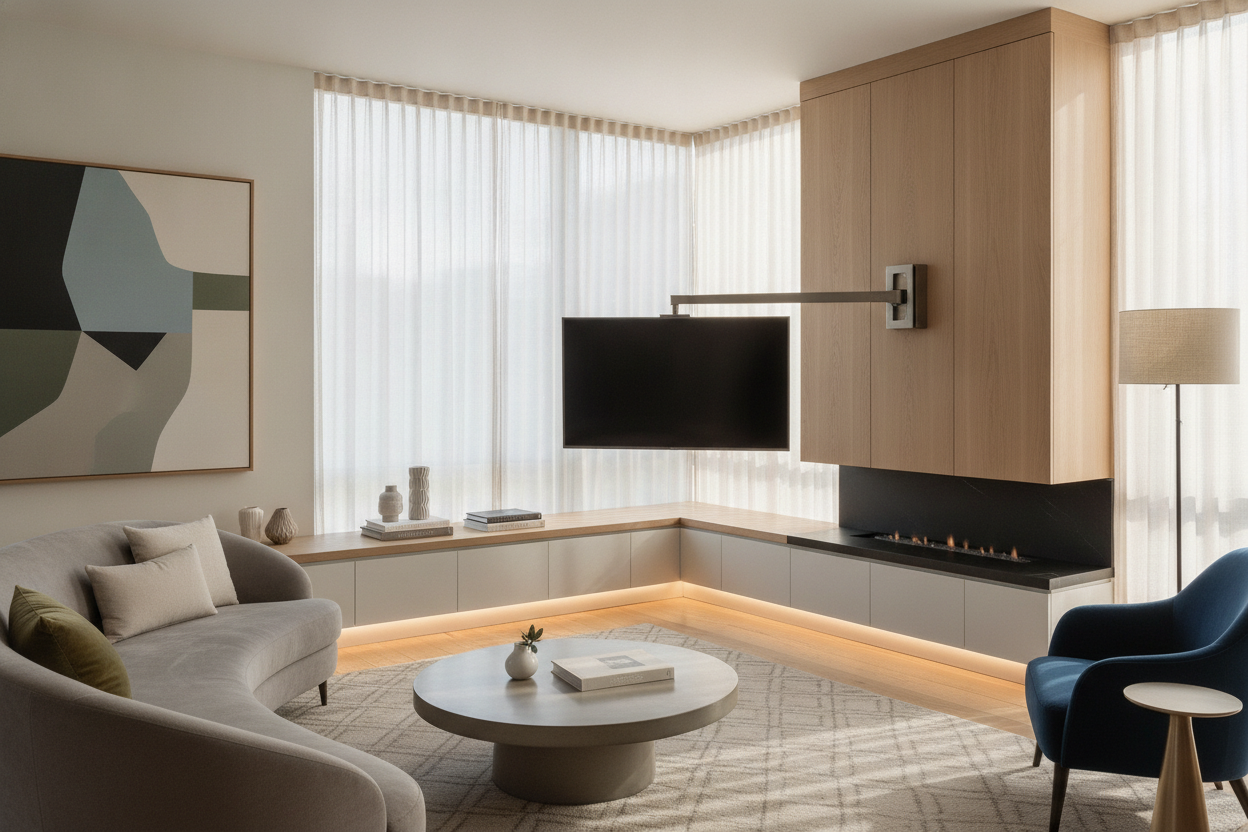
I spent three hours yesterday trying to fit a 55-inch screen into a room that was clearly designed by someone who hates Netflix. Every wall was either a floor-to-ceiling window or a giant stone fireplace. If you are currently measuring your living room for the tenth time, you have probably realized that tv corner solutions are often the only way out of a layout nightmare.
We have all been there: staring at a floor plan that looks great on paper but leaves zero room for the one thing we actually use every night. It is frustrating, but shoving a screen into a corner does not have to be a design death sentence. You just need to stop thinking like a builder and start thinking like a stylist.
- Avoid the 'triangle' cabinets—standard rectangles usually look better.
- Use tapered legs to keep the floor visible and the corner 'airy.'
- A tall plant behind the TV hides the inevitable cord nest.
- Scale matters: the stand should always be wider than the screen.
Why the Corner TV Still Gives Us 90s Flashbacks
For a lot of us, the phrase 'corner TV' conjures up memories of a 200-pound CRT television perched precariously on a chunky, honey-oak cabinet. Those units were massive, dust-gathering triangles that ate up four square feet of floor space and offered zero style. They were functional, sure, but they felt like an afterthought—a way to hide a bulky piece of tech that didn't fit anywhere else.
That lingering trauma is why we resist corner tv options today. We are afraid our living room will suddenly look like a budget motel or our parents' basement from 1994. The good news is that screens are now thin enough to disappear, and furniture has finally caught up. We are no longer stuck with particle-board monsters that dominate the room's geometry.
The 'Fireplace Dilemma' Forcing Our Hands
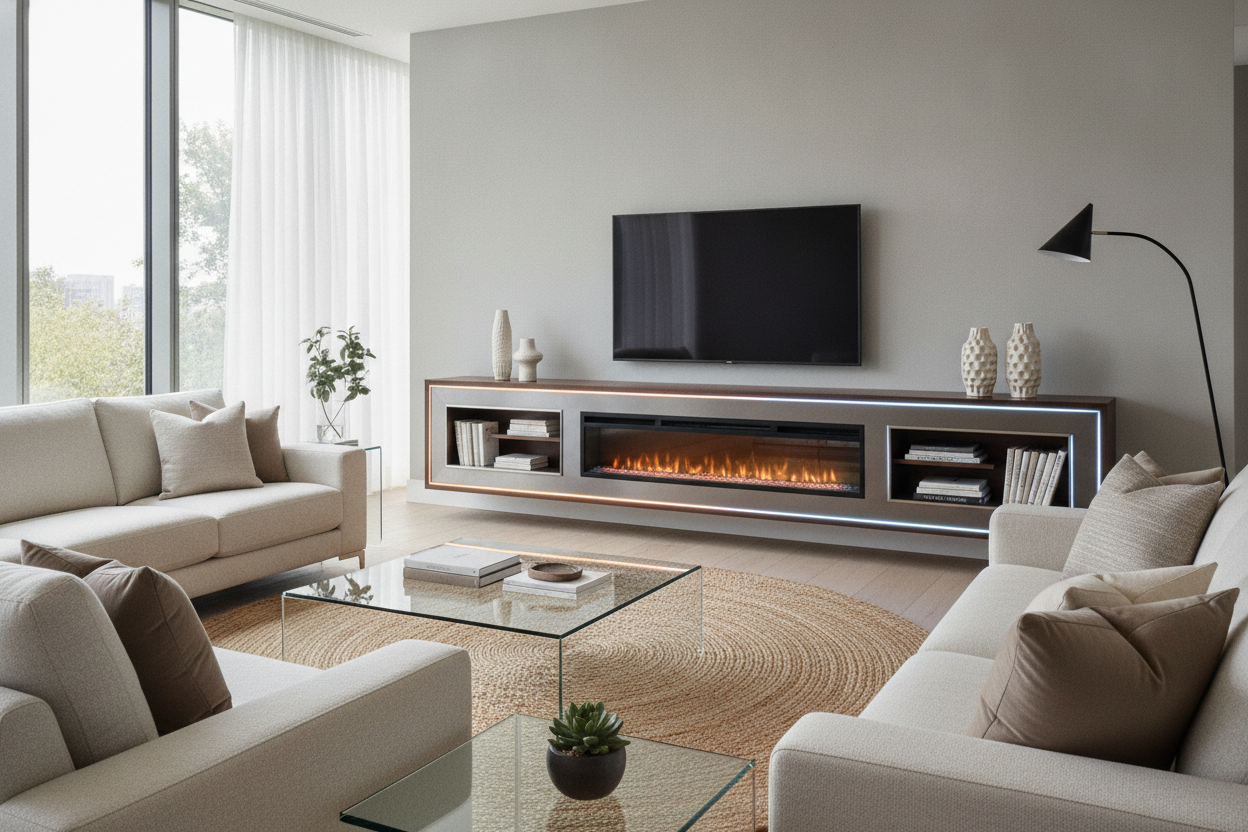
Modern architecture loves a focal point, and 90% of the time, that focal point is a fireplace. While a hearth is great for cozy vibes, it is a nightmare for media placement. Mounting a TV over the mantle is often too high for comfortable viewing—unless you enjoy a weekly trip to the chiropractor—and it can ruin the aesthetic of a beautiful stone or brick feature.
When you add large windows into the mix, you are left with exactly one usable corner. It feels like a compromise, but it is actually an opportunity to create a secondary 'zone' in the room. By pulling the TV away from the main architectural feature, you allow the fireplace to be the star of the show while the screen handles the heavy lifting of entertainment without being an eyesore.
Actually Good TV Corner Solutions to Try Right Now
The secret to a modern corner setup is avoiding anything that looks like it was designed specifically for a corner. The most successful layouts I have styled use standard, linear furniture that is simply angled. This prevents the 'wedged' look and makes the placement feel like a deliberate choice rather than a desperate necessity.
The Mid-Century Tapered Leg Trick
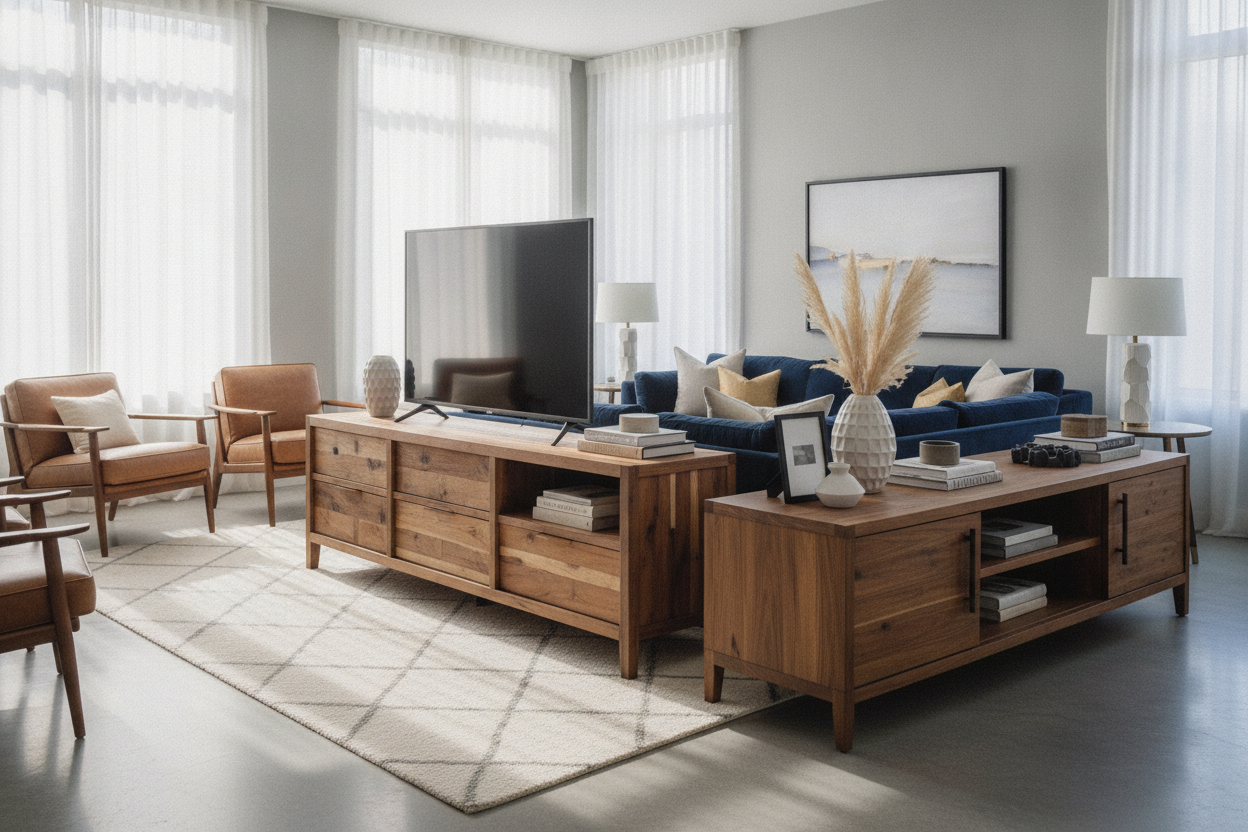
If you want to keep your room feeling open, look for pieces with 'breathing room' underneath. A mid century corner TV stand works so well because those iconic tapered legs lift the bulk off the floor. When you can see the baseboards and the floor continuing into the corner, the room feels larger. It breaks up the heavy, boxy feeling that usually plagues angled furniture.
Leaning Into the Vintage Aesthetic
Sometimes the best way to handle a cold, black rectangle of tech is to pair it with something that has some soul. Using an antique corner TV stand or a repurposed vintage chest creates a beautiful contrast. The carved details and aged wood textures soften the harsh lines of the screen. It turns a 'tech corner' into a curated nook that feels like it has been there for decades.
Are Dedicated Corner TV Options Totally Dead?
Honestly? Mostly. I almost never recommend buying a cabinet that is shaped like a slice of pie. They are hard to repurpose if you ever move, and they rarely offer the kind of storage you actually need. Instead, I suggest looking at modern TV stands that are rectangular but relatively shallow. A sleek, 15-inch deep unit can be angled into a corner without sticking out too far into the room.
In fact, using a slightly longer piece, like a 66-inch storage credenza, can actually ground the corner better than a small unit. The extra length allows you to place a lamp or a stack of books on one side of the screen, which balances the visual weight. It makes the TV look like part of a larger vignette rather than a lonely screen floating in space.
3 Rules for Making the Angle Look Intentional
First, address the 'dead triangle' behind the TV. This is where dust bunnies and cables go to die. Place a tall, leafy plant like a Fiddle Leaf Fig or a large Monstera in that gap. It hides the wires and adds a vertical element that makes the corner feel finished.
Second, rethink your rug placement. Do not try to align the rug with the angled TV; align it with the walls or the sofa. Letting the TV stand sit partially on or off the rug at an angle creates a layered, lived-in look. It signals that the room's 'bones' are straight, even if the furniture is doing its own thing.
Third, use asymmetrical art. Don't center a single picture frame above an angled TV. Instead, hang a small gallery wall on the adjacent flat wall. This draws the eye away from the corner and integrates the TV into the rest of the room's decor.
My Personal Corner Fail
In my first apartment, I bought a glass-and-metal corner stand because it was 'minimalist.' It was a disaster. Not only did every single cable show through the glass, but the sharp angles made the corner feel like a cage. I eventually swapped it for a solid wood cabinet with doors, and the room instantly felt calmer. Lesson learned: hide your clutter, especially in a corner where it tends to pile up.
FAQ
Does a corner TV save space?
Usually, yes. It utilizes a part of the room that is often dead space, especially in layouts with lots of doors or windows. However, it can make the room feel 'pointy' if the furniture is too bulky.
What size TV is too big for a corner?
It is less about the TV size and more about the stand. Your stand should be at least 4-6 inches wider than the TV. If a 65-inch screen is overhanging the edges of a stand in a corner, it looks unstable and cheap.
How do I hide wires in a corner?
Cable management boxes are your best friend, but a large basket or a tall floor plant is the 'stylist' way to do it. Just make sure the plant is in a sturdy pot so you don't leak water onto your electronics.

Dejar un comentario
Este sitio está protegido por hCaptcha y se aplican la Política de privacidad de hCaptcha y los Términos del servicio.