










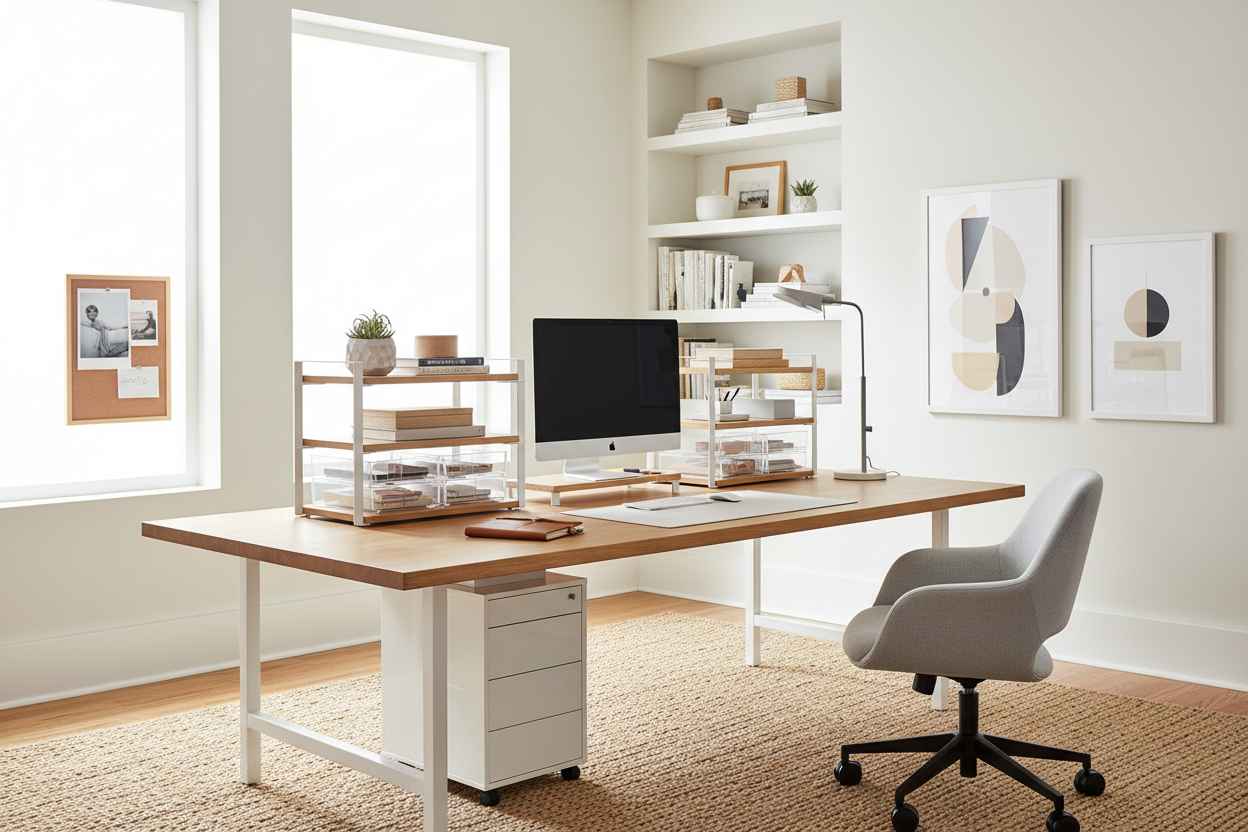
We have all faced the specific frustration of a desktop that shrinks as the workday progresses. Papers pile up, monitors take dominance, and suddenly, there is nowhere to set a cup of coffee. The solution is rarely a larger desk; it is better vertical integration. As a designer, I frequently turn to modular systems to solve this, and the container store desk shelf is often a central component in my space-planning strategies.
Quick Decision Guide: Key Features to Look For
- System Compatibility: Determine if you need a freestanding riser or a wall-mounted component (like Elfa) that integrates with track standards.
- Material Finish: Choose between epoxy-bonded steel for durability or wood veneers (like Birch or Walnut) for a warmer, executive aesthetic.
- Weight Capacity: Verify the linear load capability; monitors require reinforced shelving, whereas decor shelves can be lighter.
- Depth Ratios: Ensure the shelf depth (typically 8" to 12") does not overshadow your active workspace, creating a claustrophobic effect.
Analyzing Material Quality and Aesthetics
When selecting container store desk shelves, you are generally choosing between utilitarian metal grids and solid surface options. In high-traffic home offices, I advise clients to look closely at the finish quality. The epoxy coating on their wire systems is excellent for resisting chips, but it lacks the visual weight required for a luxury aesthetic.
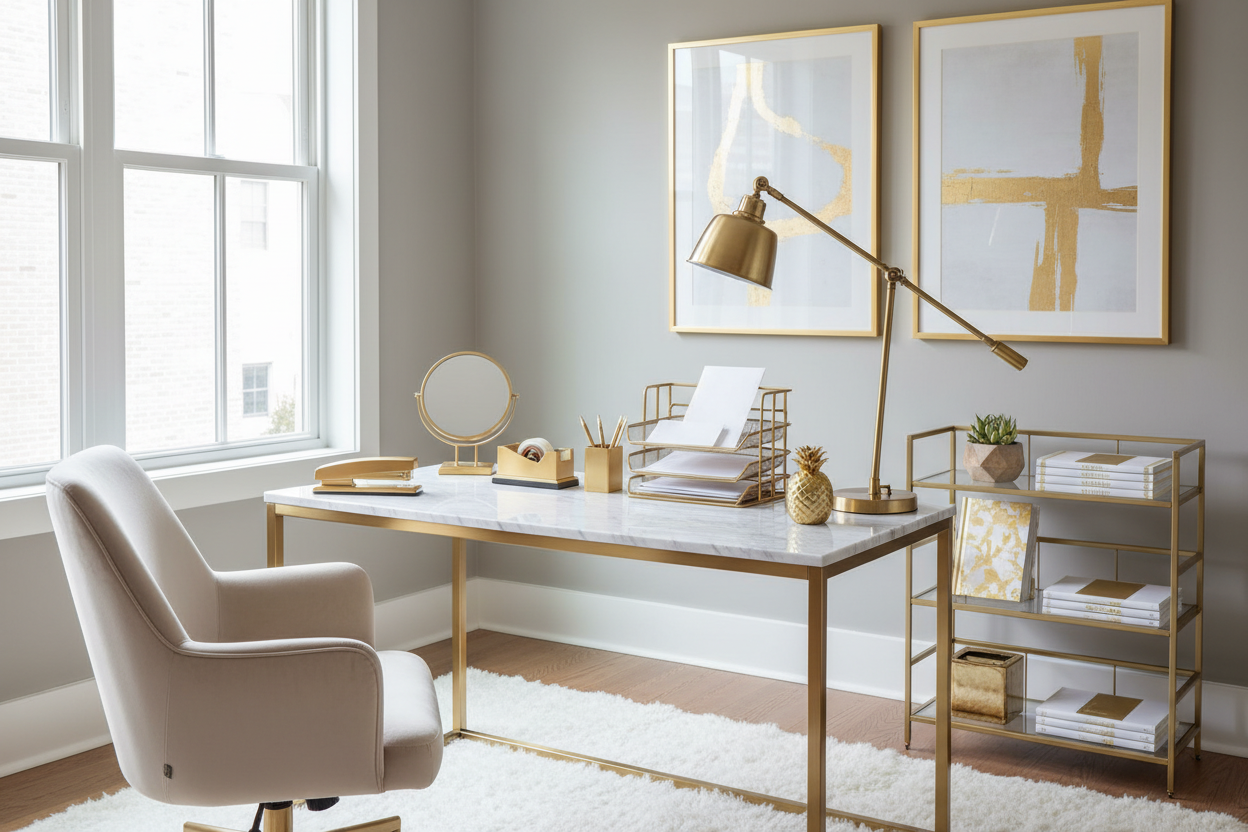
For a more sophisticated silhouette, opt for the "Décor" line or solid melamine options. These provide a continuous surface that mimics the look of custom joinery without the bespoke price tag. The goal is to match the shelf texture to your existing desk surface to create a cohesive, built-in appearance rather than looking like an afterthought.
Ergonomics and Vertical Spacing
The placement of your shelf dictates the ergonomics of your entire setup. A common error I see is mounting the first shelf too low, which interferes with monitor height and creates a dark shadow over the work surface.
The Rule of Clearance
Ideally, the bottom of your lowest shelf should sit at least 20 to 24 inches above the desk surface. This allows for ample negative space, preventing the area from feeling cramped. If you are using a freestanding desk riser, ensure it elevates your monitor to eye level to maintain proper neck alignment, rather than just serving as a storage niche.
Styling for Visual Balance
Functionality is paramount, but visual balance keeps the room feeling calm. When styling your shelves, avoid packing them edge-to-edge. Use the rule of thirds: fill one-third with books (vertical storage), one-third with bins or boxes (concealed storage), and leave the final third open or dedicated to a sculptural object. This "breathing room" is what separates a cluttered storage rack from a designed workspace.
My Personal Take on container store desk shelf Systems
I want to share a specific detail from a project I worked on in a converted loft, where we utilized the Elfa system extensively. While the modularity is brilliant, there is a distinct "wobble" factor with the freestanding desk units if they aren't loaded evenly.
More importantly, if you choose the ventilated wire shelves, you must buy the translucent plastic liners. I learned this the hard way when a client complained that their expensive leather-bound notebooks were getting indented by the wire grid over time. Furthermore, without the liners, small items like USB drives or pens slip right through the gaps. It is a small add-on cost that drastically changes the tactile experience and functionality of the shelf from "garage storage" to "interior furniture."
Conclusion
Integrating a shelf system is about reclaiming your mental space as much as your physical space. By selecting the right materials and respecting the vertical balance of the room, a simple shelf becomes an architectural asset. Assess your needs, measure your clearance, and elevate your workflow.
Frequently Asked Questions
How much weight can these shelves actually hold?
This varies by product line. Wall-mounted standards properly installed into studs can hold heavy loads (often 50+ lbs per linear foot), making them safe for books and equipment. Freestanding risers usually have a lower limit, typically around 20-30 lbs, designed mostly for monitors and light stationery.
Can I cut the shelves to fit a specific alcove?
Yes, specifically with the Elfa wire shelving, The Container Store offers custom cutting services. However, solid wood or veneer shelves often have finished edges that, if cut, will expose the raw particleboard core, so I recommend sticking to standard widths for solid surfaces unless you plan to band the edges yourself.
Do I need to drill into the wall for stability?
For freestanding risers, no. However, for any vertical shelving system that exceeds 30 inches in height, I always mandate wall-anchoring to my clients. Even if the system is "freestanding," anchoring prevents tipping and gives the unit a solid, vibration-free feel when you are typing or writing on the attached desk.


Dejar un comentario
Este sitio está protegido por hCaptcha y se aplican la Política de privacidad de hCaptcha y los Términos del servicio.