










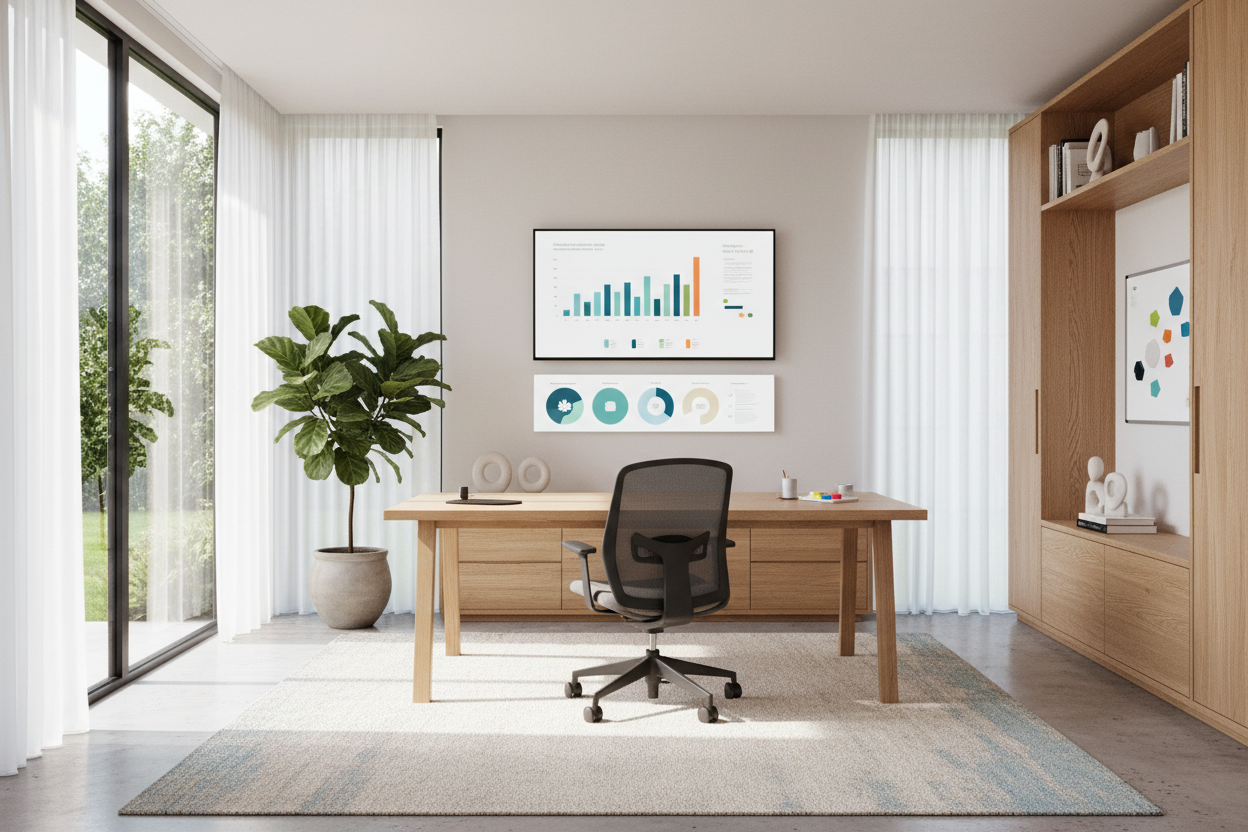
We often attribute a lack of focus or lingering back pain to poor discipline, yet a comprehensive wfh survey usually points to a different culprit: the environment itself. As an interior designer, I analyze these statistics not just as numbers, but as a roadmap for spatial planning. The data is clear—improvising a workspace at the dining table is no longer sustainable. To create a home office that actually functions, we must translate these survey findings into tangible design elements, from the tactile quality of your desk surface to the acoustic properties of your room.
Quick Decision Guide: Translating Data to Design
Before investing in new furniture, consider these core pillars derived from recent working from home survey results regarding employee satisfaction and productivity:
- Ergonomic Integrity: Prioritize seating with lumbar support and adjustable tension over purely aesthetic accent chairs.
- Acoustic Control: Survey on work from home challenges often highlights noise; mitigate this with plush rugs and upholstered furnishings.
- Lighting Layers: Combat eye strain by layering ambient overhead light with focused task lighting (2700K-3000K temperature).
- Spatial Zoning: Define clear boundaries between 'living' and 'working' zones to maintain mental separation.
The Ergonomic Reality: Function Over Form
The most consistent finding in any work from home effectiveness survey is the direct correlation between physical comfort and output. When selecting a desk, the debate between solid wood and veneer isn't just about price—it is about longevity and tactile experience. Solid wood offers a warmer, more grounding feel and can be refinished over decades, whereas high-quality veneer offers stability against humidity changes.
However, the chair is the anchor of the room. Design-wise, look for a silhouette that complements your home’s aesthetic but does not sacrifice mechanism. A high-end task chair should offer seat depth adjustment and synchro-tilt, ensuring your posture remains dynamic rather than static throughout the day.
Zoning for Sanity: The Work-Life Balance Equation
A recurring theme in every work from home work life balance survey is the inability to "switch off." In interior design, we solve this through visual weight and zoning. If you do not have a dedicated room, position your desk so you are not facing the rest of your living space while working. This creates a psychological "blinders" effect.
Furthermore, consider the storage cabinetry. Open shelving can look cluttered and induce stress. Opt for closed cabinetry with natural textures—like cane or fluted wood—to hide technology and paperwork at the end of the day. This simple act of concealing work materials signals to the brain that the workday has concluded.
Aesthetics vs. The Corporate Look
When reviewing a work from home or office survey, employees frequently mention missing the amenities of the office but loathing the sterile atmosphere. Your home workspace should not look like a cubicle. Introduce "resimercial" design elements—furniture that is durable enough for commercial use but carries a residential aesthetic.
Incorporate organic shapes to break up the rigid lines of monitors and keyboards. A kidney-shaped desk or a round rug can soften the room's geometry. Pay attention to material warmth; a walnut or white oak finish absorbs light and feels inviting, whereas glass or high-gloss lacquer can create harsh reflections and feel cold to the touch.
Lessons from My Own Projects: The Acoustic Oversight
My Personal Take on wfh survey insights
I recently worked with a client who had purchased a stunning, minimal glass desk and a leather chair based on a Pinterest board. Despite the high cost, they hated working there. They couldn't articulate why until I visited. The issue wasn't the look; it was the sound. The room was an echo chamber of hard surfaces.
What the surveys often label as "distraction" is frequently just poor acoustics. In that project, I didn't change the desk. Instead, I installed heavy linen drapery and a thick wool rug. I also added a fabric pinboard behind the monitor. The difference was immediate. The room felt "quiet" even when silent, creating a sense of intimacy and focus. It’s a detail I notice constantly now—homeowners buy for the eye, but they forget that a workspace needs to be designed for the ear as well.
Conclusion
Analyzing wfh survey results provides us with the evidence we need to justify investing in better interiors. It is not merely about buying a desk; it is about curating an environment that supports your physical health and mental boundaries. By prioritizing ergonomics, acoustics, and warm materials, you elevate your workspace from a temporary fix to a permanent asset.
Frequently Asked Questions
How do I apply survey findings to a small apartment?
Focus on verticality and multi-functional pieces. A wall-mounted secretary desk allows you to close up shop physically, addressing the work-life balance issues highlighted in surveys, without consuming floor space.
Is a standing desk actually worth the investment?
According to most effectiveness surveys, yes. However, from a design perspective, ensure you manage the cables. A standing desk with messy wiring ruins the visual calm of a room. Look for models with integrated cable management trays.
What is the best color for productivity?
While blue is often cited for focus, I recommend low-saturation greens (sage or olive). They are biophilic, reducing stress and eye fatigue, bridging the gap between the outdoors and your interior architecture.

Dejar un comentario
Este sitio está protegido por hCaptcha y se aplican la Política de privacidad de hCaptcha y los Términos del servicio.