










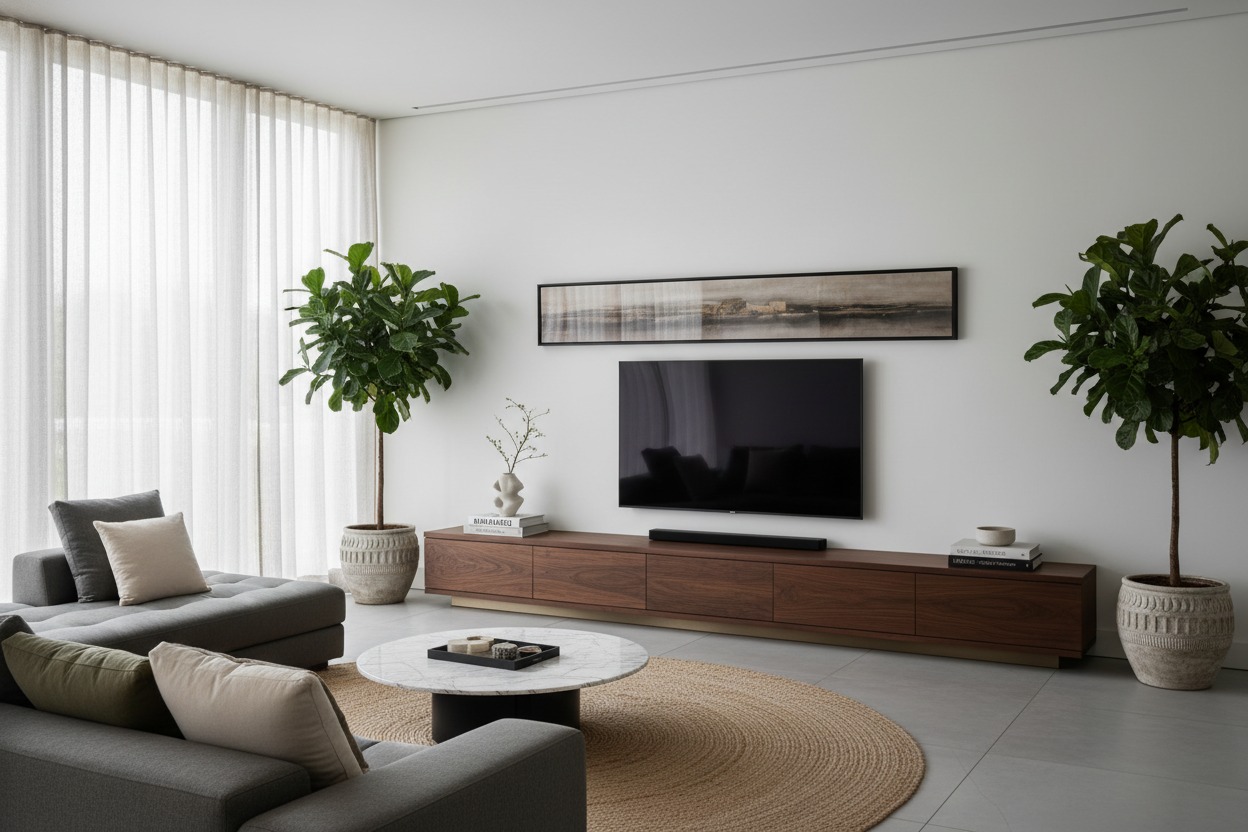
I spent three hours last night scrolling through interior design portfolios, and I noticed a pattern. The rooms that looked like they belonged in a five-million-dollar Tribeca loft all had one thing in common: the furniture was practically hugging the floor. Most of us make the mistake of buying furniture that is too tall, too deep, and too 'present.' When I finally ditched my chunky, waist-high dresser for a proper entertainment unit low to the ground, my entire living room breathed a sigh of relief.
- Low units create more 'negative space' on your walls, making ceilings feel significantly higher.
- A long profile grounds the room and prevents the TV from looking like a black hole floating in space.
- Ergonomically, a lower screen prevents neck strain during those five-hour Sunday sessions.
- Sleek, horizontal lines mimic custom built-ins without the five-figure price tag.
The Bulky Furniture Mistake We're All Making
Most big-box retailers sell media centers that are around 24 to 30 inches high. That is fine if you're living in a house with 12-foot ceilings, but for the rest of us with standard 8-foot heights, it's a spatial disaster. A tall unit eats up the middle third of your wall, which is exactly where your eyes want to travel. It makes the room feel crowded and the ceiling feel oppressively low.
Switching to a long low entertainment center is the easiest spatial cure I know. By dropping the height of your furniture, you're essentially reclaiming two feet of vertical space. It’s the difference between a room that feels like a storage unit and one that feels like a curated lounge. I've seen people try to fix a 'small' room by buying smaller furniture, but that just makes it look cluttered. You don't need less furniture; you need lower furniture.
The Optical Illusion of a Low TV Cabinet
It’s all about the visual math of the wall. When you use a low tv cabinet, you’re creating a massive stretch of empty space between the top of your tech and the ceiling. This trick of the eye makes the room feel airier and more expensive because 'empty space' is a luxury in modern floor plans. It’s why high-end galleries never crowd their walls.
I’ve written before about how a long low cabinet fixed my layout when I was dealing with a narrow living room that felt like a hallway. The horizontal line of a long low entertainment unit pulls the eye across the room rather than up and down. It widens the space visually, making a cramped apartment feel like it has some actual breathing room.
Finding the Sweet Spot: Just How Low is Too Low?
You don’t want to be sitting on the floor like you're at a campfire, but ergonomics matter. Most people mount their TVs way too high—the 'TV over the fireplace' trend is a chiropractor’s dream. A low tv setup actually aligns better with your natural line of sight. When you’re sitting on a standard sofa with a 17-inch seat height, your eyes naturally rest about 40 to 42 inches from the floor.
The ideal height for a long low tv console is usually between 15 and 19 inches. This ensures that the middle of your 65-inch screen is right at eye level. If you go higher than 22 inches, you’re starting to tilt your chin up. Trust me, your neck will thank you after the third episode of whatever you're bingeing.
Proportions Matter: Why Length is Your Best Friend
If you buy a unit that is low but also short, it’s going to look like a bench you forgot to put in the entryway. To pull off this look, you need a tv cabinet long low enough to extend well past the edges of your television. Ideally, the stand should be at least 10 to 12 inches wider than the TV on both sides. This creates a 'weighted' look that feels intentional and high-end.
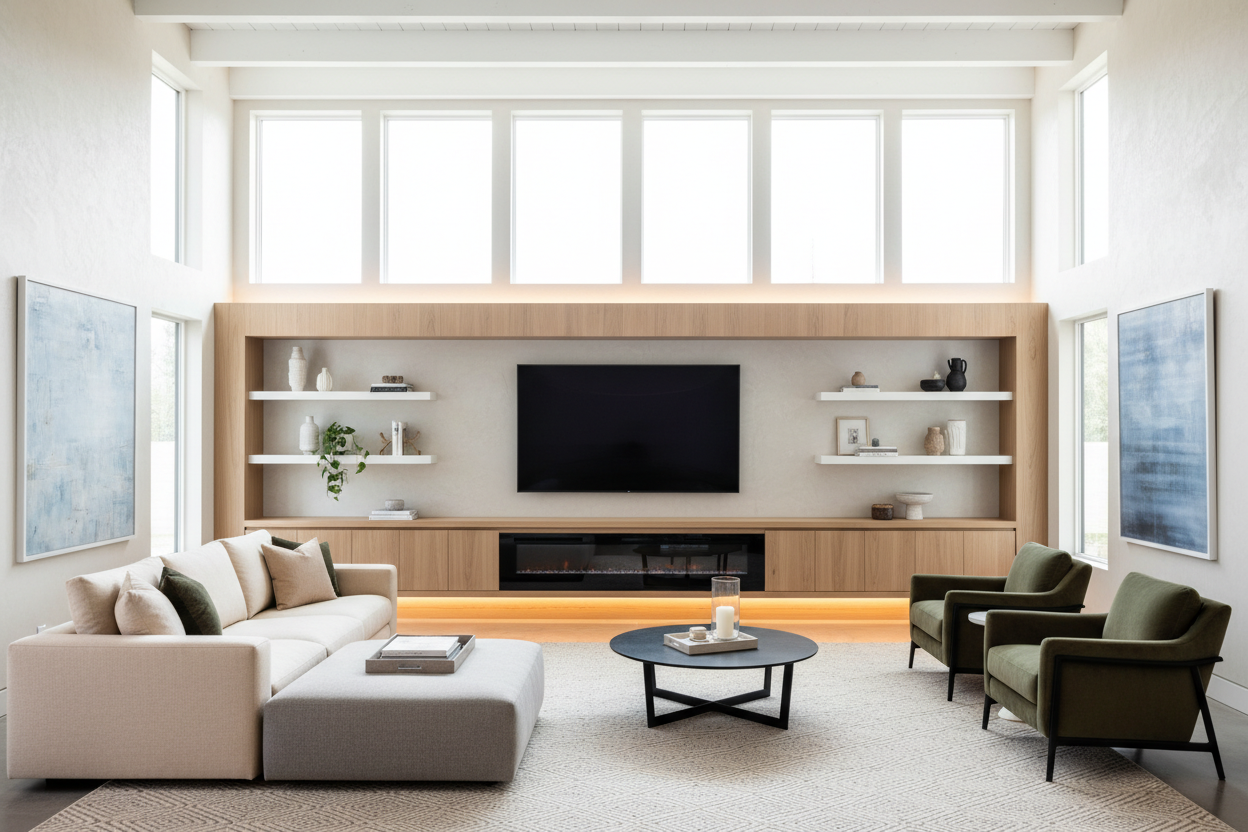
A low and long tv stand grounds the room. If you’re struggling with a massive wall, I often suggest an adjustable length media console with drawers. It allows you to stretch the footprint of the piece to match the scale of your wall, which gives you that custom, wall-to-wall look without the custom-built price tag. It’s about creating a strong horizontal anchor for the entire room.
Where Does the Clutter Go in a Long Low Entertainment Unit?
The biggest fear people have with minimalist furniture is storage. Where does the PlayStation go? What about the messy nest of HDMI cables? Because a long low entertainment unit has a smaller vertical footprint, you have to be smarter about how you use the interior. You can't just pile things in and hope for the best.
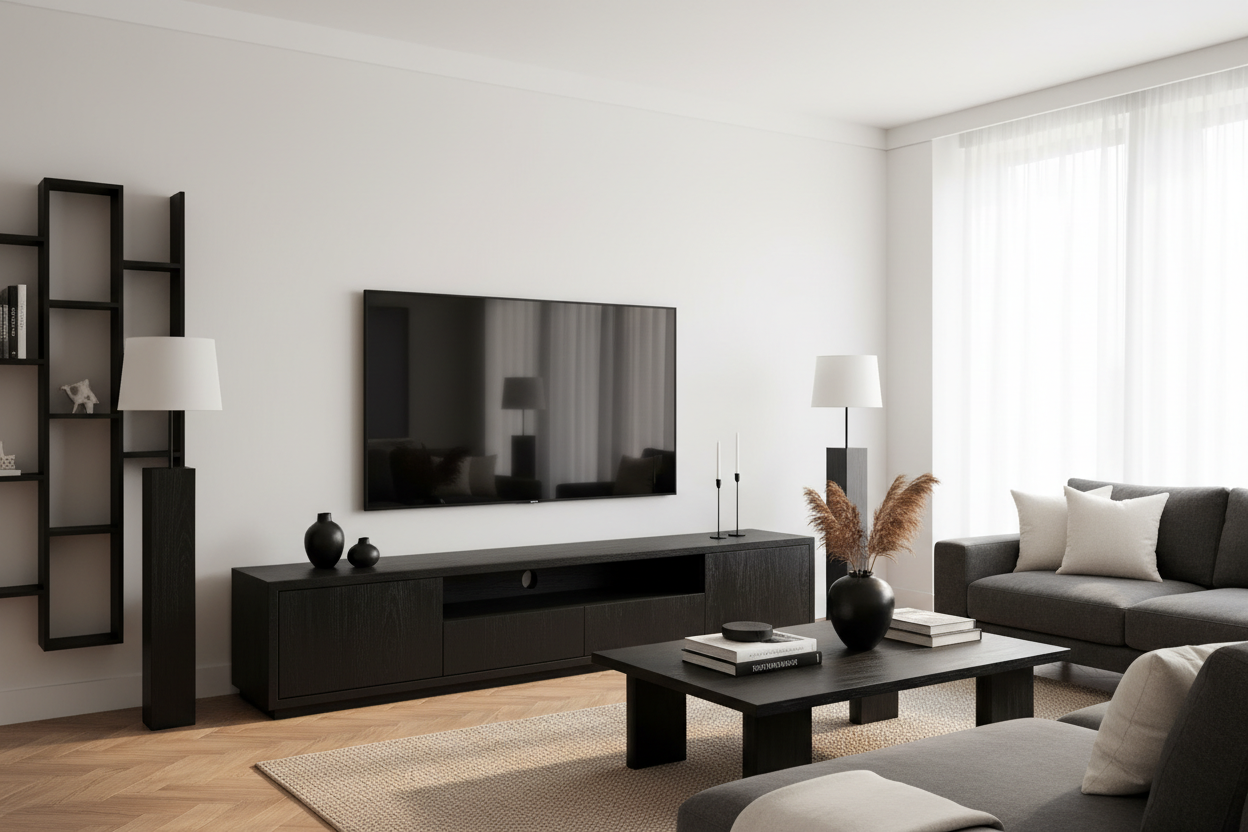
When you're browsing for sleek new tv stands, look for units with clever cable management cutouts and slatted doors. Slats are a lifesaver—they hide the ugly plastic of your router and cable box while still letting your remote’s signal get through. I personally prefer units with at least one deep drawer for controllers and one open or slatted shelf for components that need airflow. Low doesn't have to mean 'no storage,' it just means organized storage.
My Personal Lesson in Scale
I once bought a gorgeous, mid-century modern stand that was only 14 inches high. It looked incredible in the photos. In reality, I paired it with a sofa that had massive, 22-inch high cushions. I felt like I was looking down at my feet to watch the news. I ended up having to swap the legs out for 6-inch steel versions to get it to 20 inches. The takeaway? Always measure your sofa's seat height before you commit to a low-profile unit. You want the TV to be a comfortable companion, not something you're hovering over.
Frequently Asked Questions
Is a low TV stand okay if I have kids or pets?
Actually, they are often safer. A lower center of gravity makes the unit much harder to tip over. However, you still absolutely must use the wall-anchoring kit that comes with the furniture. A 75-inch TV is heavy regardless of how close it is to the floor.
Should I still wall-mount my TV if I have a low console?
You can, but hang it low! Aim for just 2-4 inches above the top of the console. If you mount it too high, you lose that 'integrated' look and end up with a weird gap of empty wall that exposes all your dangling cords.
How do I hide cables on a low unit?
Since the unit is closer to the floor, you have less 'hidden' wall space. Use a cable management box or a simple raceway painted the same color as your wall to guide the wires from the outlet to the back of the unit. Many high-quality low consoles also have 'wire channels' carved into the back of the frame.

Dejar un comentario
Este sitio está protegido por hCaptcha y se aplican la Política de privacidad de hCaptcha y los Términos del servicio.