










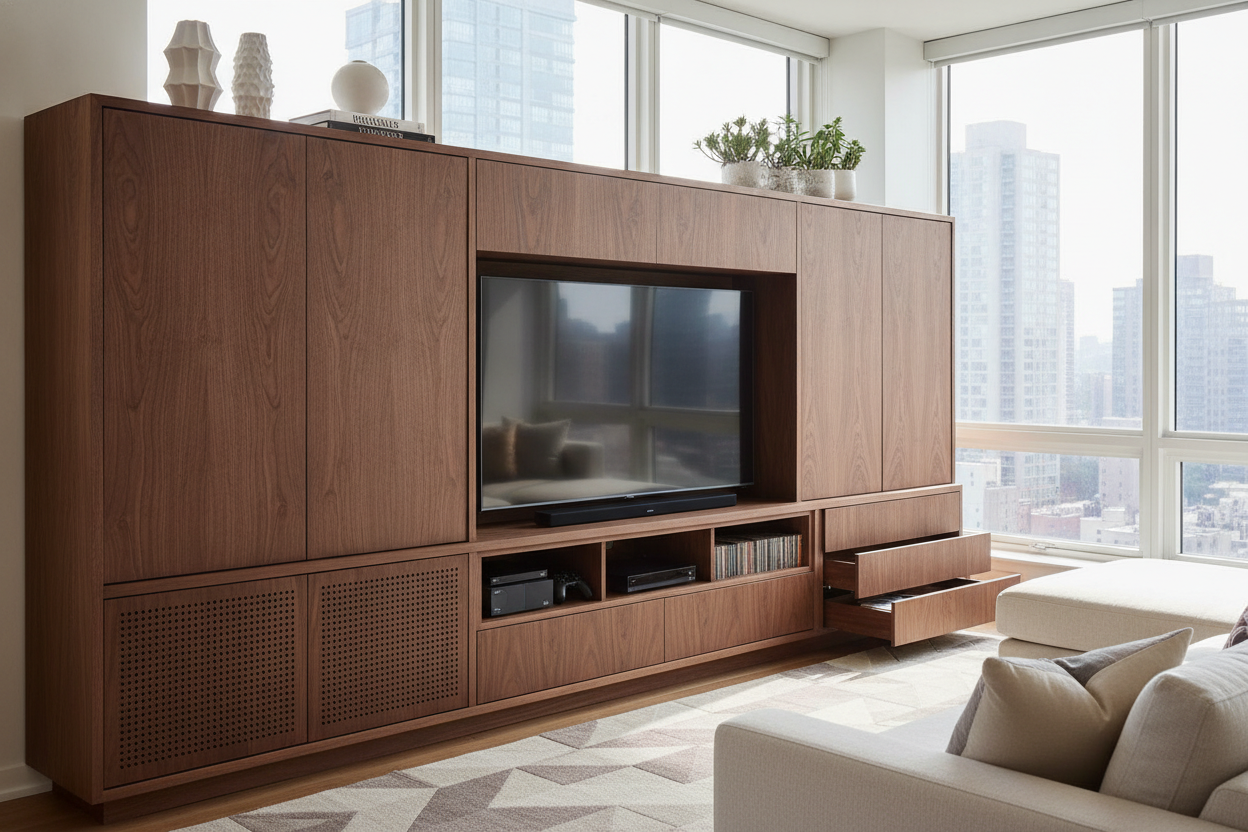
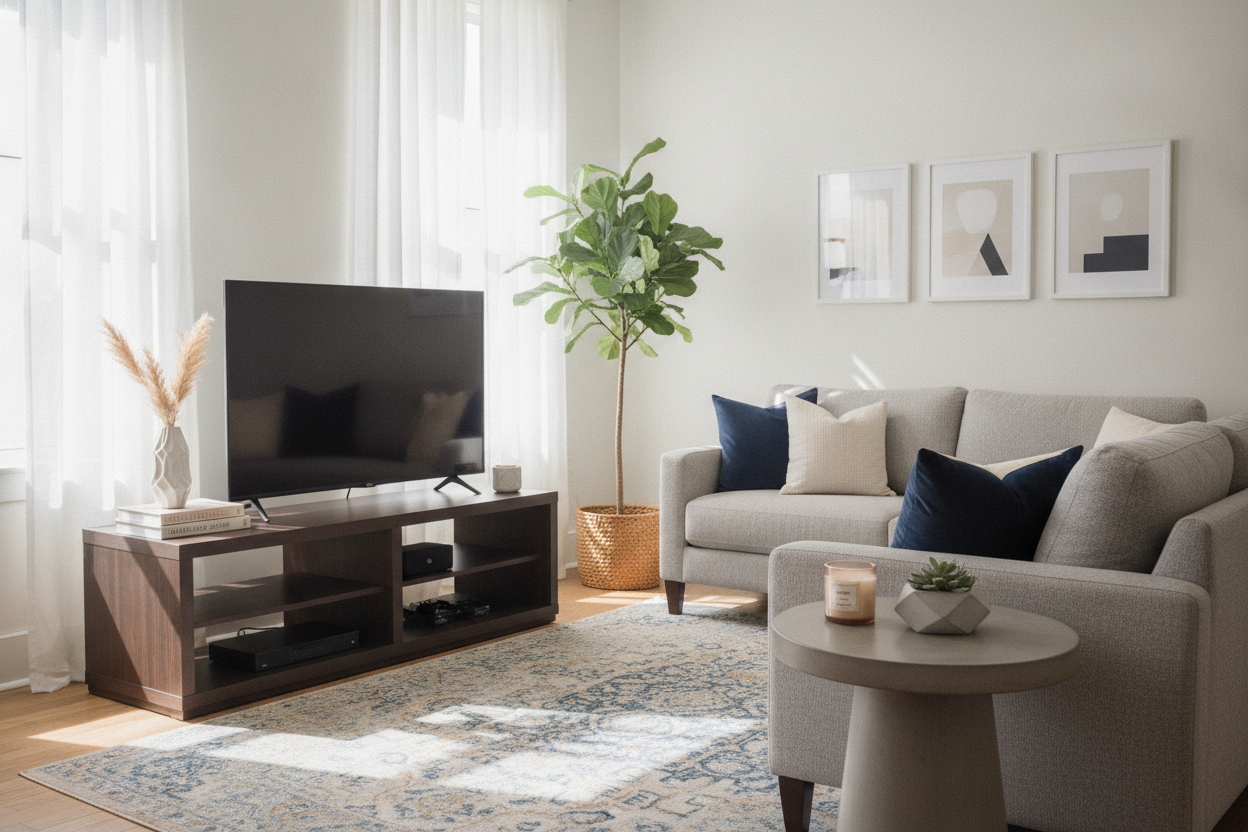
I spent years convinced that a minimalist, open-frame TV stand was the peak of modern design. In reality, it was just a stage for my tangled nest of HDMI cables and a dusty Xbox that looked like it hadn't been cleaned since the Obama administration. I finally hit my breaking point when I realized my living room felt more like a server room than a place to relax.
Switching to actual media cabinet furniture wasn't just about aesthetics; it was about reclaiming my sanity. There is a specific kind of peace that comes from closing a pair of solid wood doors on a blinking router and pretending the internet doesn't exist for a few hours. It’s the difference between a house that looks lived-in and one that just looks messy.
- Close the doors: Enclosed storage hides the visual clutter of wires and blinking lights.
- Mind the heat: Ensure your cabinet has ventilation or enough internal clearance (at least 2-3 inches) to prevent overheating.
- Scale is everything: Your cabinet should be wider than your TV to avoid a top-heavy, 'lollipop' look.
- Material matters: Solid wood or high-quality MDF with real veneers beats hollow-core particle board every time.
The 'Open Shelving' Trap (And Why Your Cords Look Awful)
We've all been lured in by those $50 metal and glass stands. They look airy in the catalog, but once you plug in a soundbar, a PlayStation, and a cable box, that airiness is replaced by a black hole of tangled plastic. It’s impossible to make a living room electronics cabinet look tidy when every wire is on full display.
I used to spend my weekends trying to zip-tie cables to the legs of my stand, only to have a new peripheral ruin the whole look. If you find yourself constantly fighting the mess, it might be time to look into a modern wall cabinet for living room storage. Moving away from the 'skeleton' look allows the furniture to actually do its job: hiding the things you don't want to see.
What Actually Qualifies as 'Grown-Up' Media Cabinet Furniture?
A 'stand' is something your TV sits on. A 'cabinet' is a piece of furniture that anchors the entire wall. To me, grown-up furniture means weight and intention. You want something that doesn't wobble when the dog bumps into it. Look for pieces with soft-close hinges, integrated cord management holes, and adjustable shelving.
I've found that repurposing a large sideboard display buffet often works better than buying a dedicated TV stand. These pieces usually have better depth—around 18 to 20 inches—which is crucial if you have a bulky older receiver. Plus, media cupboards with solid doors give the room a much cleaner, more architectural feel than a flimsy rack.
Hiding the Tech Without Frying Your Receiver
The biggest fear with enclosed living room media storage is heat. I once shoved an old receiver into a tight cabinet and it smelled like burning dust within twenty minutes. Don't do that. You need at least two inches of clearance on all sides of high-heat electronics like amplifiers or gaming consoles.
When browsing for living room storage, check the back panels. If they don't already have pre-drilled holes, make sure the material is something you can safely use a hole saw on. I usually leave the back panel off the specific section housing my hottest components to ensure maximum airflow while the front doors keep everything looking sleek.
Proportions Matter: Grounding the Big Black Screen
There is nothing more awkward than a 65-inch TV perched on a 50-inch stand. It looks like a lollipop. To properly ground a large television, your cabinet should be at least 6 to 10 inches wider than the screen on both sides. This creates a visual base that prevents the TV from dominating the room in a bad way.
A substantial piece of furniture helps in solving awkward living room layouts by providing a clear focal point. If your ceilings are high, don't be afraid of a slightly taller cabinet. It fills the vertical space and makes the room feel finished rather than just a collection of items pushed against a wall.
The Unexpected Joy of Reclaiming Your Floor Plan
Once I swapped my open stand for a closed cabinet, the whole energy of my apartment changed. I stopped seeing the 'work' of the technology and started seeing the room again. It’s a small shift that cures that 'dorm room' aesthetic instantly.
My biggest mistake was waiting four years to do it because I thought I didn't have the space. In reality, a larger, enclosed cabinet actually made the room feel bigger because it eliminated the visual noise of the clutter. It’s a design choice I’d make again in a heartbeat.
Will my remote work through wooden doors?
Standard IR remotes won't work through solid wood. You'll either need a cabinet with mesh/slotted doors, an IR repeater, or devices that use Bluetooth/RF like most modern streaming sticks.
How do I stop my cables from becoming a bird's nest inside?
Use adhesive cable clips on the interior walls. Group cables by device and label them. It takes ten minutes now but saves you hours of frustration when you eventually need to swap out a HDMI cable.
Can I use a dresser as a media cabinet?
Yes, but check the height. Most dressers are 32-36 inches tall, which might put your TV at an uncomfortably high viewing angle unless you have a very deep sofa. You'll also need to drill your own cord holes in the back panel.

Dejar un comentario
Este sitio está protegido por hCaptcha y se aplican la Política de privacidad de hCaptcha y los Términos del servicio.