










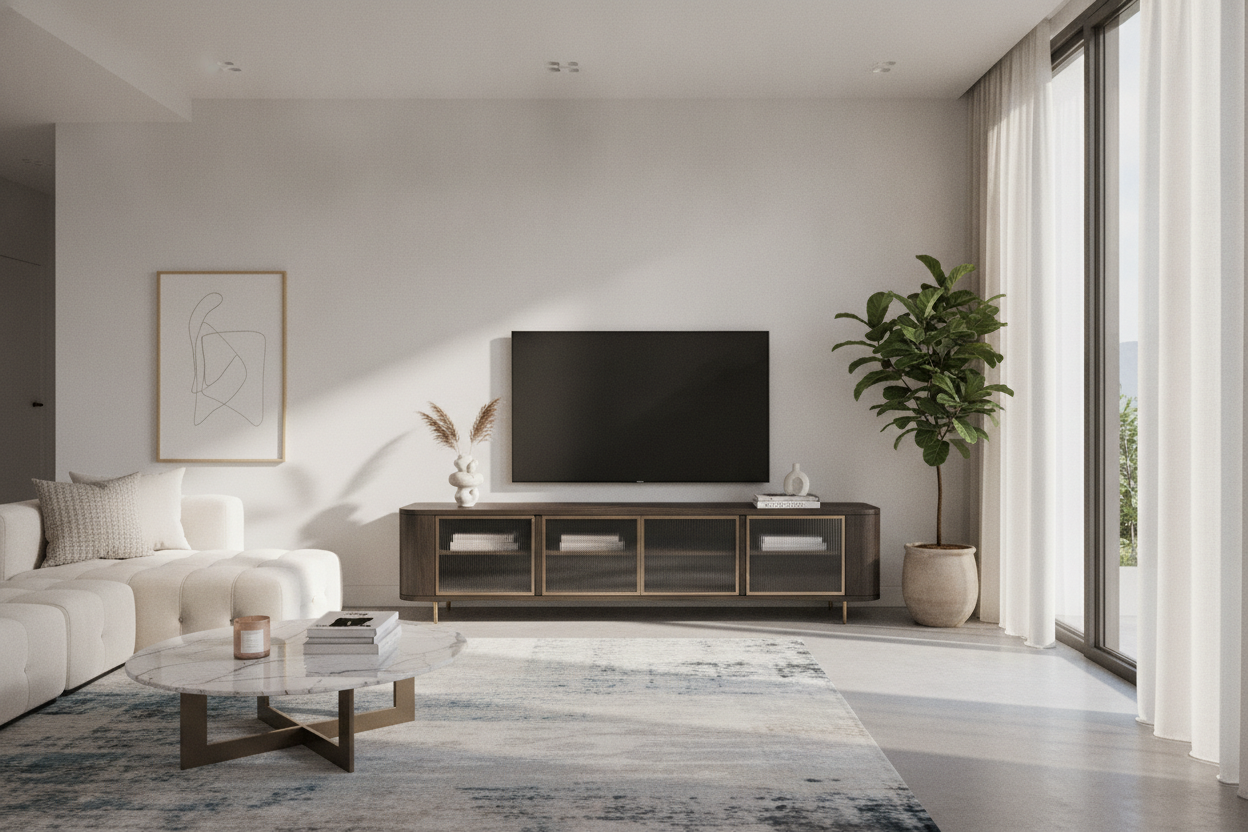
I spent three years staring at a visible, three-degree curve in the middle of my media console like it was some kind of avant-garde art installation. It wasn't art; it was cheap particleboard crying for help under the weight of a 65-inch OLED. I finally realized that my designer tv stand shouldn't be the weakest link in my living room.
Quick Takeaways
- Solid wood and kiln-dried frames prevent the dreaded 'center-sag' common in big-box units.
- Integrated ventilation is non-negotiable if you own a gaming console or a high-end receiver.
- Luxury hardware like soft-close hinges and magnetic catches feel better every single day.
- The right width is 10-15 inches wider than your TV to maintain visual balance.
The Day My Cheap Console Finally Bowed
The realization hit me when I tried to open the center drawer and it wouldn't budge. The weight of the television had compressed the frame so much that the drawer was physically pinched shut. I had spent nearly two grand on a state-of-the-art screen, only to perch it on a $200 'furniture-in-a-box' unit that had the structural integrity of a wet saltine.
A luxury tv stand for living room setups isn't just about showing off; it's about physics. Most cheap units are rated for 50 pounds max, but a heavy-duty 75-inch TV plus a soundbar and a couple of consoles can easily exceed that. Seeing that expensive glass panel sitting on a bowing shelf made me realize I was one house-party bump away from a disaster. It was time to stop buying temporary fixes and invest in a high-quality media console.
What Actually Makes a Console 'Designer'?
When you start looking at a luxury tv stand design, you notice things that just don't exist in the flat-pack world. First, it's the materials. We're talking solid walnut, white oak, or high-grade lacquer finishes rather than paper-thin veneers that peel at the corners if you spill a drop of water. A high-end media console feels dense and grounded.
Then there's the architectural detail. Most standard TV stands are just boxes with legs. A luxury modern tv stand might feature hand-slatted wood doors that allow infrared signals to pass through while hiding the clutter, or fluted textures that catch the light. I opted for a piece with heavy-duty soft-close hardware. There is a specific kind of satisfaction in a door that glides shut silently rather than slamming with a hollow, tinny thud.
The Magic of Actually Good Cord Management
Cheap units usually have one sad, jagged hole punched through a cardboard back-panel. An expensive entertainment center treats cable management as a primary feature. My new luxury tv console has a recessed back with integrated channels and velcro ties. It actually fits my bulky Denon receiver without the back panel popping off—a miracle in itself.
Ventilation is the other 'hidden' luxury. High end entertainment center designs often include vented back panels or slotted bases. This is crucial because a PS5 or Xbox Series X trapped in a small, unventilated box is basically a space heater that will eventually fry its own motherboard. If you're debating between styles, I wrote about Why I Swapped My Minimalist Console for a Display Cabinet TV Stand, which dives into the struggle of hiding messy gear while keeping it cool.
Wait, Should I Have Just Gone With a Floating Unit?
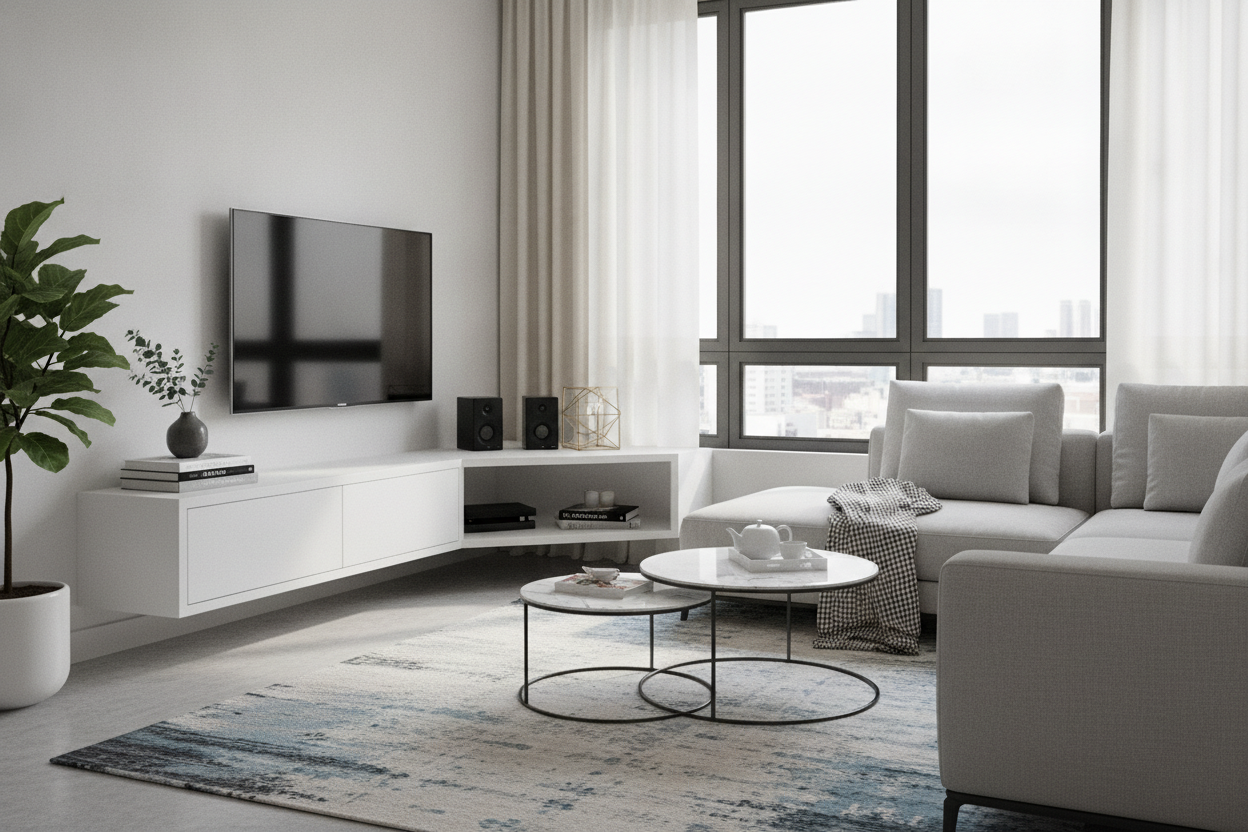
During my search, I was tempted by the ultra-minimalist look of a floating TV stand wall mounted media console. They are incredible for making a small room feel larger because you can see the floor underneath. It gives that high-end tv stand vibe without the footprint.
Ultimately, I stuck with a floor-based luxury tv cabinet because I live in an older building with questionable studs. A heavy, exclusive tv stands unit felt more permanent and 'anchored.' Plus, I didn't want to deal with the stress of mounting a 100-pound wood cabinet to plaster walls. If you have modern drywall and a penchant for minimalism, though, the floating route is the peak of modern luxury tv unit design.
Did I Need to Spend This Much? (Probably)
Look, I know spending four figures on a place to put your TV feels like a lot. But after living with my high end media cabinet for six months, the difference in the room's energy is palpable. It doesn't just hold the TV; it anchors the entire wall. It makes my rug look more expensive and my sofa look more intentional.
If you're tired of replacing your furniture every time you move or every time a drawer slide bends, an upscale tv stand is the way to go. It’s the difference between a house that feels like a collection of 'good enough' items and a home that feels curated. It’s one of the few pieces of furniture I touch every single day, and I don't regret a single cent.
FAQ
How much wider should a TV stand be than the TV?
Ideally, your stand should have at least 5 to 10 inches of breathing room on each side. If the TV is wider than the stand, it looks top-heavy and unstable. For a 65-inch TV, look for a console that is at least 70 inches wide.
Do luxury TV stands come pre-assembled?
Usually, yes. One of the biggest perks of a high-end tv console is that it arrives via white-glove delivery, fully assembled. No more spending four hours on your knees with an Allen wrench and a confusing manual.
Is solid wood better than metal for a TV stand?
It depends on your style, but solid wood is generally better for dampening sound and hiding dust. Metal luxury stands can look incredibly sleek but tend to show fingerprints and can vibrate if you have a powerful subwoofer nearby.

Dejar un comentario
Este sitio está protegido por hCaptcha y se aplican la Política de privacidad de hCaptcha y los Términos del servicio.