










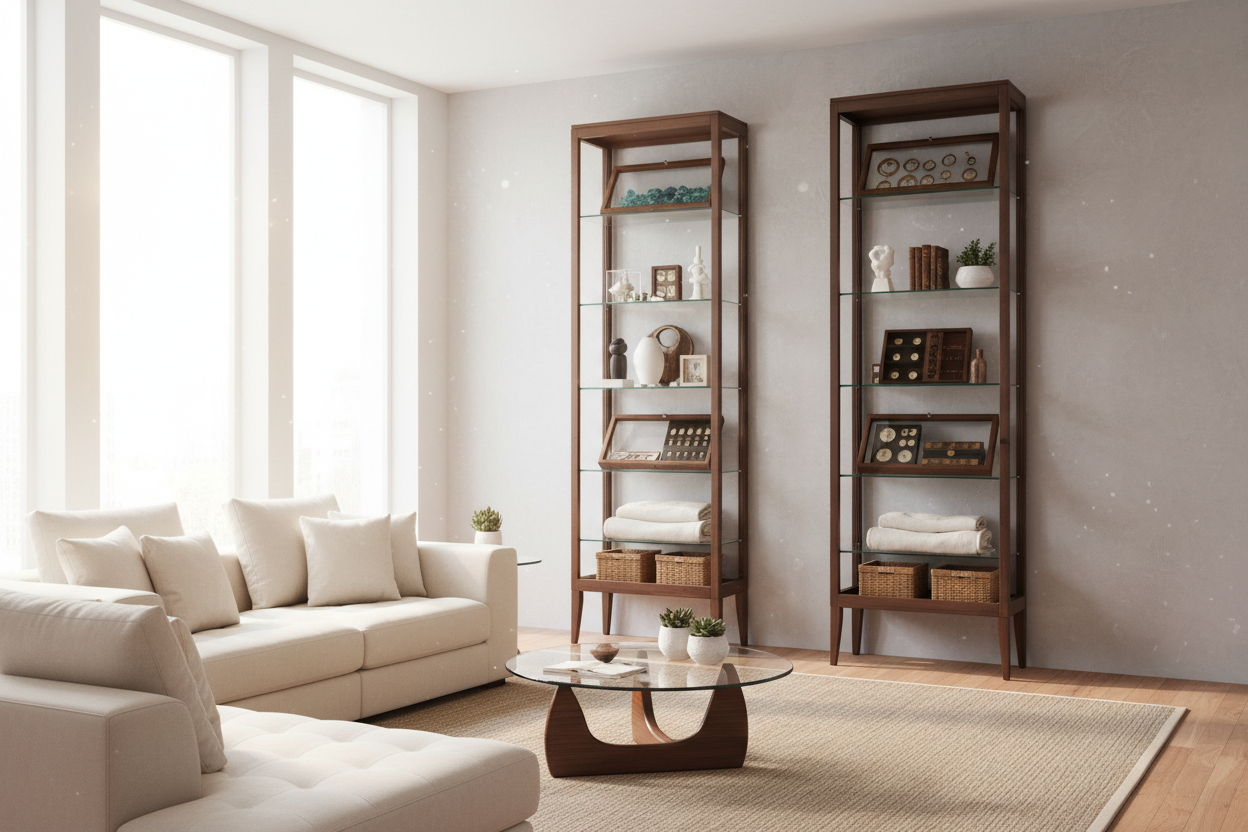
My 'shelf of shame' used to be a graveyard for things I loved but couldn't figure out how to style. I had a handful of matchbooks from my favorite bars, a jagged piece of quartz from a hike, and a vintage Leica that I’m 90% sure doesn’t actually work. Scatting them across my bookshelf just made the room look like I’d forgotten to finish unpacking. I tried the whole 'styling tray' thing everyone on Pinterest loves, but it just became a glorified dust collector. Then I finally caved and bought a set of display boxes wood and glass, and the vibe shifted instantly.
Quick Takeaways
- Boxes create a 'frame' that turns random objects into a curated collection.
- Glass tops prevent the 'dusty museum' smell and keep your cleaning routine short.
- Solid wood frames (look for oak or walnut) provide the visual weight that cheap acrylic lacks.
- Mixing heights is the secret to a professional-looking tabletop vignette.
The Problem With Tiny Treasures (And Why Trays Don't Work)
I used to think trays were the universal solution for clutter. They aren't. If you have small collectibles or those weirdly specific thrift finds that are only three inches tall, a tray just makes them look like they're waiting to be sorted. A wooden glass display box does something a tray can't: it creates a literal boundary. It says 'this is a specimen,' not 'this is a pile of stuff.'
When you enclose an object, you give it importance. I’ve found that even a single, solitary air plant looks intentional when it’s sitting inside a glass display case wood frame. Plus, let’s be real about the dusting. I spent half my life wiping down tiny trinkets with a Q-tip. Enclosing them in glass cut my shelf-maintenance time down to a single swipe with a microfiber cloth once a week. It’s a lazy person’s guide to looking like a high-end collector.
Why the Mix of Materials Matters
There is a reason designers go crazy for the wood-and-glass combo. If you go all glass or acrylic, the display feels cold, like a jewelry store in a dying mall. If you go all wood, you lose the visibility and the light. The wood provides the soul—the grain, the warmth, the history—while the glass keeps things airy. It’s the same logic behind why a wood and glass TV stand works so well; it anchors the room without feeling like a giant, heavy block of lumber.
I personally look for frames made of solid hardwoods like acacia or mango wood. Avoid the MDF stuff that’s just wrapped in a wood-look sticker. You want something that has a bit of heft. When you pick up a well-made wood and glass display case, it should feel substantial. That weight is what makes your $5 thrift store find look like a $500 artifact.
Scaling Up: When a Box Needs to Become a Cabinet
Eventually, you’re going to hit a wall—literally. You’ll start with one box for your matchbooks, then another for your rocks, and suddenly your coffee table is disappearing. This is the moment you have to transition from tabletop styling to actual furniture. When my collection of vintage cameras outgrew my side table, I knew I needed to scale up to something like a rustic wood china cabinet.
The goal is to keep that same 'boxed-in' aesthetic but on a macro level. If you're working with a cramped apartment, don't try to cram a massive hutch against a flat wall. Instead, look for a corner display case to utilize that dead space behind the door. It keeps the collection contained and out of the 'traffic flow' of your room, while still giving you that satisfying glass-encased look.
How to Style Your Boxes Without Looking Like a Museum
The biggest mistake people make is trying to make their display look too formal. If you put a set of gold-rimmed teacups in a glass display case wood, you’ve officially entered 'Grandma’s parlor' territory. To keep it modern, you need contrast. Put something organic—like a dried seed pod or a piece of driftwood—next to something mechanical, like a vintage watch.
I’m a big fan of the 'rule of thirds' here. Don’t pack the box to the brim. Leave some negative space so the eye can actually see what’s happening. If you’re feeling bold, you can even mix in different textures on the walls behind your boxes. I’ve seen people pair these tabletop cases with a metal and wood display cabinet to create a layered, industrial look that feels curated over time rather than bought all at once from a big-box store.
My Personal Lesson Learned
I once bought a cheap set of display boxes that used 2mm glass and thin pine frames. Every time I walked past the shelf, the glass would rattle. It drove me insane. I ended up returning them and spending the extra $40 on boxes with 4mm tempered glass and a felt-lined bottom. The difference in 'thud' factor when you set them down is worth every penny. If it feels flimsy in the store, it will feel like trash in your living room.
FAQ
What should I put in a display box?
Anything that has a cool texture but is too small to stand on its own. Think: vintage keys, interesting rocks, old postcards, or even a stack of colorful matchbooks. Avoid things that are too tall for the box; you don't want the item touching the glass ceiling.
How do I clean the glass without streaks?
Skip the blue spray. Use a mixture of half water, half white vinegar, and a drop of dish soap. Use a microfiber cloth—not paper towels, which leave behind tiny white fibers that look like dust the second you're finished.
Are wood and glass boxes safe for kids or pets?
If you have a cat that likes to parkour or a toddler who throws blocks, look for boxes with tempered glass. It’s much stronger and, if it does break, it crumbles into dull cubes instead of sharp shards. Also, use a bit of museum wax on the bottom of the box to stick it to the shelf.


Dejar un comentario
Este sitio está protegido por hCaptcha y se aplican la Política de privacidad de hCaptcha y los Términos del servicio.