










I still have nightmares about the time I tried to wedge a 72-inch sideboard into a Brooklyn fourth-floor walk-up. The delivery guys looked at me with pure pity as we realized the hallway turn was physically impossible. After three moves in five years, I stopped buying 'statement' pieces and started buying for the floor plan I might have next year.
Standardizing my living room around a 4 foot wide tv stand was the best executive decision I ever made for my sanity. It is the goldilocks of furniture dimensions: big enough to look like a real piece of furniture, but small enough to fit in the back of a crossover SUV without a struggle.
Quick Takeaways
- A 48-inch console fits most TVs up to 55 inches without looking top-heavy.
- It is the maximum width that reliably fits in small apartment elevators.
- Provides enough surface area for a soundbar and a lamp without feeling cluttered.
- Easier to resell on Marketplace because everyone has a 4-foot gap in their wall.
The Unsung Hero of Apartment Living: 48 Inches
When you are shopping for tv stands, it is easy to get seduced by those massive, 80-inch low-profile consoles. They look incredible in a 2,000-square-foot open-concept home. But in a real-world apartment, those monsters eat your entire wall and leave no room for a floor lamp or a plant. A 48-inch unit gives you presence without the bulk.
I have found that 48 inches is the magic threshold. Anything smaller feels like dorm furniture, like you are still using a nightstand to hold up your screen. Anything larger and you start running into 'will it fit between the window and the radiator' territory. It anchors the room without demanding the spotlight.
The TV Math: What Screen Size Actually Fits?
Here is the mistake everyone makes: they think a 55-inch TV is 55 inches wide. It is not. That is the diagonal measurement. A standard 55-inch TV is actually about 48 inches wide. Putting a 55-inch screen on a 4 ft long tv stand creates a 'flush' look where the edges align perfectly.
If you have a 50-inch TV, you get about two inches of breathing room on either side, which is my personal preference. It allows for a small candle or a stack of books. Just remember that the height of your television stand matters just as much as the width—if you go too wide and too high, you are basically building a wall of plastic in your living room.
Why It Survives Narrow Hallways and U-Haul Tetris
I have moved six times in ten years. I have learned that anything over 60 inches requires a professional crew or a very frustrated friend. A 4-foot unit is the sweet spot for the 'U-Haul Tetris' phase of your life. It fits horizontally across the back seat of most SUVs if you fold the seats down, and it pivots around those 90-degree stairwell turns that kill larger credenzas.
I once bought a solid oak mid-century piece that was 70 inches long. It was beautiful, but it was a nightmare. I had to sell it for half what I paid because it wouldn't fit through the door of my next place. Since switching to a 4-foot footprint, I haven't had to check a floor plan before signing a lease. It fits everywhere.
Styling a Mid-Sized Console Without Clutter
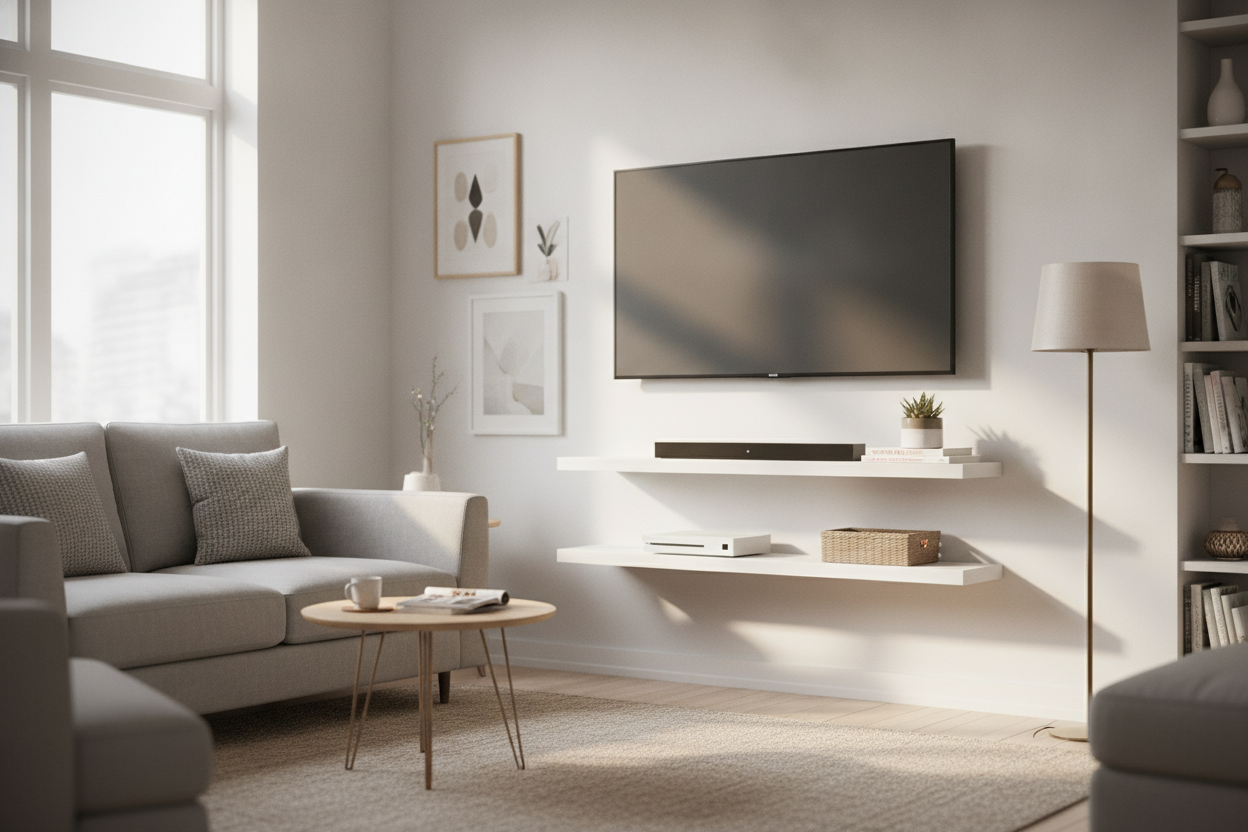
The challenge with a compact stand is that it can get messy fast. You have a cable box, a gaming console, and three remotes competing for space. Look for units with closed cabinetry rather than open shelving. If you can hide the clutter behind a door, the whole room feels five times cleaner. I prefer a unit with at least one adjustable shelf for my oversized receiver.
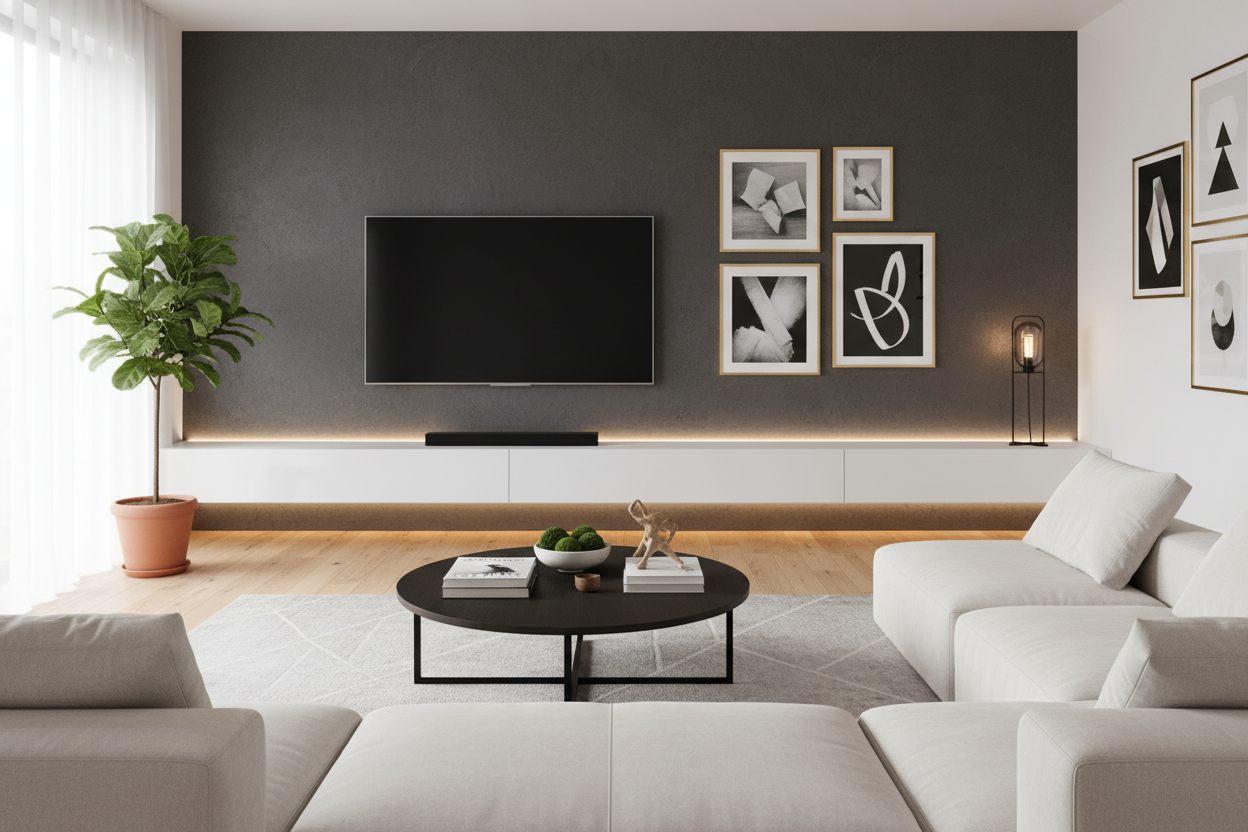
When decorating wider media units, you have feet of space to play with vignettes. On a 4-foot stand, you have inches. Stick to one 'tall' item on one side—like a snake plant or a slim lamp—to balance the horizontal line of the TV. Use cord clips to keep the 'black spaghetti' of wires from peeking out the back.
My Honest Mistake
I once bought a 4-foot stand made of cheap particle board with paper veneer. It looked great for six months, but the weight of my older, heavier TV caused the top to 'smile' or sag in the middle. If you are going this size, spend the extra $100 for a solid wood top or a reinforced metal frame. Your TV is an investment; don't trust it to a piece of furniture held together by glue and hope.
Frequently Asked Questions
Can I put a 65-inch TV on a 4-foot stand?
Technically, yes, if the TV has a center pedestal stand. But it will overhang by about 5 inches on each side. It looks top-heavy and is an accident waiting to happen if you have pets or kids. I wouldn't recommend it.
Is 48 inches too small for a large living room?
If your room is massive, a 4-foot stand might look like a postage stamp on a billboard. In that case, I'd suggest flanking it with two tall bookshelves to give it more visual weight without the bulk of a single 8-foot unit.
What is the best material for a small TV stand?
Go for solid wood or high-quality plywood like Baltic Birch. Avoid the stuff that feels like compressed sawdust. Since it's a smaller piece, the price jump to 'real' wood is usually pretty manageable.

Dejar un comentario
Este sitio está protegido por hCaptcha y se aplican la Política de privacidad de hCaptcha y los Términos del servicio.