










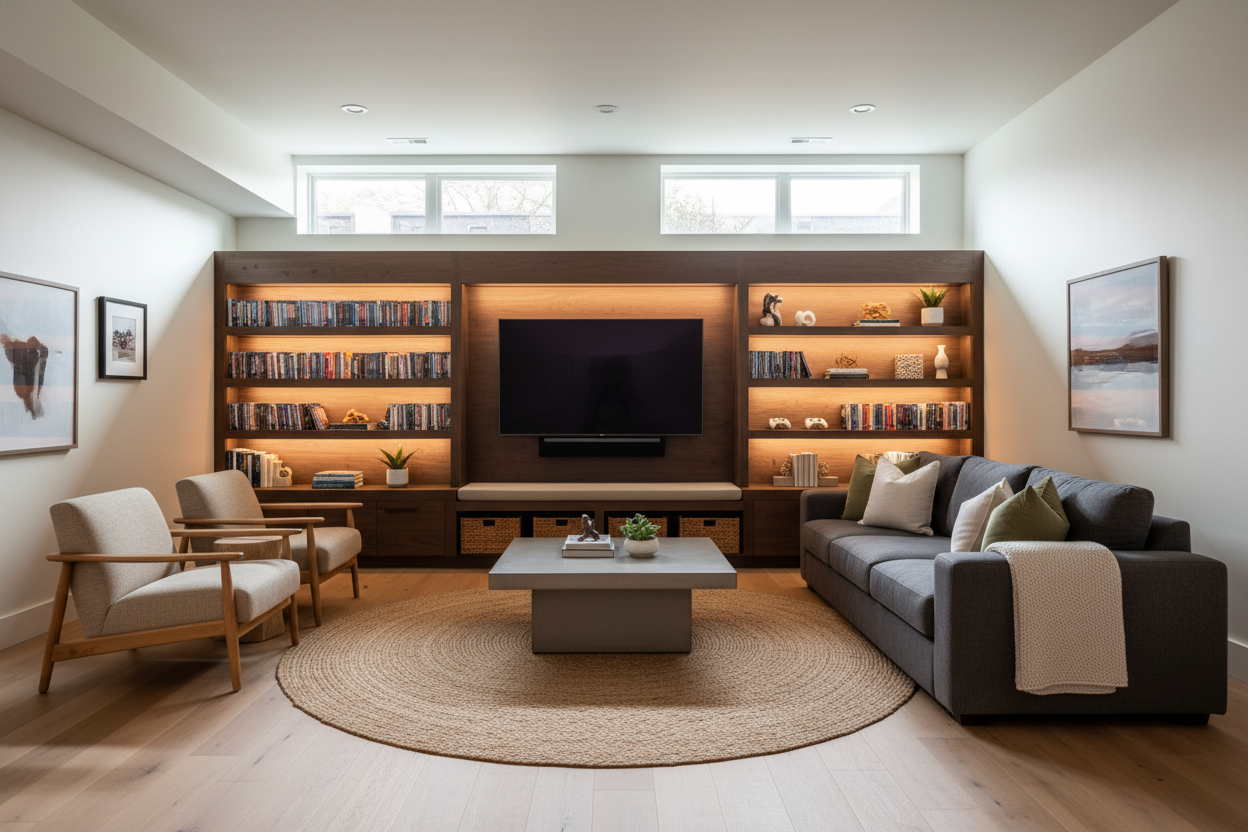
I’ve spent way too many Friday nights in basements that felt more like a dungeon than a theater. You know the vibe: an old sofa that smells vaguely of damp laundry and a TV stand that’s clearly too small for the wall it’s sitting against. Creating a functional entertainment center basement isn't just about plugging in a console; it's about outsmarting the architecture of a space that was never meant to be a cozy retreat.
Quick Takeaways
- Stop using 'demoted' furniture; scale is your best friend in a basement.
- Low-profile consoles make 7-foot ceilings feel much higher.
- Bias lighting is the secret to fixing the 'cave' glare from recessed cans.
- Freestanding units are often safer than built-ins due to moisture risks.
The 'Hand-Me-Down' Furniture Trap
Stop treating your lower level like a furniture graveyard. We've all been there—the sofa that’s too lumpy for the upstairs gets demoted to the basement 'family room.' Then you wonder why the whole vibe feels disjointed. If you want a real basement entertainment center, you need to stop using the wobbly 10-year-old console you bought for your first apartment.
Investing in a dedicated entertainment center that actually fits the scale of your lower level is the first step. Most basements have more floor space but significantly lower ceilings than the rest of the house. If you use a tiny, tall chest, it makes the room feel cramped and narrow. You need something long—think 70 to 80 inches—and low-slung. This tricks the eye into thinking the room is wider and the ceiling is higher than it actually is. Plus, kiln-dried hardwood frames are a must down here; cheap plywood will warp the second the humidity hits 60%.
Fighting the Awkward Architecture
Designing a basement entertainment wall means dealing with the structural stuff nobody tells you about in the furniture showroom. I’m talking about support poles that always seem to be exactly where you want to sit, and those bulky drop ceilings hiding the HVAC ductwork. You can't move them without a structural engineer and a second mortgage, so you have to outsmart them.
I usually suggest looking at various entertainment center wall ideas that incorporate the architecture rather than fighting it. If you have a pole, build a custom bar-height table around it or use it as a natural divider between the media area and the home gym. The goal is to create a focal point so strong that the eye is drawn to the screen and the decor, not the 7-foot-high ceiling. Use vertical slats or tall shelving on the ends of your media wall to draw the eye up and down, making the ceiling height feel intentional rather than accidental.
Built-In vs. Freestanding: What Actually Works Down Here?
The big debate: do you go for a permanent basement: built-in entertainment center or keep it flexible? I’ve seen homeowners spend $15,000 on custom oak cabinetry only to have a pipe burst or a sump pump fail two years later. It’s heartbreaking to watch a contractor rip out molded millwork. Unless you’ve spent the money to fully waterproof your concrete and install a subfloor system, I’m a big fan of freestanding modular units.
A stylish black TV stand provides a grounding element that looks expensive without the permanent commitment. Darker finishes work wonders in basements because they recede into the shadows, making the screen pop. I personally prefer a unit with at least 18 inches of depth to handle modern AV receivers, which are surprisingly bulky. Also, look for pieces with ventilated back panels. Electronic heat plus basement humidity is a recipe for a fried motherboard.
Lighting Your Basement Media Center Without Glare
Basement lighting is usually a nightmare—either 'operating room bright' or 'cave dark.' Most homeowners rely on those recessed 'can' lights in the ceiling, which create a brutal, distracting glare on your screen. To fix a basement media center, you need to think about layers.
I always stick a high-quality LED bias strip on the back of the TV. It provides a soft glow against the wall, which helps your eyes adjust and makes the black levels on your screen look much deeper. It’s the easiest way to make a $500 TV look like a high-end OLED. Skip the floor lamps that point upwards; they just highlight the ceiling tiles you're trying to ignore. Instead, use small table lamps with warm bulbs (around 2700K) to keep the light low and cozy.
My Go-To Basement Entertainment Center Ideas
If you're looking for quick basement entertainment center ideas, start with the floor and the walls. If you have bare concrete or thin LVP flooring, you're going to deal with a lot of echo. I’ve found that thick, 1.5-inch pile rugs and even some decorative acoustic foam panels hidden behind the TV can make a massive difference in sound quality.
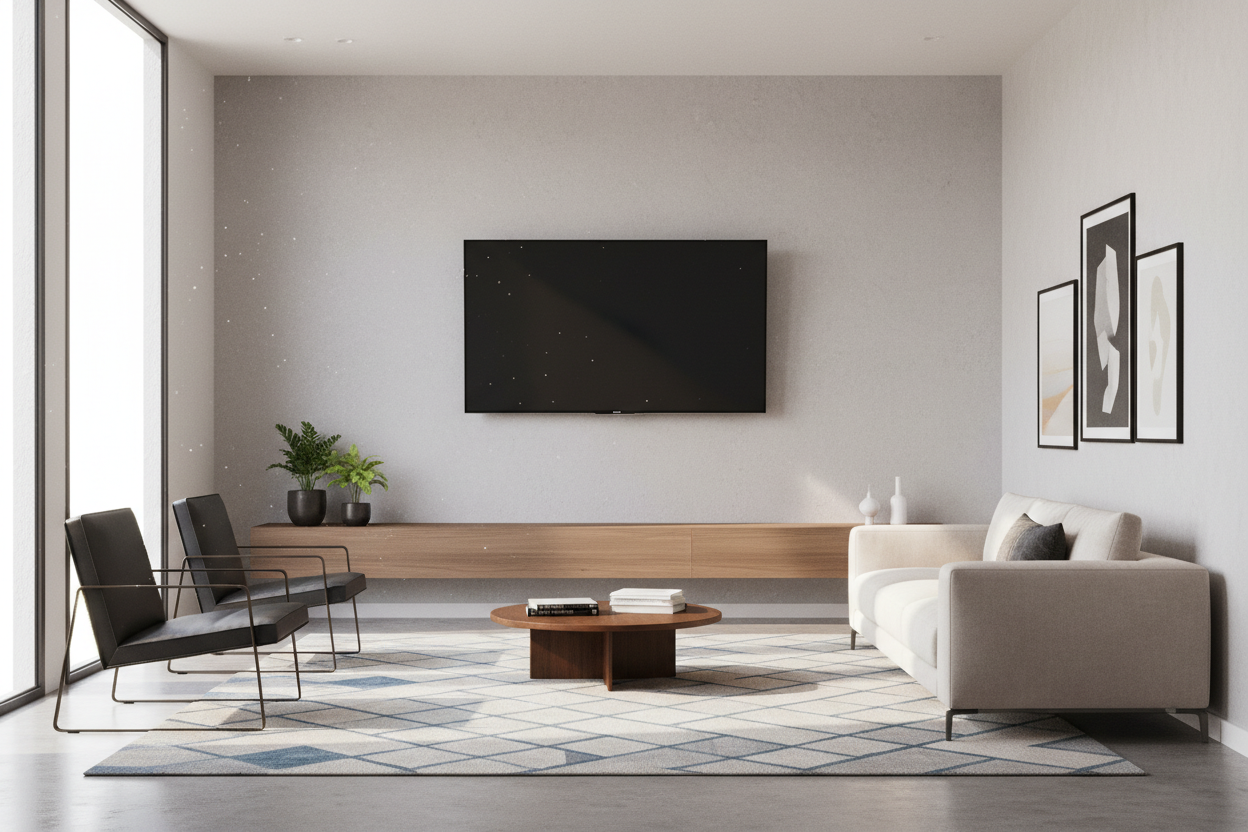
For smaller layouts, check out floating entertainment center ideas. Getting the furniture off the floor creates a continuous line of sight that makes the room feel much larger. I once installed a floating unit in a 10x12 basement room, and it completely changed the 'claustrophobic' feel of the space. Just make sure you're drilling into the actual studs, not just the thin drywall furring strips over the concrete block. It’s a weekend project that pays off every time you walk into the room.
My Basement Design Disaster
My first basement project was a total disaster. I bought a massive, deep sectional that I literally had to take the feet off of just to squeeze it through the narrow staircase. Once it was in, it was so big that I couldn't even reach the back of my media console to plug in my Xbox. I ended up selling it on Craigslist for half what I paid just to get my walking space back. Now, I measure every doorway and corner twice, and I always opt for modular furniture that comes in boxes.
Frequently Asked Questions
How do I stop my basement furniture from smelling?
A high-capacity dehumidifier is non-negotiable for basement life. Keep the humidity below 50% to prevent that musty smell from settling into your sofa and wooden console.
Can I put a TV over a basement fireplace?
Only if it's an electric insert. Most basement mantels are too high for comfortable viewing, and you'll end up with a sore neck. If you must, use a pull-down mount.
How do I hide the wires in a basement?
Use a console with built-in cable management or a simple cord raceway painted to match your wall. If you have a drop ceiling, you can often run cables up and over to keep the floor clear.

Dejar un comentario
Este sitio está protegido por hCaptcha y se aplican la Política de privacidad de hCaptcha y los Términos del servicio.