










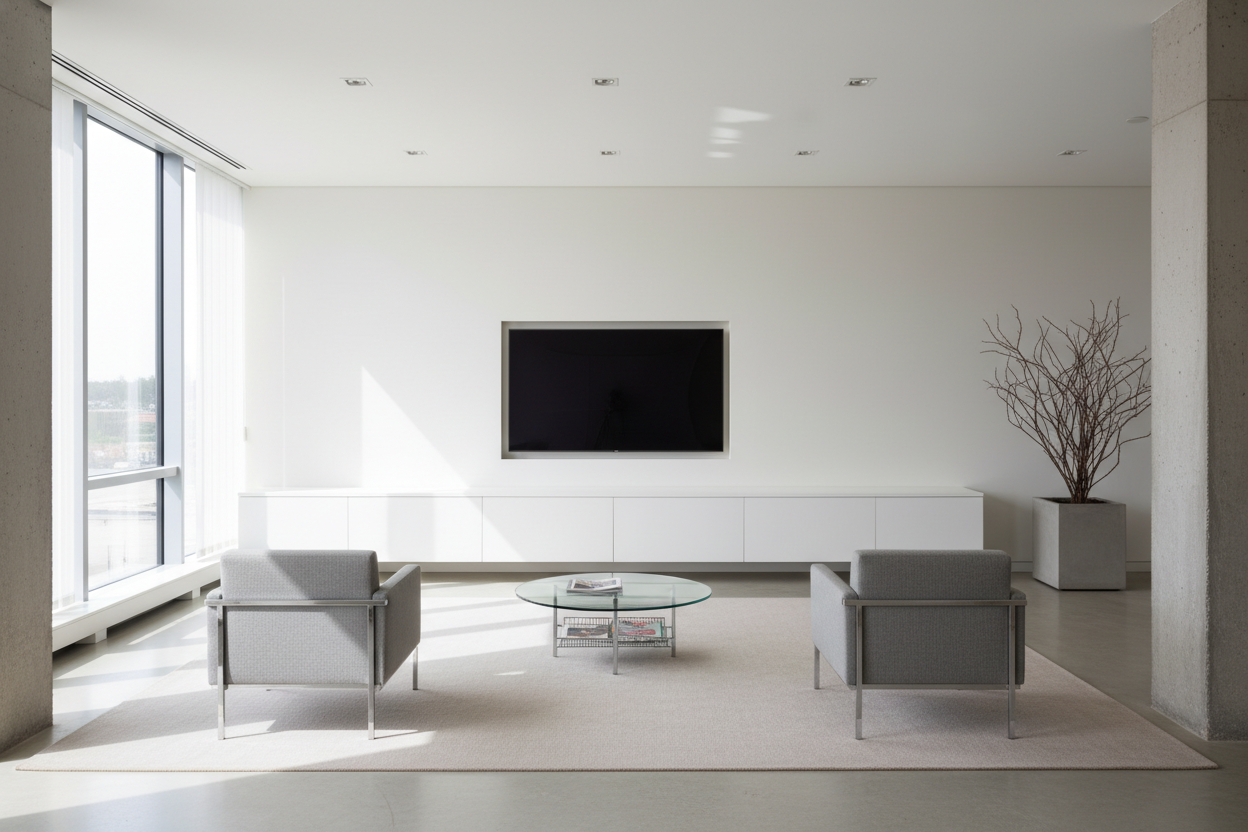
I recently sat in a friend's apartment where every single piece of furniture—the velvet sofa, the two armchairs, even the beanbag in the corner—was angled with surgical precision toward a 75-inch black rectangle. It felt less like a home and more like the lobby of a very expensive urgent care clinic. We weren't there to hang out; we were there to wait for the pixels to start moving. This is the living room entertainment trap: we spend thousands on decor only to let a piece of plastic from a big-box store dictate how we actually live in our space.
Quick Takeaways
- Stop pointing every chair at the TV; prioritize conversational circles instead.
- Scale matters—your console should always be wider than your screen.
- Cable management isn't optional; it's the difference between 'curated' and 'dorm room.'
- Embrace the screen rather than hiding it behind clunky, expensive sliding doors.
The 'Screen Worship' Problem
The biggest mistake I see in modern entertainment living is the 'shrine' layout. You know the one: the sofa is exactly parallel to the TV, and the coffee table acts as a sacrificial altar in between. It kills the vibe for anything other than a Netflix binge. When I reconfigured my own place, I pulled the chairs out of their 'stadium seating' formation and angled them toward each other. I realized that a functional living room furniture layout needs to support eye contact, not just screen time.
If you can't have a conversation without craning your neck 90 degrees to see the person next to you, your layout is broken. Try pulling your seating away from the walls. Create a 'U' or 'L' shape that happens to have a view of the screen, rather than a firing line aimed at the wall. It makes the room feel like a place for people, not just a private cinema.
Why Your Room Entertainment Center Looks Like an Afterthought
There is nothing sadder than a massive, top-of-the-line OLED TV perched on a tiny, spindly console that looks like it’s buckling under the weight. I’ve made this mistake—buying a 50-inch stand for a 65-inch TV because I liked the mid-century legs. It looked ridiculous. It made the whole room entertainment center feel top-heavy and cheap. To fix the visual balance, your furniture needs to be at least 6 to 10 inches wider than the TV on both sides.
I usually recommend a wide adjustable TV stand because it gives you the flexibility to go bigger with your tech later without having to buy new furniture. A low, long profile grounds the room. It makes the TV look like a deliberate choice rather than a giant black hole sucking the soul out of your wall. When the furniture matches the scale of the tech, the tech starts to look like part of the design.
How to Actually Blend Tech With Your Vibe
Cables are the enemy of peace. I don't care how beautiful your rug is; if there’s a tangled nest of black wires spilling out from behind your entertainment center room, that’s all anyone will see. I’ve spent far too many Saturday mornings with Velcro ties and cable channels, and I promise you, it is worth the effort. Use a power strip with a long cord and mount it to the underside of your console. Hide the 'brains'—the routers and the hubs—inside a cabinet with a mesh front or ventilated back.
Soundbars are another sticking point. Don't just plop them on the very edge of the shelf where they look like they’re about to fall off. Integrate them. If your console has an open shelf, put the soundbar there. If not, mount it just below the TV so it looks like a single unit. Use textures—a stack of books, a ceramic bowl, or a sculptural lamp—on the ends of your console to soften the hard edges of the electronics. You want the eye to travel across the whole setup, not just get stuck on the plastic parts.
Go Big or Go Home: The Architectural Illusion
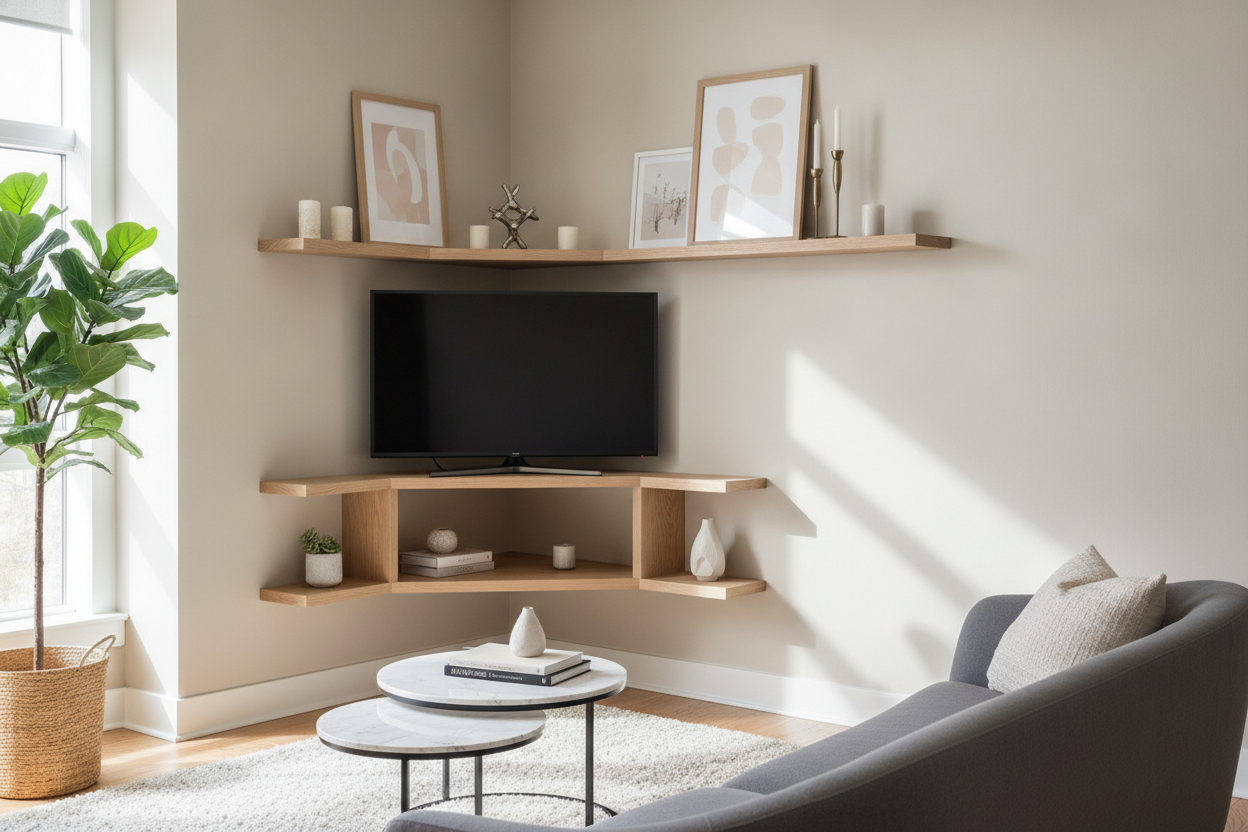
In my last apartment—a literal white box with zero character—a floating shelf just didn't cut it. The TV looked like it was hovering in a void. I decided to go 'all in' and installed a full wall entertainment center. It sounds counterintuitive for a small space, but taking up the entire wall actually made the room feel larger. It created built-in architectural interest where there was none before.
By surrounding the screen with books, art, and storage, the TV became just one element of a larger composition. It wasn't the 'main event' anymore. If you’re dealing with a boring room, don’t be afraid of a massive piece of furniture. It anchors the space and gives you a place to hide the clutter that usually ends up on the coffee table.
Please Stop Trying to Make the TV Invisible
I’m going to say it: Frame TVs are overrated and overpriced. I’ve owned one, and while the 'art mode' is cool for five minutes, the matte screen actually makes movies look slightly worse, and the software is a nightmare. And don't get me started on those sliding barn doors or cabinets meant to hide the TV. They’re bulky, they always get stuck, and they just scream, 'I’m hiding a TV here!'
We live in the 21st century. We watch TV. It’s okay to own a screen. Instead of trying to camouflage it like a secret agent, just make it look good. Get a high-quality console, manage your wires, and surround it with things you actually love looking at. A TV is a tool for entertainment; let it be what it is without the design guilt.
My Personal Setup Fail
I once bought a gorgeous, solid walnut media console that had no holes in the back for ventilation. I thought I’d just drill some myself. I ended up splintering the wood because I used the wrong bit, and then I realized my receiver was too deep for the cabinet anyway. I had to leave the doors propped open just so the thing wouldn't overheat and die. I spent $1,200 on a piece of furniture that I essentially broke on day one. Now, I always check the depth and the airflow before I even look at the price tag.
FAQ
How high should I mount my TV?
Lower than you think. Your eyes should be level with the middle of the screen when you're sitting down. Unless you're a sports bar, don't put it near the ceiling.
Can I put a TV over a fireplace?
You can, but I wouldn't. It's usually too high (hello, neck strain) and the heat can damage the internal components over time. If you must, use a pull-down mount.
What is the best material for a media console?
Look for kiln-dried hardwood or high-quality plywood with a real wood veneer. Avoid thin MDF if you have a heavy TV or a lot of equipment; it will sag in the middle within a year.


Dejar un comentario
Este sitio está protegido por hCaptcha y se aplican la Política de privacidad de hCaptcha y los Términos del servicio.