










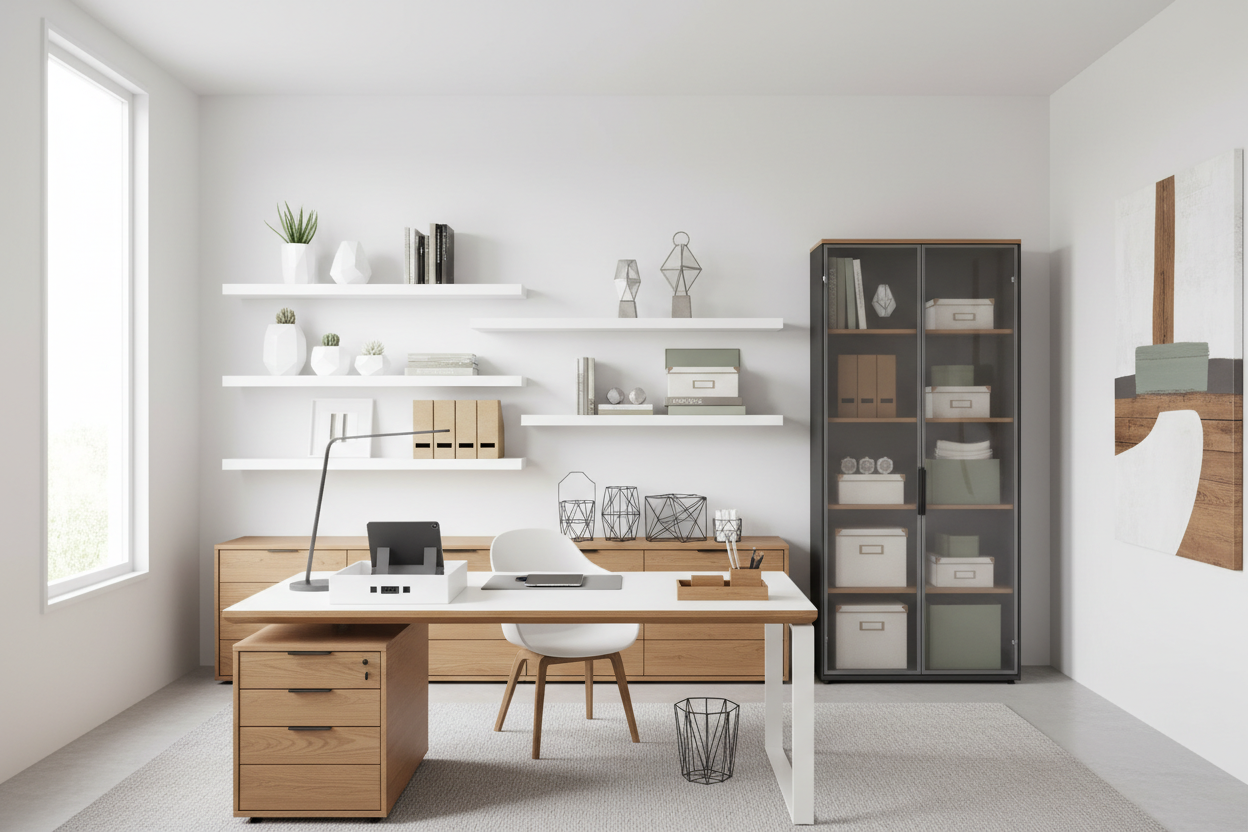
You cannot be productive when your desk looks like a paper factory exploded. We have all tried to convince ourselves that a little "organized chaos" sparks creativity, but there is a breaking point where clutter just becomes stress. The solution is rarely just throwing things away; it is about having a place to put them. This is where the shift toward modern home office cabinets has changed the game for remote work design. We aren't talking about those beige, metal filing cabinets from the 1990s corporate world. We are talking about sleek, architectural elements that happen to hold your printer and tax returns.
Modern design in a workspace is defined by a lack of visual noise. It relies on clean lines, hidden hardware, and a seamless integration with the rest of your home’s decor. Whether you are working from a dedicated room or a corner of the living room, the right storage transforms the area from a utility station into a design feature.
The Shift to "Furniture-Grade" Storage
For a long time, office storage was treated as an afterthought. You bought a desk, and maybe you shoved a plastic bin underneath it. The current trend in modern home office cabinetry is treating these pieces like permanent fixtures, similar to kitchen builds or custom media centers. The goal is to hide the work when the work is done.
Slab doors are the hallmark of this aesthetic. Unlike shaker style or raised panels which can feel traditional or farmhouse-leaning, slab doors offer a flat, unadorned surface. This simplicity allows the eye to travel across the room without getting stuck on intricate details. When you pair a matte charcoal or warm walnut slab door with touch-latch hardware, you eliminate handles entirely. The result is a wall of storage that looks more like a wood-paneled feature wall than a closet full of stationery.
My Battle with Open Shelving
I learned the hard way that "aesthetic" storage isn't always functional. A few years ago, I decided to install floating open shelves above my desk. I had visions of color-coded books and a perfectly placed succulent. The reality was much harsher. Within a week, those shelves were a dumping ground for invoices, charging cables, and random post-it notes. It looked terrible, and it made the room feel smaller.
I eventually tore them down and installed floor-to-ceiling closed cabinets with a matte black finish. The difference was immediate. I could shove the ugly reality of work—the binders, the router, the reams of paper—behind a closed door. The room instantly felt calmer. It taught me that unless you are an extreme minimalist, you probably need more closed storage than you think.
Material Mixes and Textures
One dimensional color palettes are fading out. While an all-white office feels clean, it can also feel sterile and clinical. The most interesting modern home office cabinets right now are utilizing two-tone designs to add depth. You might see lower base cabinets in a deep navy or forest green, paired with upper cabinets in a white oak or ash veneer. This grounds the space while keeping the upper visual field airy.
Texture plays a massive role here. High-gloss finishes were popular for a minute, but they are nightmare for fingerprints and glare, especially if your desk faces a window. Super-matte finishes, often called "soft-touch," absorb light rather than reflecting it. This creates a softer, more sophisticated look that hides smudges and feels velvety to the touch.
Floating vs. Floor-Standing Units
Deciding how your cabinetry interacts with the floor changes the perceived size of the room. Floating cabinets (mounted to the wall with no legs) are a staple of modern design. Because you can see the flooring extend all the way to the wall underneath the cabinet, the room feels wider and more open. This is a brilliant trick for smaller box rooms or apartment nooks.
However, floating units have weight limits. If you plan to store heavy reference books or heavy equipment, traditional floor-standing modern home office cabinetry with a recessed toe-kick is the safer engineering choice. The toe-kick (the little gap at the bottom) mimics the floating look slightly but transfers the weight directly to the floor. It also prevents dust bunnies from accumulating in hard-to-reach places under the unit.
The Tech-Ready Interior
The exterior should look like a calm sanctuary, but the interior needs to be a command center. Modern cabinetry fails if it doesn't account for the digital age. We have moved past simple shelves. You need dedicated spaces for hardware.
- Ventilated Cabinets: If you are hiding a CPU tower, a gaming console, or a heavy-duty router inside a cabinet, it needs airflow. Modern custom units often include mesh inserts in the backing or slotted bases to prevent overheating.
- The Printer Drawer: Printers are universally ugly. A pull-out shelf on heavy-duty glides allows you to tuck the printer away in a base cabinet and only slide it out when you need to grab a document.
- Charging Stations: Drilling grommet holes through the back of a drawer allows you to install a power strip inside. You can charge your tablet, phone, and headphones inside the drawer, keeping the desktop completely cord-free.
Custom Built-ins vs. Modular Systems
You do not always need a carpenter to achieve this look. While custom millwork offers the most seamless fit, modular systems have come a long way. Many retailers now offer modular components that can be bolted together to look like a single unit. The trick to making modular furniture look high-end is fitting it wall-to-wall. If you buy three bookcase units and there is a six-inch gap left on the side, it looks like furniture you bought. If you use filler strips (pieces of wood painted to match) to close that gap, it suddenly looks like custom architecture.
Lighting also bridges the gap between stock and custom. Adding LED strip lighting to the underside of upper cabinets or inside glass-fronted display areas adds a layer of polish that elevates even budget-friendly materials.
Making the Choice
Your workspace environment dictates your output. If you are staring at clutter, your brain is processing that visual data constantly. Investing in modern home office cabinets is an investment in your focus. Look for clean lines, prioritize closed storage over open shelving, and ensure the interior is rigged for your tech needs. When everything has a place, work feels a little less like work.
Frequently Asked Questions
How deep should home office cabinets be?
Standard lower cabinets are usually 24 inches deep, similar to kitchen counters, which is great for printers and large equipment. However, for upper cabinets or tighter spaces, a depth of 12 to 15 inches is preferred to prevent the room from feeling closed in while still accommodating binders and books.
Can I mix different cabinet styles in one office?
Yes, but keep the color palette cohesive. A popular modern approach is to use solid slab doors for the messy storage areas and aluminum-framed glass doors for a small section to display curated items, which breaks up the visual weight of a solid wall.
What is the best finish for durability in a home office?
thermally fused laminate (TFL) or high-quality rigid thermofoil (RTF) are excellent choices for modern offices. They resist scratches and chips better than painted wood and come in convincing wood grains or matte solids that fit the contemporary aesthetic perfectly.

Dejar un comentario
Este sitio está protegido por hCaptcha y se aplican la Política de privacidad de hCaptcha y los Términos del servicio.