










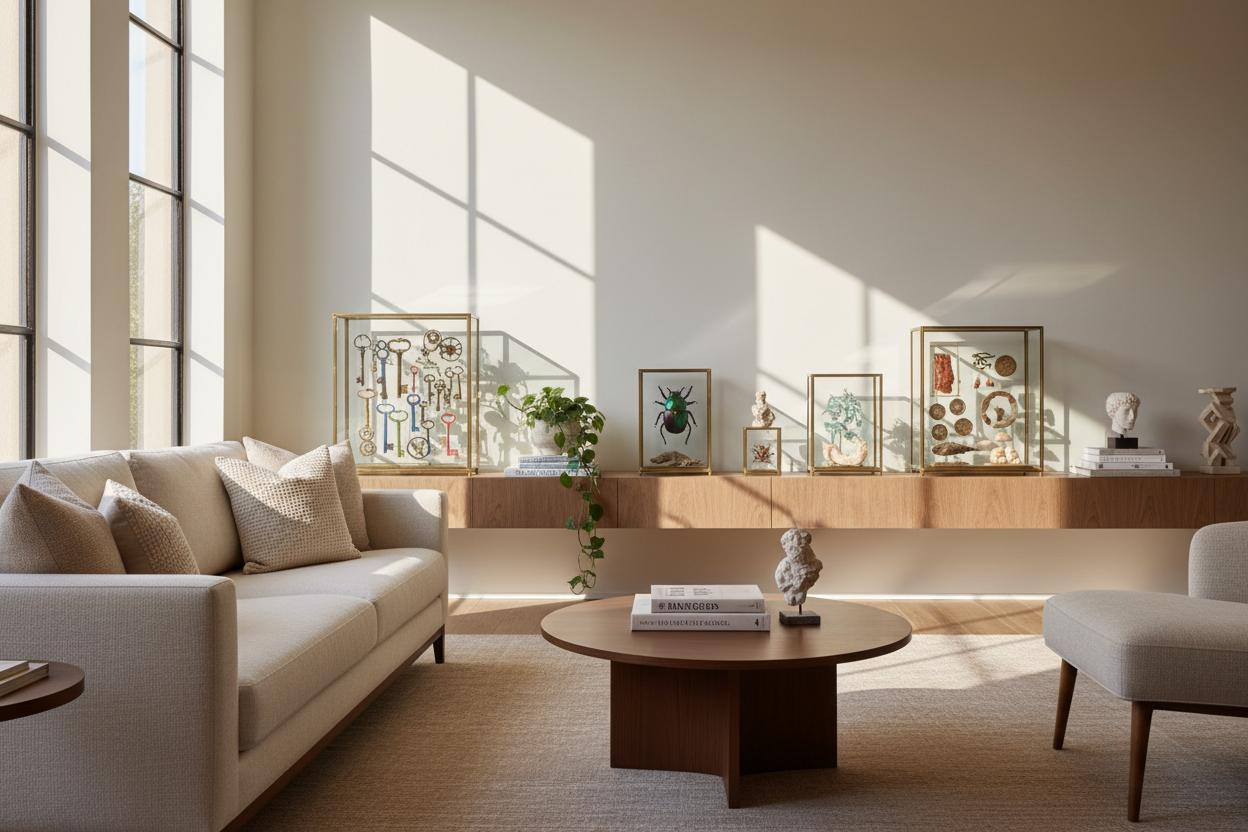
I have a confession: I’m a hoarder of things that don’t matter to anyone else. A smooth pebble from a Maine beach, a brass key that fits no lock I own, and a collection of matchbooks from restaurants that closed before I was born. For years, I tried to 'style' these on my bookshelf. I’d spend hours nudging a rock two inches to the left, only for it to look like literal debris. It was a mess that never felt finished.
Then I bought a small glass case display and everything changed. Suddenly, my 'debris' had a boundary. It wasn't just stuff sitting on a shelf; it was a curated moment. If you're tired of your favorite trinkets looking like junk or, worse, becoming permanent dust magnets, it's time to put them behind glass. It turns chaos into a collection.
- Dust protection: Save yourself hours of tedious cleaning.
- Intentionality: Glass creates a museum effect for ordinary objects.
- Visual Order: Groups small, disparate items into one cohesive unit.
- Space efficiency: Vertical cases maximize tiny footprints.
The Dark Side of Open Shelving (And All That Dust)
Open shelving is the biggest lie in interior design. We see those photos of airy, minimalist kitchens and perfectly balanced living room built-ins, but the reality is much grittier. Literally. If you have tiny objects sitting out, they aren't just decor—they are dust collectors. It takes about four days for a cool vintage toy to go from 'charming' to 'grey and fuzzy.'
I used to spend my Sunday mornings with a microfiber cloth, carefully wiping down every individual figurine and vintage dice set. It’s soul-crushing work. Beyond the cleaning, open shelves make it nearly impossible to display small items without them looking like clutter. A single 2-inch object on a 36-inch shelf looks lost. Ten of them look like a yard sale. You need a way to house the small stuff so it doesn't get swallowed by the room or covered in a layer of grime.
Why a Small Glass Case Display Changes the Game
There is a weird psychological trick that happens when you put something behind glass. It immediately feels more expensive. Think about a museum: they put a broken piece of pottery in a small glass display showcase, and people stand in line to look at it. Without the glass, it’s just a shard of clay. The glass tells the viewer that the item inside is precious.
When you use a small glass case, you’re telling the room that the contents are worth protecting. It creates a frame. Instead of your eyes scanning past a dozen tiny things, they focus on the enclosure. I’m begging you to put your decor in a small display case instead of leaving your favorite items loose on top of dressers. It provides a hard boundary that says, 'This is art, not clutter.' It also prevents that 'drifting' effect where your decor slowly migrates across the surface over time.
Containing the Chaos With Small Glass Display Boxes
If you have a collection of very small, flat-ish items—think old coins, crystals, or those matchbooks I mentioned—small glass display boxes are your best friend. These are usually tabletop units, maybe 4 to 8 inches wide. They don't take up much room, but they pack a huge punch in terms of organization.
The trick here is the 'pile' method. You don't have to stand every item up perfectly. You can artfully layer them. A stack of vintage postcards inside a glass box looks intentional and tactile. It turns a pile of paper into a collection of history. It’s also a great way to handle those items that are too small to stand up on their own without falling over every time someone walks past the table. It keeps the chaos contained within four glass walls.
What Actually Looks Good Inside a Glass Case Small Enough for a Desk?
You don't need a collection of Ming vases to justify a glass case small enough to fit on your workspace. In fact, the weirder the better. I’ve seen people use them for things that most people would just throw in a junk drawer. It's about the presentation, not the price tag.
The key is contrast. If the case is sleek and modern with thin black metal frames, put something organic or rough-textured inside, like a piece of driftwood or a geode. If the case is ornate and brass, go for something minimalist and clean. Some of my favorite things to display include:
- Dried botanical clippings or particularly cool pinecones.
- Mechanical keyboard switches or vintage fountain pens.
- A single, high-quality architectural model or LEGO set.
- Air plants (they love the slightly higher humidity).
- Old cameras that no longer work but look iconic.
Going Vertical: Small Display Cases With Shelves
If your horizontal surface area is at a premium, you need small display cases with shelves. These allow you to stack your interests without eating up the entire top of your console table. I use a three-tier vertical case for my collection of miniature brass animals. If I lined them up on the desk, they’d take up the whole side. Stacked vertically, they take up a 5-inch square.
Vertical cases also allow you to tell a story through the tiers. You can have a theme for each shelf—maybe travel souvenirs on the bottom and family heirlooms on the top. If you find that a tabletop case isn't quite enough but you aren't ready for a full-sized cabinet, a short glass display cabinet can bridge that gap perfectly. It gives you more height without dominating the room like a massive armoire would.
My 3 Rules for Styling a Small Glass Case
Don't just shove everything in there and call it a day. You have to edit. The difference between a curated display and a glass-covered junk box is all in the arrangement. I've assembled enough of these to know that less is almost always more.
First: Negative space is your friend. Don't fill the case to the brim. If the objects are touching the glass on all sides, it looks like a trash can. Leave at least an inch of breathing room around your main pieces. This allows the eye to actually see what you're showing off.
Second: Vary your heights. If everything is the same size, the eye gets bored. Use a small pedestal, a stack of two books, or even a nice piece of wood to lift one item higher than the rest. It creates a sense of movement.
Third: Keep the glass clean. This sounds obvious, but a dusty glass case is worse than a dusty shelf. Use a high-quality glass cleaner and a lint-free cloth once a week. Fingerprints on the glass break the museum illusion instantly. If you see a smudge, kill it immediately.
Personal Experience: The Acrylic Disaster
I once bought a 'beautiful' case online that looked like a steal. When it arrived, it was actually thin, flimsy acrylic that was already scratched. It felt like a toy. I learned the hard way that if you want that high-end look, you have to look for real glass—preferably 4mm tempered—and a solid metal or wood frame. I eventually replaced it with a heavy brass and glass box I found at an estate sale for $15. It weighs five pounds and makes my cheap thrifted rocks look like they belong in the Smithsonian. Don't settle for plastic.
FAQ
How do I stop things from sliding around inside?
Use a tiny dot of museum wax (clear putty) on the bottom of the object. It’s invisible and keeps things from toppling over if you bump the table or open the door.
Is acrylic better than glass?
No. Acrylic scratches if you even look at it wrong and it yellows over time. Real glass stays clear and has a weight to it that feels much more premium and stable.
Can I put plants in them?
Yes, but watch the humidity. Air plants and succulents do well in cases that have some airflow. If the case is airtight, you'll end up with mold unless it's a dedicated terrarium.


Dejar un comentario
Este sitio está protegido por hCaptcha y se aplican la Política de privacidad de hCaptcha y los Términos del servicio.