










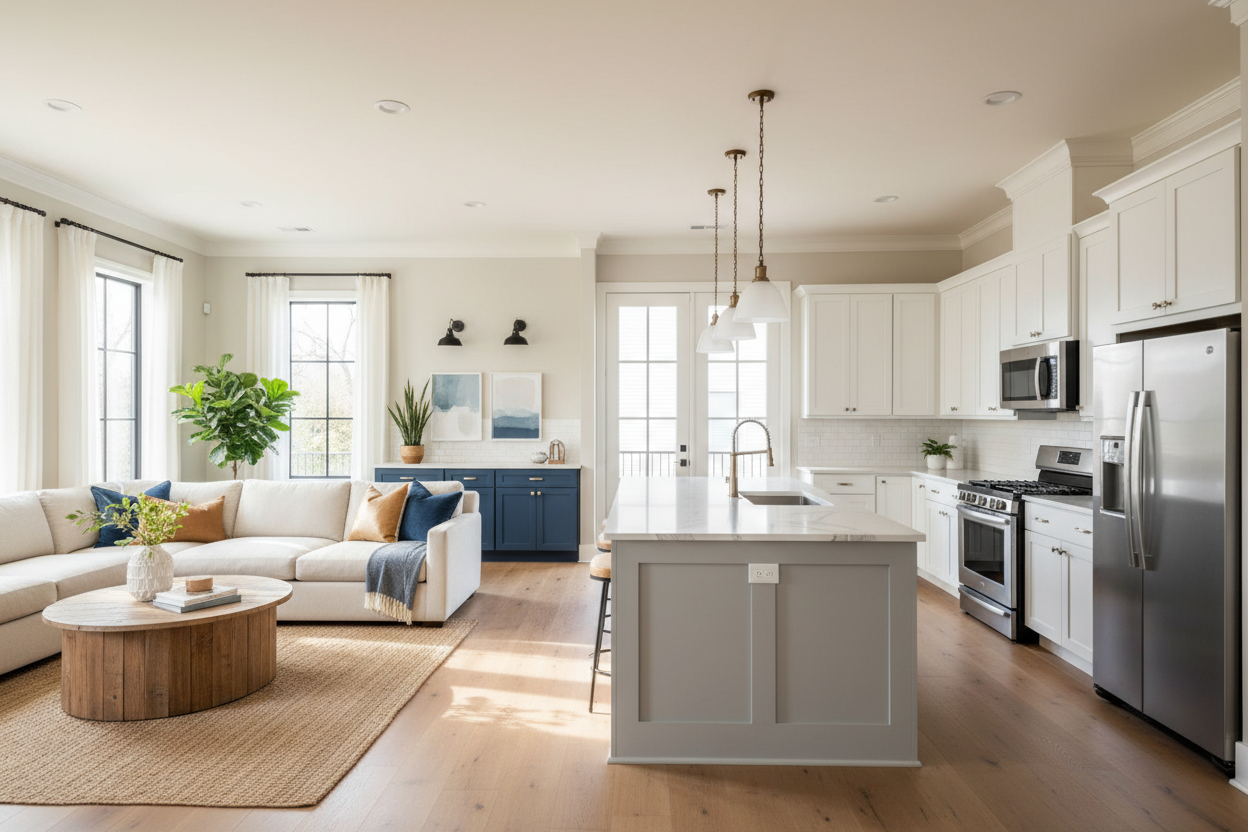
I remember the day I thought I was smarter than my lease. I bought a heavy-duty articulating arm, a stud finder that lied to me, and proceeded to turn my living room wall into Swiss cheese. I thought I was saving floor space; instead, I was ensuring I’d never see my $400 security deposit again. After three hours of patching drywall with a putty knife and a prayer, I realized the truth: a well-chosen apartment tv stand is actually superior to a wall mount.
Quick Takeaways
- Always buy a stand at least 6 inches wider than your TV to avoid the 'lollipop' look.
- Prioritize a 14-16 inch depth to keep your walkway clear.
- Closed cabinetry is the only way to hide the 'tech nest' of routers and wires.
- Legs with 6+ inches of clearance make a small room feel significantly larger.
The Wall-Mounting Delusion (And My Lost Security Deposit)
We’ve all been there. You see those minimalist living rooms on Pinterest where the TV floats effortlessly against a pristine white wall. In a rental, that dream usually ends in a bucket of spackle and a frustrated landlord. I spent years trying to make wall-mounting work in cramped units before I finally accepted that a tv stand for apartment living is a design opportunity, not a compromise.
The reality is that most modern drywall in 'luxury' apartments is thin and unreliable. Even if you hit a stud, you’re left with the 'cord waterfall' problem—unless you’re prepared to cut holes to hide cables behind the wall, which is another lease violation. A solid tv stand apartment setup solves both problems instantly. It hides the mess and gives you a surface for things that actually make a house feel like a home, like a decent lamp or a stack of books you might actually read.
3 Golden Rules for Small Living Rooms
When you’re dealing with limited square footage, you can't just buy the first thing that catches your eye at a big-box store. You need a system. I’ve gone through four different consoles in three years, and these are the non-negotiables I’ve landed on to keep a room from feeling like a storage unit.
1. Measure the Wall, Not Just the Screen
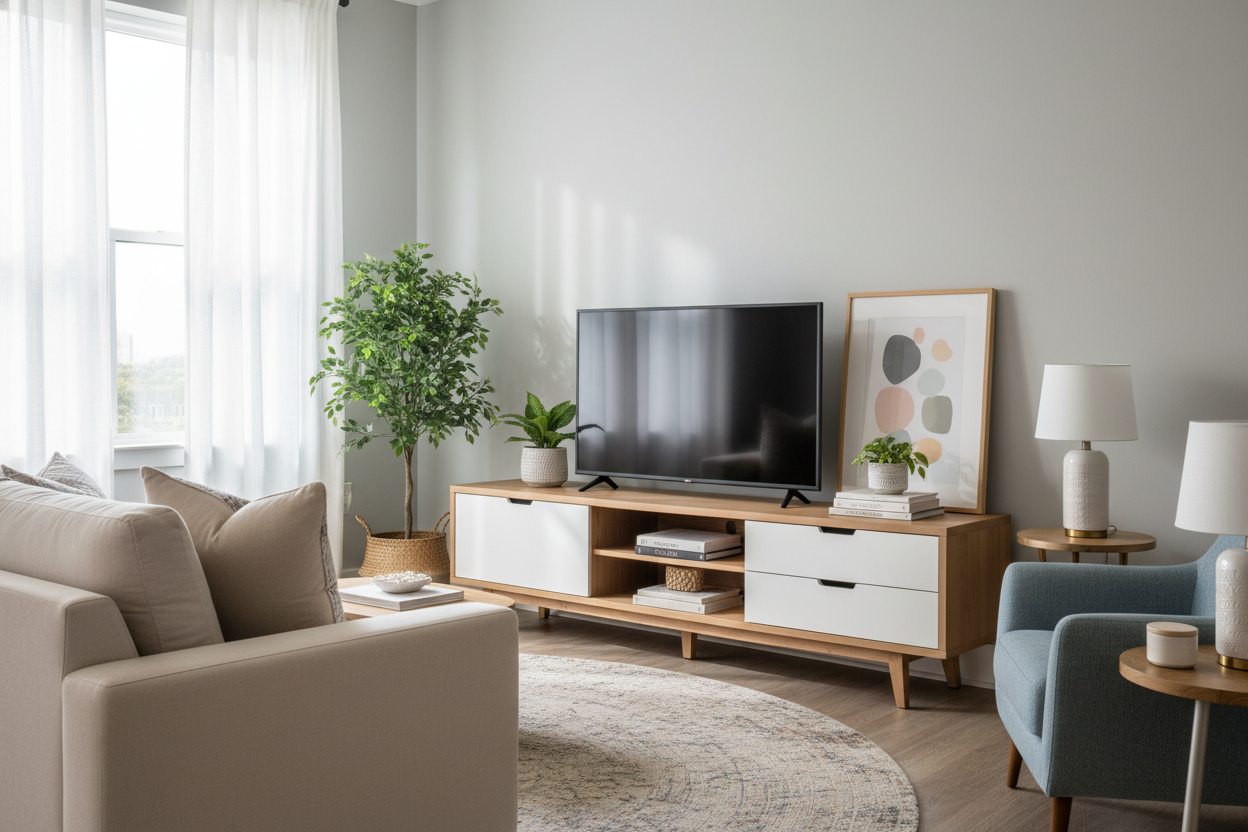
The biggest mistake I see is people buying a stand that is the exact same width as their TV. It looks precarious and cheap. You want at least three to six inches of 'buffer' on either side of the screen. This creates a sense of balance and allows you to maximize flow in a tight room by giving the eye a place to rest.
If your wall is ten feet wide and your TV is 50 inches, don't buy a 50-inch stand. Go for something 60 or 70 inches. It sounds counterintuitive to buy 'bigger' furniture for a small space, but one long, low piece looks much more intentional and high-end than a tiny stand flanked by awkward floor clutter.
2. Closed Storage is Non-Negotiable
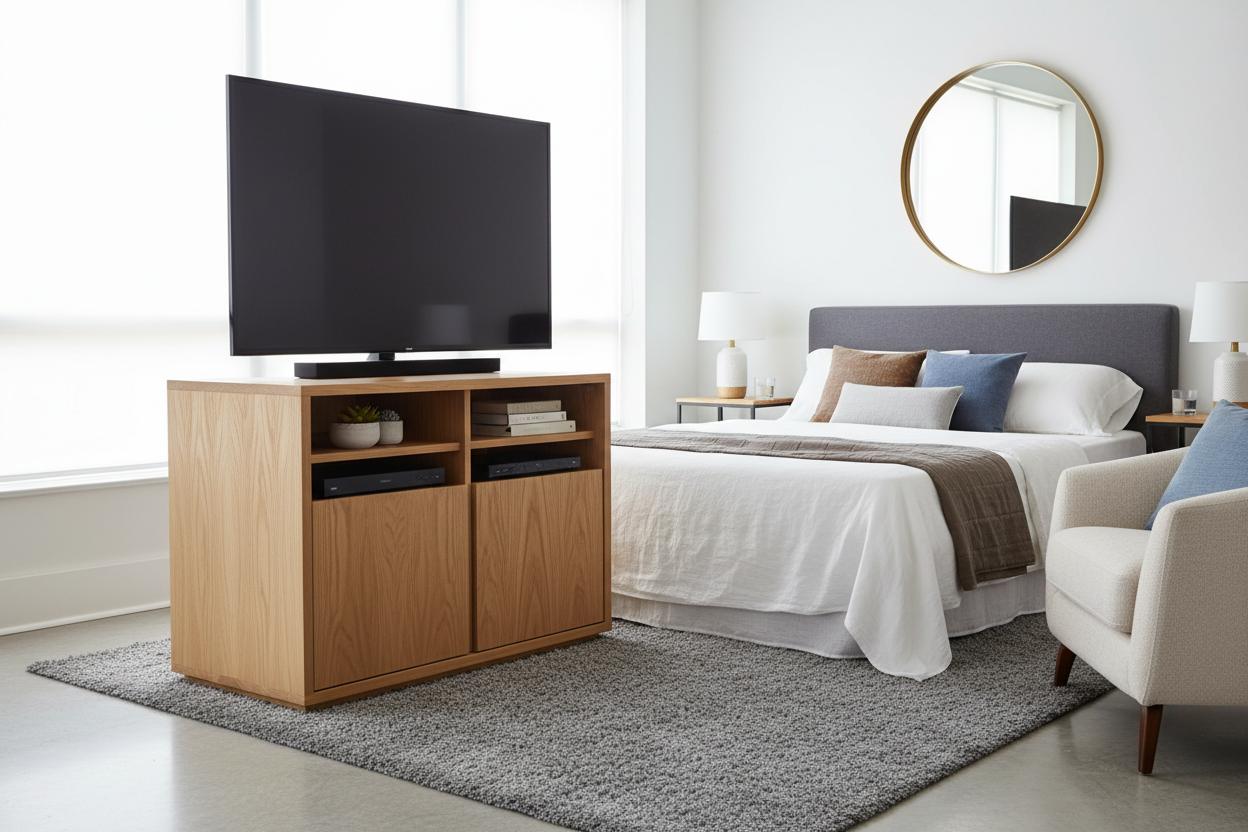
Open shelving is a trap. Unless you are a literal monk who owns nothing but a single remote, those shelves will eventually be filled with tangled HDMI cables, a dusty PlayStation, and your internet router. In a tv stand for studio apartment layouts, your media console is often your only storage piece. Get doors.
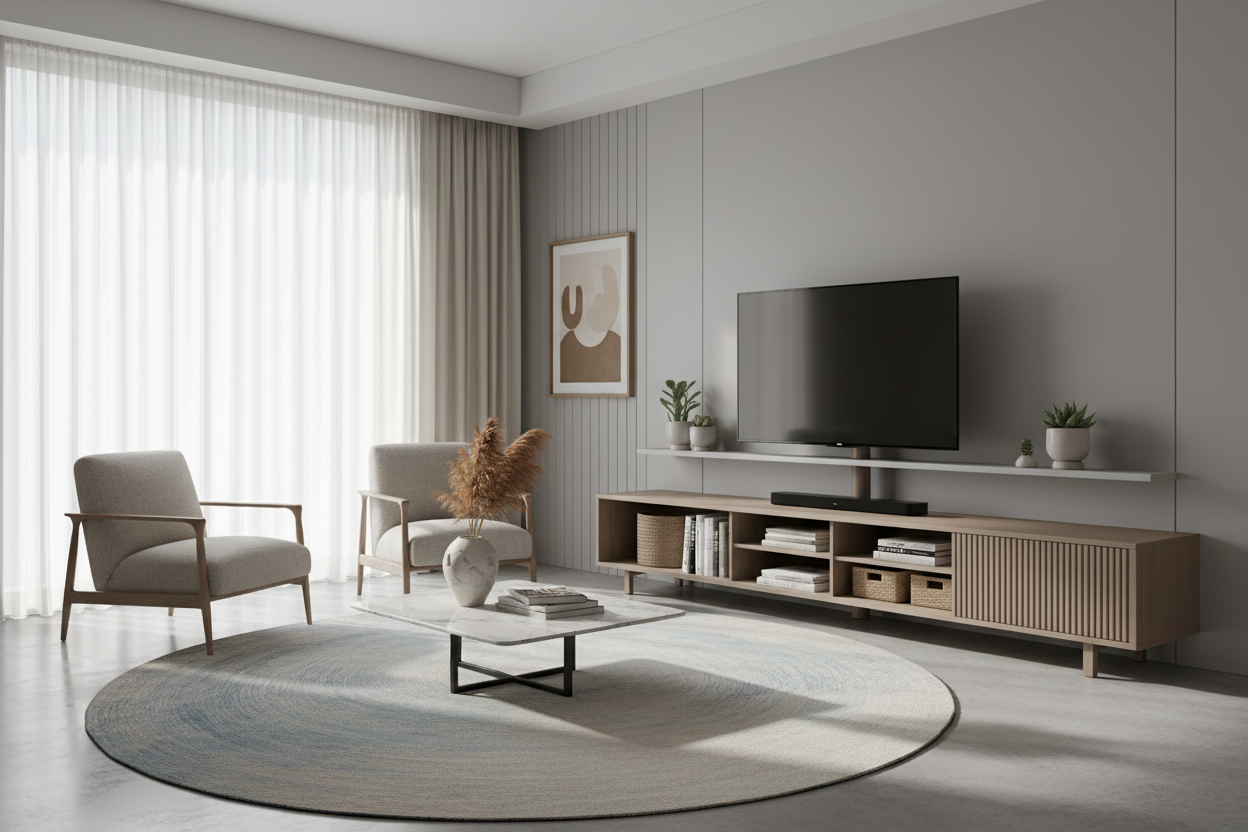
I personally swear by cane or slatted doors. They allow infrared signals from your remote to pass through and provide ventilation for electronics that run hot, but they hide the visual chaos. If you can see the wires, the room will never feel clean, no matter how much you vacuum.
3. Go Tall and Slim, Never Deep
In a narrow tv stand apartment floor plan, depth is your enemy. Most old-school media consoles are 20 to 24 inches deep because they were designed for heavy CRT tubes. Modern LEDs are only a few inches thick. Look for a small space media console with a 'slim profile'—ideally between 14 and 16 inches deep.
That extra four inches of floor space is the difference between comfortably walking past your coffee table and having to do a sideways 'apartment shuffle' every time you go to the kitchen. If you need height to clear the back of a sofa, look for units with tall, tapered legs. Getting the bulk of the furniture off the floor makes the entire room feel airier.
Floating vs. Freestanding: What Actually Works?
If you have a landlord who doesn't mind a few heavy-duty bolts, a wall-mounted media console is the gold standard for small spaces. It keeps the floor completely clear, which is a massive win for aesthetics and cleaning. However, for 90% of us, freestanding is the way to go.
The compromise? Buy a freestanding unit with very thin, high legs. I once bought a solid-to-the-floor cabinet for a 300-square-foot studio and it felt like a boulder in the middle of the room. I swapped it for a mid-century style piece with 8-inch spindle legs, and the room instantly felt twice as big. Being able to see the floorboards underneath the furniture trick the brain into thinking there’s more space than there actually is.
Making the Media Wall Look Intentional
Once you’ve picked your piece, don't just plop the TV in the center and call it a day. A giant black rectangle is a bit of a vibe-killer. I like to offset my TV to one side and balance the other side with a tall vase or a piece of art. It breaks up the 'shrine to the television' look that many living rooms fall into.
Lighting is your best friend here. Stick a cheap LED bias strip to the back of the TV or put a small accent lamp on the console itself. It reduces eye strain and makes the furniture look like a curated part of the room rather than just a place to put the Netflix machine. If you're still hunting for the right fit, browse a curated selection of tv stands to find a silhouette that matches your specific wall dimensions.
FAQ
How much wider should a TV stand be than the TV?
At minimum, aim for 3 inches on each side. If you have a 55-inch TV (which is usually about 48 inches wide), your stand should be at least 54 inches wide. Anything less looks 'top-heavy' and unstable.
What is the best height for a TV stand?
Your eyes should be level with the middle of the screen when you are sitting on your sofa. For most standard couches, this means a console height of about 22 to 28 inches. If you buy a 'tall' sideboard, you’ll be straining your neck looking up.
Can I put a large TV on a small stand?
Physically? Maybe. Visually? It’s a disaster. Beyond the aesthetic issues, it’s a major safety hazard. If the TV overhangs the edges of the stand, it’s incredibly easy to knock over while cleaning or walking past.

Leave a comment
This site is protected by hCaptcha and the hCaptcha Privacy Policy and Terms of Service apply.