










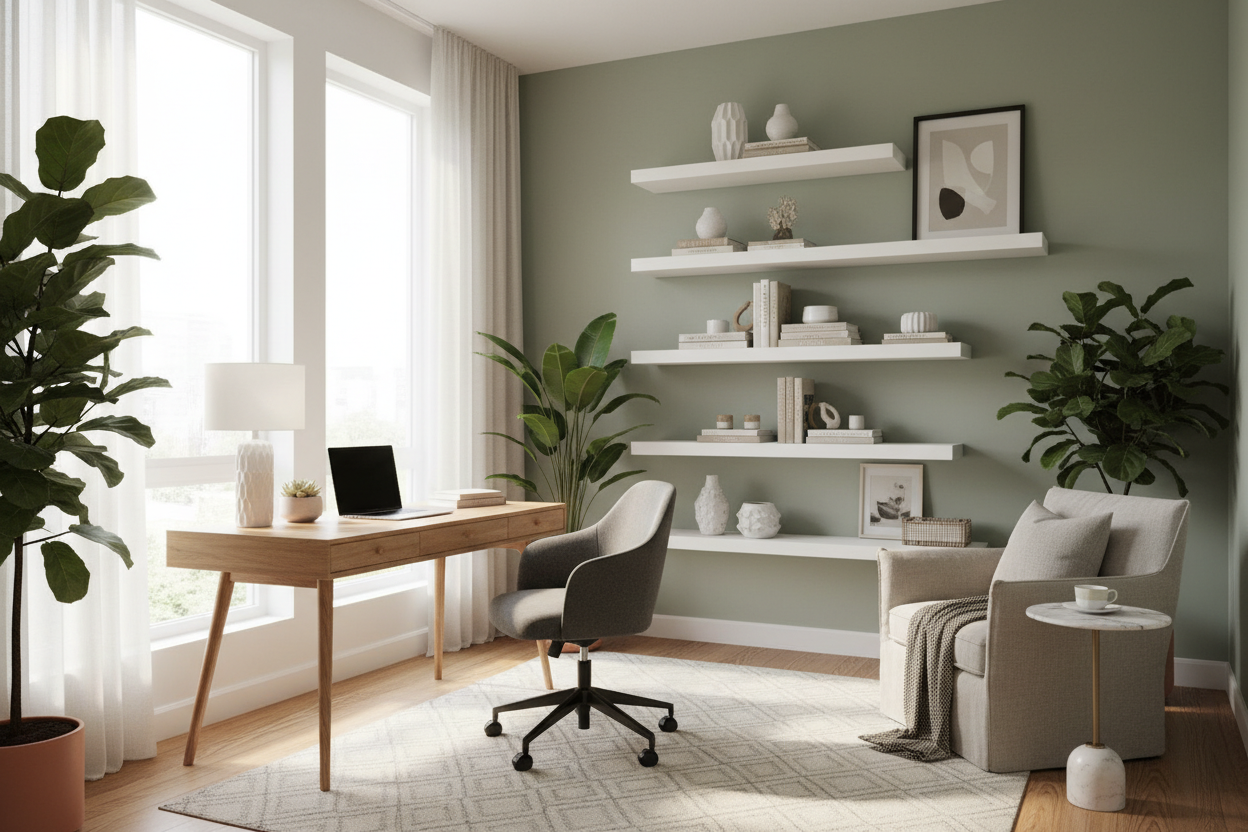
We have all been there: balancing a laptop on a stack of coffee table books or trying to ignore the laundry pile while on a video call. Creating a workspace that feels inspiring rather than purely utilitarian is a common hurdle, especially when square footage is tight. If you are trying to achieve that coveted apartment.therapy home office aesthetic, you likely want a room that feels collected, personal, and highly functional without looking like a corporate cubicle.
In this guide, we will break down exactly how to balance ergonomics with eclectic styling. You will walk away knowing how to plan your layout, select the right materials, and avoid the common pitfalls of setting up a residential workspace.
Quick Decision Guide
- Prioritize negative space: Avoid pushing all your furniture against the walls; floating a desk can make a small room feel intentionally designed.
- Mix materials for warmth: Pair a sleek metal desk frame with organic textures like a rattan lamp or a vintage wool rug.
- Hide the tech: Use cable management trays and decorative woven baskets to conceal routers, power strips, and ugly wires.
- Scale matters: Ensure your desk depth is at least 24 inches if you use an external monitor, preventing eye strain and cramped wrists.
Space Planning & Layout
Finding the right spot for your workspace dictates how often you will actually use it. A common mistake is shoving a desk into a dark corner just because it fits.
The Floating Desk Approach
If you have the floor space, try pulling your desk away from the wall so you face the room, or better yet, a window. This setup instantly gives the room a commanding, executive feel, even in a spare bedroom. Leave at least 36 inches of clearance behind the desk so you can comfortably push your chair out without scuffing the baseboards.
Managing Visual Weight
When dealing with a small footprint, pay attention to the silhouette of your furniture. A chunky, solid-wood executive desk carries heavy visual weight and can swallow a room whole. Opt for a desk with open legs or a glass top to allow light to pass through, making the space feel airy and uncrowded.
Style & Coordination
The secret to an inviting workspace is treating it like an extension of your living area rather than a separate, sterile zone.
Layering Textures Over Tech
Monitors, keyboards, and printers introduce a lot of hard, cold plastic into a room. To counteract this, introduce soft, tactile elements. Drape a textured throw over the back of your desk chair, bring in a potted trailing plant like a pothos to soften the hard edges of your monitor, and swap out harsh overhead lighting for a brass or ceramic table lamp with a warm bulb.
Comfort & Ergonomics
A beautiful room means nothing if your back aches after an hour of answering emails.
The Chair Compromise
Many homeowners sacrifice support for a chair that looks good in photos. You need a seat with adjustable height and proper lumbar support. If a traditional ergonomic chair clashes with your decor, look for transitional pieces upholstered in performance velvet or leather that offer hidden tilt mechanisms and high-density foam seating.
Designer's Honest Take
A few years ago, I was designing a Brooklyn apartment therapy office for a client who insisted on using a gorgeous, mid-century modern dining chair as her primary desk seating. It had a flawless walnut finish and sculptural lines. I advised against it, but aesthetics won out.
I learned the hard way that a rigid wooden backrest is unforgiving after a four-hour deep work session. Within three weeks, the client was complaining of shoulder pain, and the chair's delicate vintage legs were scratching the original hardwood floors every time she scooted in. We ended up swapping it for a fully adjustable task chair with rolling casters and a padded seat. The lesson? Never compromise on the physical touchpoints of your daily routine. If you love a vintage chair, keep it in the room as an accent piece, not your main workhorse.
Frequently Asked Questions
How do I hide cords in a small home office?
Mount a wire management tray underneath the back edge of your desk to hold power strips and excess cable lengths. Use adhesive cord clips to route wires down the back of the desk legs so they remain virtually invisible from the doorway.
What size desk do I need for a dual-monitor setup?
For two standard monitors, you need a desk that is at least 48 inches wide and 24 to 30 inches deep. Anything shallower will force the screens too close to your face, causing eye fatigue and leaving zero room for a keyboard and notepad.
How can I make my workspace look like an apartment therapy office?
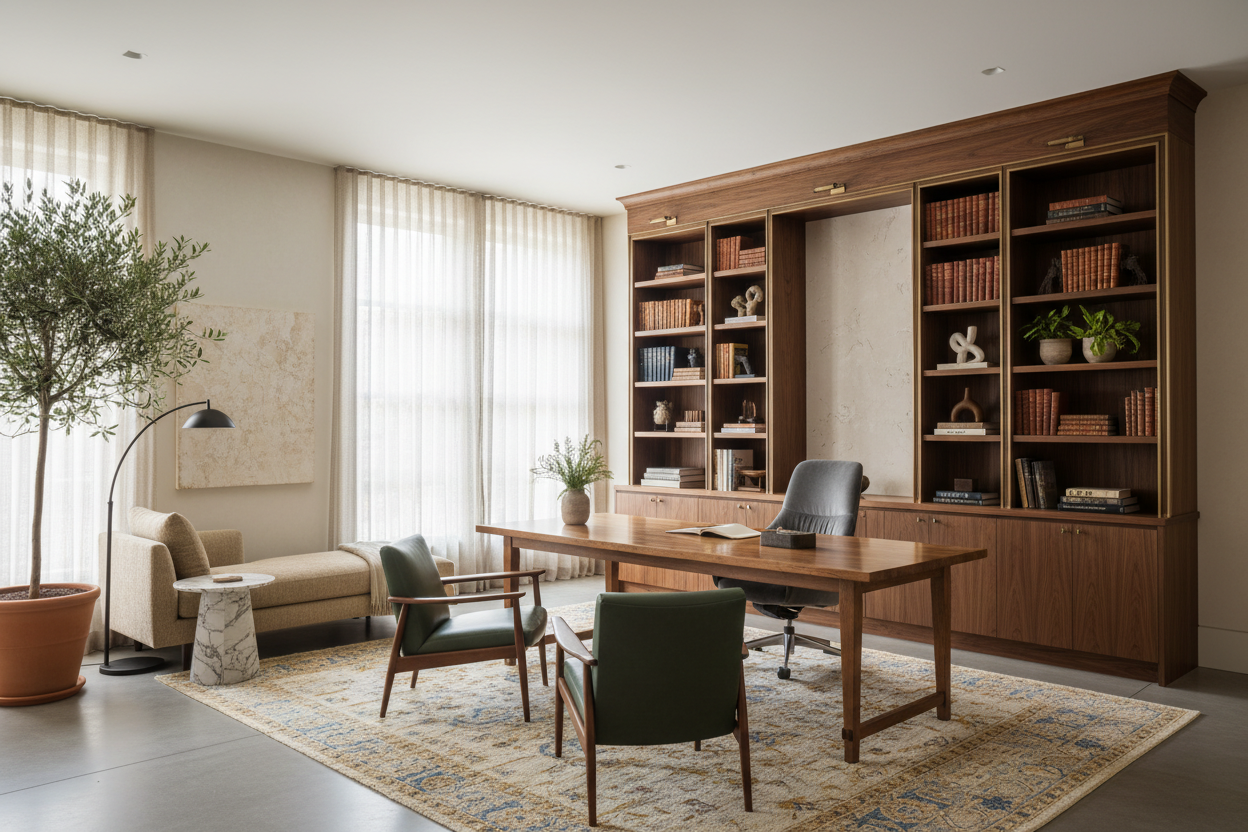
Focus on personalization and eclectic mixing. Instead of buying a matching desk-and-bookshelf set, pair a modern writing desk with a vintage Persian rug and a gallery wall of personal art. The goal is a curated, lived-in feel rather than a showroom look.

Leave a comment
This site is protected by hCaptcha and the hCaptcha Privacy Policy and Terms of Service apply.