










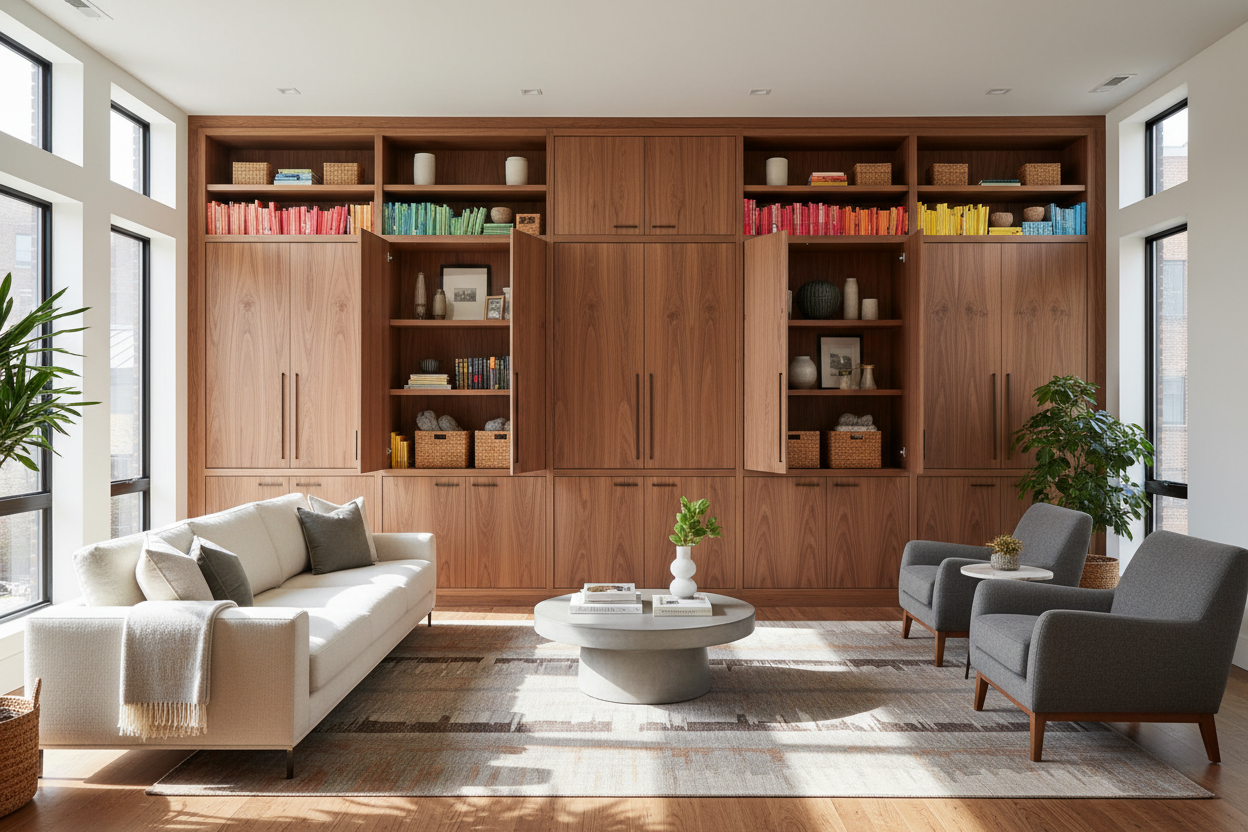
I remember staring at my living room last year and feeling like the whole thing was sliding toward the floor. Everything I owned was low-profile—the mid-century sofa, the flat-weave rug, the spindly coffee table. It felt temporary, like a stiff breeze could blow the whole layout away. I finally realized I didn't need more throw pillows; I needed living storage cabinets that actually had some weight to them.
We've been told for a decade that 'airy' is the only way to make small rooms feel big. But there's a threshold where airy becomes messy. If you can see every cord, every half-finished puzzle, and every dusty Wi-Fi router, your room doesn't feel big—it feels cluttered. I traded my open metal shelving for a solid wood piece, and suddenly, the room felt like it had a permanent address.
- Visual Anchor: A heavy cabinet grounds a room full of 'soft' furniture.
- Hiding the Mess: Closed storage is the only way to achieve true minimalism.
- Material Matters: Look for kiln-dried hardwoods over thin veneers if you want the piece to last.
- Depth Check: 15-18 inches is the magic number for most living spaces.
The 'Floppy Room' Epidemic (And Why We Need Visual Weight)
Most modern living rooms suffer from what I call 'the flop.' You have a sofa, a rug, and maybe some curtains—all soft textures. Without a heavy, vertical element, the room lacks structure. It’s like wearing an oversized tracksuit without a structured coat; you just look like a pile of laundry.
Adding a substantial wood cabinet creates an architectural anchor. It mimics the presence of a built-in without the $5,000 contractor bill. When I brought home a 72-inch tall oak cabinet, my 12x14 living room actually felt larger because the eye had a clear place to land. It stopped the visual drift where your gaze just slides around the room looking for something solid.
Floating Shelves Are Lying to You
Floating shelves are the ultimate Instagram trap. They look stunning when they’re holding three perfectly coordinated art books and a single sprig of eucalyptus. They look like a disaster when they’re holding your Catan box, three tangled charging cables, and a stack of mail you’re avoiding.
Open shelving demands constant curation, which is a part-time job I don't want. Moving toward finding the perfect wood cabinet allows you to be a secret mess. You shove the board games and the ugly plastic router behind a solid door, and suddenly you're a person who has their life together. It’s about peace of mind, not just aesthetics.
How Deep Do Living Storage Cabinets Actually Need to Be?
This is where most people mess up. They buy a massive sideboard and realize they have to shimmy past it just to get to the kitchen. In a standard room, you want at least 36 inches of 'walk zone' in front of your furniture. If your cabinet is 22 inches deep, you might be choking your floor plan.
I’ve found that 15 to 18 inches is the sweet spot for living room storage options. It’s deep enough for a standard record player or those massive coffee table books, but shallow enough that it doesn't swallow the room. If you’re storing electronics, make sure the interior depth accounts for the plugs sticking out the back—I once bought a beautiful 14-inch cabinet only to realize my receiver needed 16 inches including the HDMI cables.
My Formula for Styling Heavy Wood Pieces
The risk with 'heavy' furniture is that you end up with a room that looks like a 1990s law office—dark, brooding, and slightly depressing. To avoid this, you have to play with contrast. If the cabinet is solid and dark, I top it with 'light' materials: glass lamps, thin metal frames, or a large mirror that bounces light back into the room.
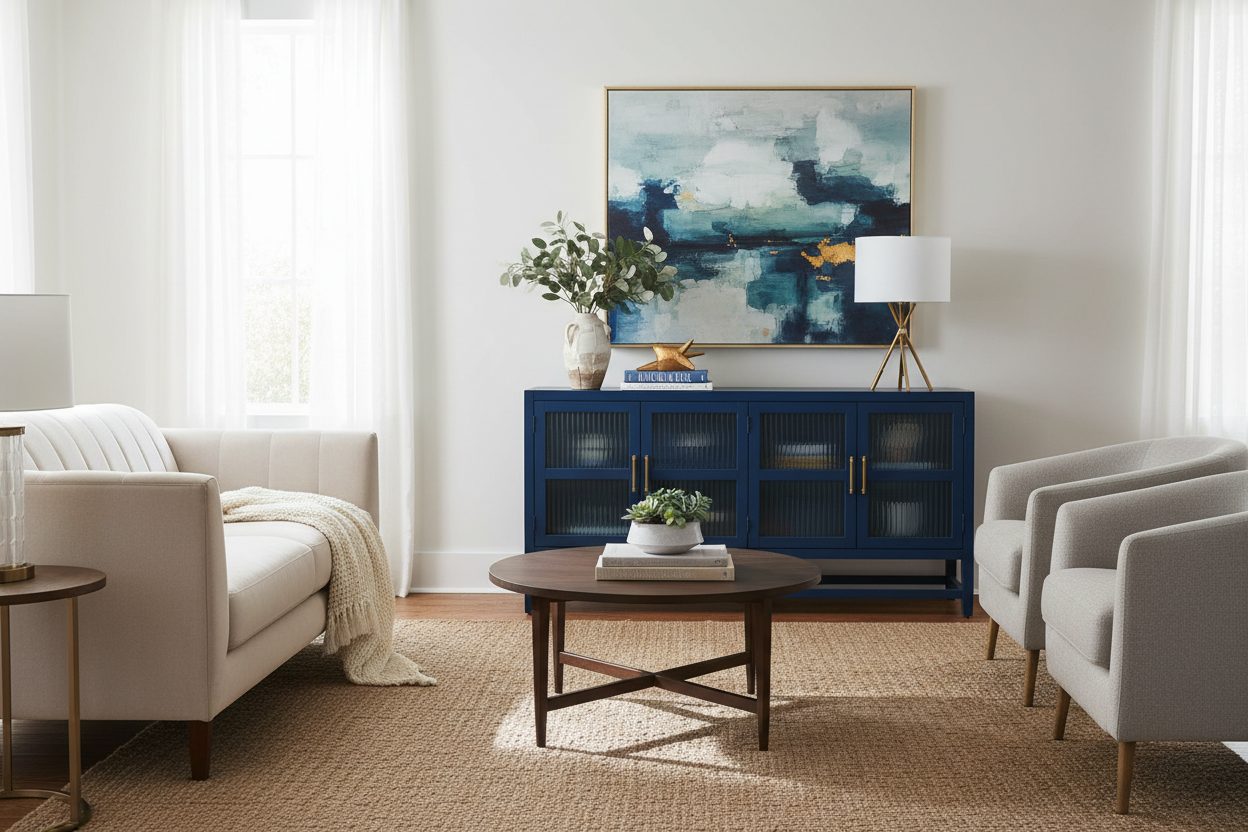
I’m a huge fan of using wood storage for living room that sits on slightly tapered legs. It gives you that solid wood feel and massive storage capacity, but because you can see a few inches of floor underneath, it doesn't feel like a boulder dropped in your house. I personally use a similar sideboard for my bar station—it hides the ugly liquor bottles but provides a great surface for mixing drinks.
Wait, Can I Just Use a Dresser?
I get asked this all the time. Can you just drag a bedroom dresser into the living room? The answer is: sometimes. A dresser is great if you have a lot of small items—coasters, batteries, remotes, and napkins. If you’re trying to store a stack of blankets or a gaming console, the drawers will drive you crazy.
However, a specialized wood storage living room piece that uses a multi-drawer layout can be a lifesaver for the 'everything drawer' addicts among us. I use a nine-drawer chest in my entryway-living combo. One drawer is for dog leashes, one for keys, and one for those random Allen wrenches that come with every piece of furniture. It works because the scale is right for the wall, even if the label says otherwise.
How do I stop a tall cabinet from tipping?
Always use the anti-tip kit. I don't care if you don't have kids. One heavy drawer pulled out too far can bring the whole thing down. Anchor it to a stud, not just the drywall.
What wood should I look for?
If you can afford it, go for solid oak, walnut, or teak. If you're on a budget, look for wood veneer over solid plywood. Avoid MDF or particle board for anything holding significant weight, as the shelves will eventually bow in the middle.
How do I hide cords in a solid cabinet?
If the cabinet doesn't have a cord hole, don't panic. A 2-inch hole saw bit on a standard power drill will give you a clean opening in the back panel in about thirty seconds. Just check for interior shelves before you drill.


Leave a comment
This site is protected by hCaptcha and the hCaptcha Privacy Policy and Terms of Service apply.