










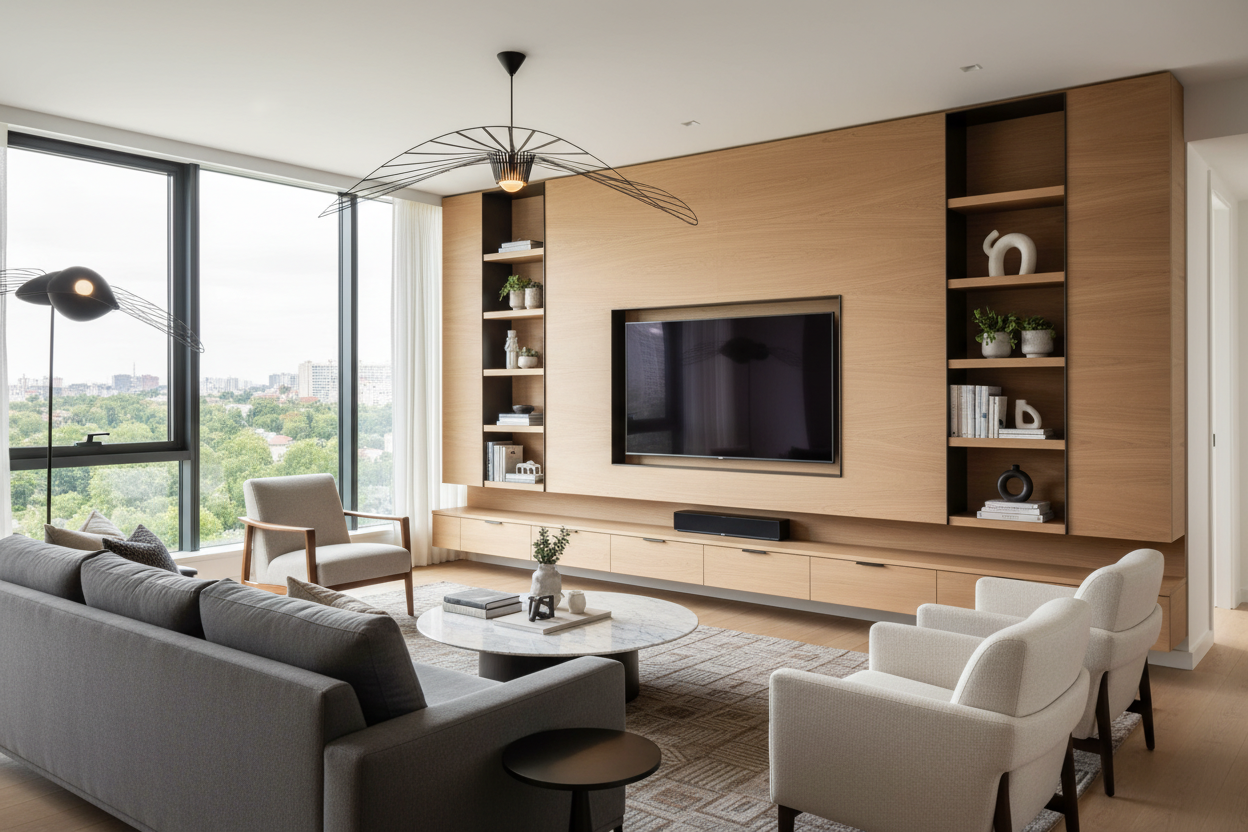
I spent three hours last Saturday staring at my living room wall. Not at the movie playing on the screen, but at the wall itself. My 65-inch TV was hanging there like a lonely postage stamp on a giant, empty envelope. It looked unfinished, cold, and honestly, a bit cheap. That is when I realized we were wrong to ditch modern wall units and entertainment centers in favor of that 'ultra-minimalist' look that leaves all your wires exposed like a digital crime scene.
We all remember the massive oak monsters of the 90s that took up half the zip code. We ran away from them as fast as we could, opting for tiny floating shelves that can barely hold a remote. But now, the pendulum is swinging back. We need places for our routers, our gaming consoles, and the mountain of clutter we pretend doesn't exist. The good news? The new versions are actually stylish.
- Storage is king: You finally have a place to hide the cable box and the Wi-Fi router.
- Visual Scale: Large walls need large furniture to feel balanced, not just a floating screen.
- Wire Management: Integrated channels mean you never have to see a black cord again.
- Architectural Interest: These units add depth to flat, boring drywall without a full renovation.
The 'Floating Screen' Trend Is Officially Over
For a few years, we were obsessed with the idea that a TV should just 'hover.' We spent hundreds on recessed wall mounts and hired electricians to hide cables behind the plaster. But once the TV was up, the room felt hollow. A giant black rectangle on a white wall isn't decor; it's a void. It lacks soul. I've walked into so many homes where the TV is the only thing on a 15-foot wall, and it looks like the homeowners just moved in—even if they've lived there for five years.
Minimalism is great in theory, but in practice, we have stuff. We have soundbars that don't fit on thin ledges. We have physical media we aren't ready to throw away. We have smart home hubs that need to live somewhere central. Stripping everything away left our living rooms feeling like waiting rooms. It turns out that a little bit of 'bulk' is actually what makes a room feel anchored and intentional. You don't want a room that looks like a gallery; you want a room that looks like a home.
Enter the Contemporary Entertainment Wall
If you are picturing the heavy, honey-oak cabinets of your childhood, stop. A sleek entertainment center today looks nothing like those relics. We are talking about slim profiles, matte finishes, and modular designs that feel light despite their size. The contemporary entertainment wall is all about negative space. Instead of one solid block of wood, these units use a mix of closed cabinetry and open shelving to keep the room breathing.
I recently helped a friend install a modular system that used floating base cabinets and offset upper shelves. It didn't feel like it was eating the room; it felt like it was part of the architecture. Today's designs focus on high-quality materials like walnut veneers, powder-coated steel, and even fluted glass. They are designed to frame the technology, not swallow it. The goal is to create a focal point that looks as good when the TV is off as it does when you're binge-watching a series on a Friday night.
Why Your Space Needs an Entertainment Wall Modern Upgrade
Functionally, these units are a sanity-saver. Let's talk about the 'cable spaghetti' nightmare. Even with wireless everything, you still have power cords. An entertainment wall modern setup provides a dedicated 'tech garage' where you can hide the power strips and the blinking lights of your modem. It’s about reclaiming your visual peace. I've found that when the visual clutter of wires is gone, the whole room feels ten degrees cooler.
Beyond the tech, these units solve the 'big wall' problem. If you have ten-foot ceilings and a massive open-concept floor plan, a standard console table looks like a toy. You need height. A 3 piece entertainment center allows you to climb the wall vertically. By using overhead cabinets, you draw the eye upward, making the entire room feel more grand. It’s an easy way to add a 'built-in' look without the $5,000 price tag of a custom carpenter. Plus, you can take it with you if you move, which is a win in my book.
How to Style a Contemporary Entertainment Wall Unit (Without the Clutter)
The biggest fear people have with large units is that they will become a magnet for junk mail and old batteries. To keep a contemporary entertainment wall unit looking sharp, you have to be disciplined. Use the 'rule of threes' for your open shelves: one large object, one textured item, and one organic element like a plant. Don't feel the need to fill every square inch. Empty space is a design choice, not a mistake.
I recommend using the closed cabinets for the ugly stuff—controllers, manuals, and extra HDMI cables—and saving the open areas for things that actually represent you. Think art books, a vintage camera, or a ceramic vase. Because minimalist entertainment centers often come with adjustable widths or modular pieces, you can actually tailor the shelving to fit your specific decor. If you have a tall sculpture, move the shelf. If you want a clean look, keep the top surface completely clear except for the TV itself.
The Verdict: Are They Actually Worth the Investment?
Buying a large piece of furniture is intimidating. It's a commitment. But after years of trying to make small, flimsy stands work, I can tell you that a substantial wall unit is the single most impactful change you can make to a living room. It stops the room from feeling like a collection of random objects and starts making it feel like a designed space. You aren't just buying a place to put your TV; you're buying an anchor for your home life.
When you consider the cost of separate bookshelves, a TV stand, and the hidden costs of trying to hide wires through drywall, a comprehensive unit is actually a bargain. It’s a smart choice for modern living because it addresses the reality of how we live now—surrounded by tech but craving a space that feels curated and calm. Skip the wobbly $100 stands and get something that will actually last a decade.
How do I know if a wall unit is too big for my room?
Measure your wall and aim for the unit to take up about two-thirds to three-quarters of the total width. If it goes wall-to-wall, it can feel a bit claustrophobic unless it's a light color like white or light oak. Always leave at least 18 inches of breathing room from the ceiling.
Can I still wall-mount my TV if I have a full entertainment center?
Absolutely. In fact, many modern units are designed specifically for this. You mount the TV to the wall, and the unit frames it. This gives you the 'floating' look but with all the storage and cable management benefits of a full unit. Just make sure the opening in the unit is at least 4-6 inches wider than your TV.
Is assembly a nightmare for these large units?
I won't lie: it takes time. If you're doing it yourself, clear your afternoon and grab a friend. Most high-quality modern units use cam-lock systems which are sturdy but require patience. If the thought of an Allen wrench gives you hives, many retailers offer white-glove assembly. For a piece this size, it’s often worth the extra fifty bucks.


Leave a comment
This site is protected by hCaptcha and the hCaptcha Privacy Policy and Terms of Service apply.