










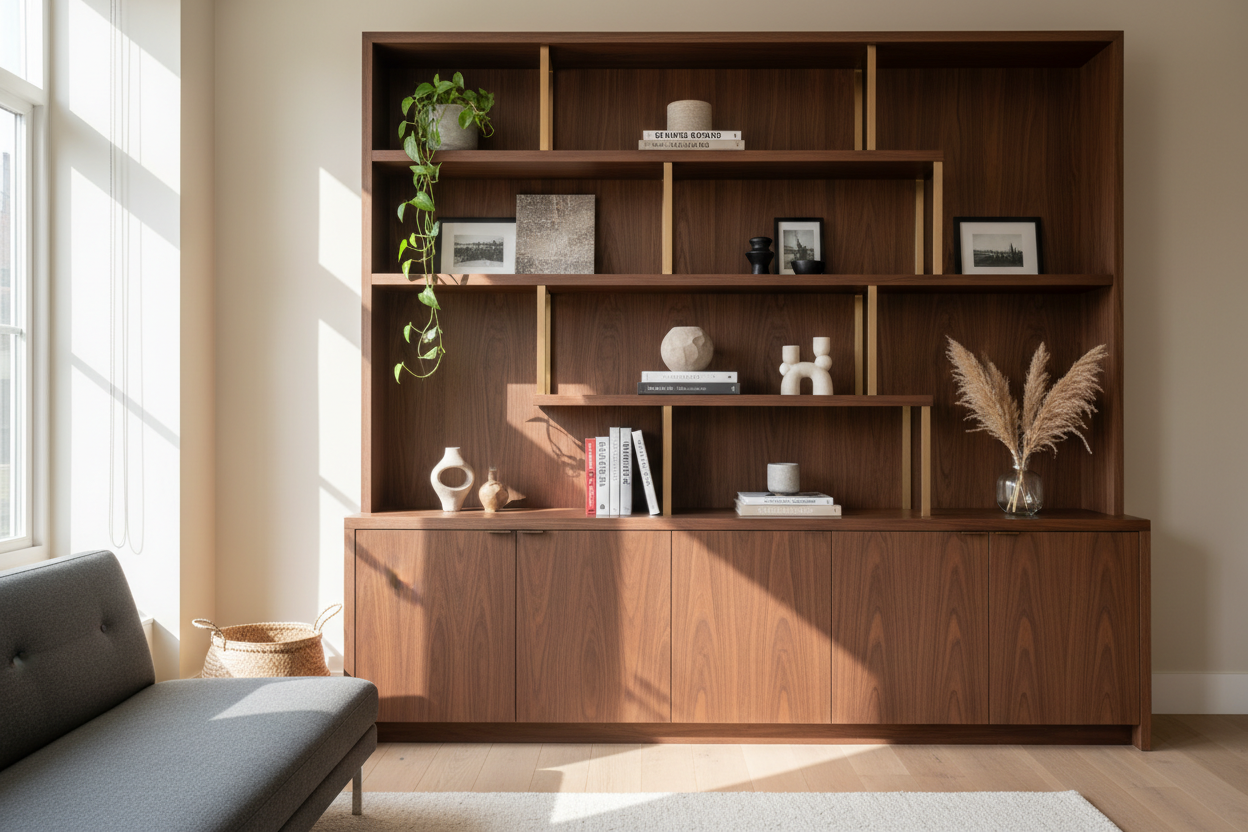
We have all been there: staring at a massive, blank wall, wondering how to fill the void without turning the room into a chaotic storage locker. You want a place to hide the unsightly daily clutter—like internet routers, board games, and paperwork—but you also want a dedicated spot to display your favorite ceramics, art, and books. Enter the cabinet and shelf unit. This hybrid piece offers the best of both worlds, grounding your room with closed storage at the bottom while drawing the eye up with airy, open shelving.
Finding the right piece is only half the battle. If scaled incorrectly, it can dwarf your living room; if styled poorly, it just looks like a messy bookcase. By the end of this guide, you will know exactly how to choose, scale, and style this essential piece of furniture so it feels intentional, balanced, and perfectly suited to your home.
Quick Decision Guide
- Keep lower closed cabinets at least 15 to 18 inches deep to accommodate bulky items like storage baskets or media equipment.
- Leave a minimum of 12 to 18 inches of clearance between the top of the unit and your ceiling to avoid making the room feel compressed.
- Treat the open shelves strictly as display areas. Use the 60/40 rule: 60 percent books and objects, 40 percent negative space.
- Always anchor tall units to the wall. Standard North American drywall requires proper toggles or direct stud mounting to prevent tipping.
Nailing the Proportions in Your Room
The biggest mistake homeowners make with large storage pieces is ignoring visual weight. A tall, solid piece of furniture commands attention, and it needs room to breathe.
Measuring for Vertical Space
Before you fall in love with a piece online, tape out its exact dimensions on your wall. In standard homes with 8-foot or 9-foot ceilings, a towering unit can easily overwhelm the space. If your room is on the smaller side, look for a cabinet with shelf unit that features an open back or slim metal uprights. Being able to see the wall color behind the shelves drastically reduces the visual heaviness of the piece.
Managing Visual Weight
Balance is everything. If you place a heavy, solid wood unit on one side of your living room, you need something of equal visual weight on the opposite side to balance it. This could be a large sectional sofa, a dark fireplace mantel, or a pair of substantial armchairs. Do not leave the rest of the room floating with delicate, leggy furniture.
Choosing Materials That Last
When you are buying a piece that combines structural shelving with moving parts like cabinet doors, material choice directly dictates longevity.
Solid Wood vs. High-Quality Veneers
Solid wood is the gold standard for durability, but it reacts to humidity changes in North American homes, expanding and contracting throughout the seasons. High-quality wood veneers over an MDF core actually offer superior stability for large cabinet doors because they will not warp. If you go the veneer route, check the edge banding. It should feel seamless and thick; peeling edges are the first sign of a cheap build.
Mastering the Display vs. Storage Balance
The beauty of this furniture style is its dual purpose. The lower cabinets are the workhorses, while the upper shelves are the showpieces.
The Triangle Method for Styling
When styling the open shelves, group items using the triangle method. Place similar elements—like three hits of a specific color or three metallic objects—in a triangular formation across different shelf levels. This forces the eye to travel across the entire unit rather than getting stuck on one cluttered shelf. Vary the heights of your objects, mixing tall vases with low stacks of horizontal books.
Lessons from My Own Projects
A few years ago, I specified a stunning, floor-to-ceiling matte black oak unit for a bright suburban living room. In the sunlit showroom, the piece looked incredibly chic. But once installed in my client's standard-sized family room, it became a massive black hole that absorbed all the natural light. I learned the hard way that dark, towering furniture requires significant negative space and strategic accent lighting to work outside of a massive architectural home.
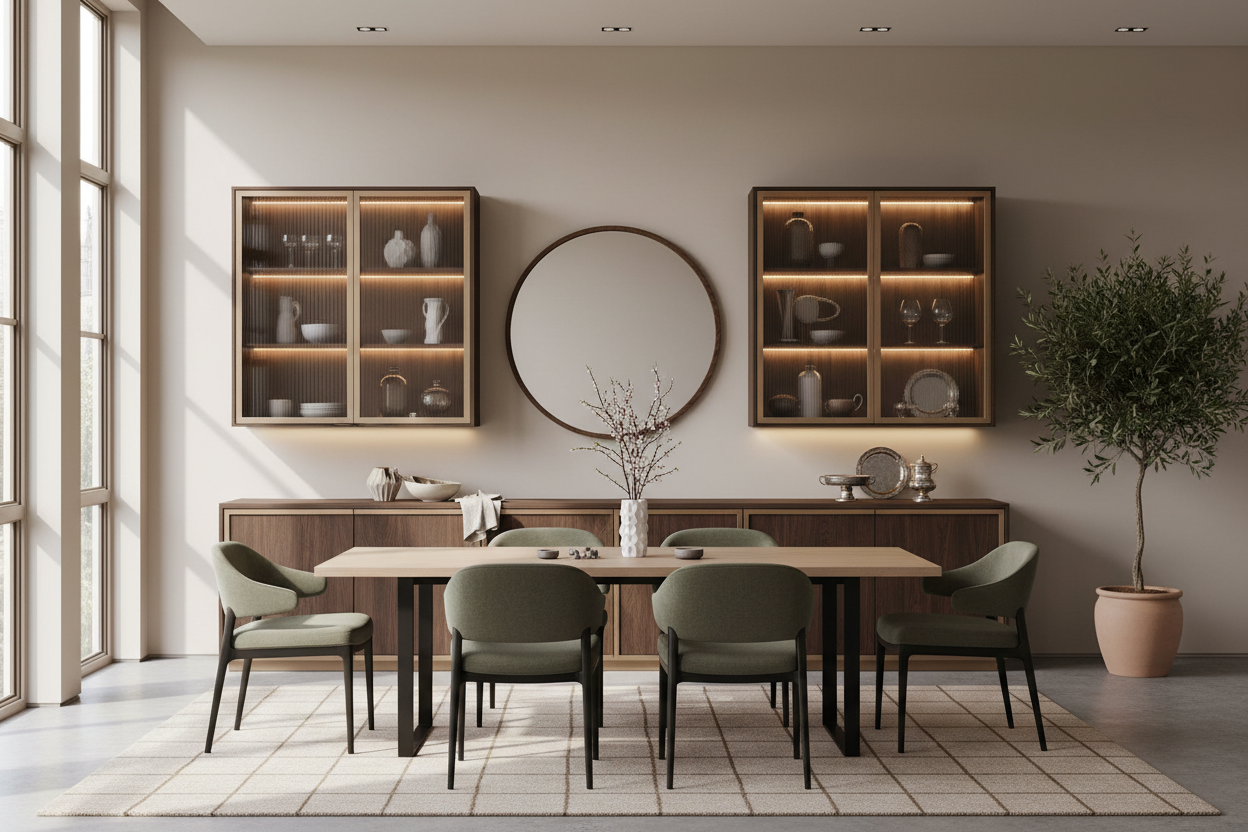
We ended up painting the back panel of the open shelves a soft cream and adding hidden LED puck lights to bounce light back into the room. It saved the design, but it taught me to always consider how light interacts with tall furniture. Another honest truth: open shelves require constant dusting. If you hate weekly maintenance, skip the open shelving and opt for glass doors on the upper section instead. It gives you the display space without the dust.
Frequently Asked Questions
How deep should the lower cabinet be compared to the shelves?
For a balanced look, the lower cabinet should be deeper than the upper shelves. A typical ratio is an 18-inch deep base cabinet with 12-inch deep shelves above. This stepped-back silhouette prevents the unit from feeling top-heavy and gives you a usable ledge.
Does a tall unit make a small room look smaller?
Not necessarily. Drawing the eye upward can actually emphasize your ceiling height, making the room feel taller. The trick is to avoid over-stuffing the shelves and to match the unit closely to your wall color, which helps it blend into the architecture rather than protruding as a bulky obstacle.
How do I hide cords if I use the shelves for electronics?
Look for units that have pre-drilled cable management holes in the back panel of the closed lower cabinets. Keep your ugly electronics (routers, gaming consoles) hidden below, and only place wireless speakers or decorative items on the open upper shelves.

Leave a comment
This site is protected by hCaptcha and the hCaptcha Privacy Policy and Terms of Service apply.