










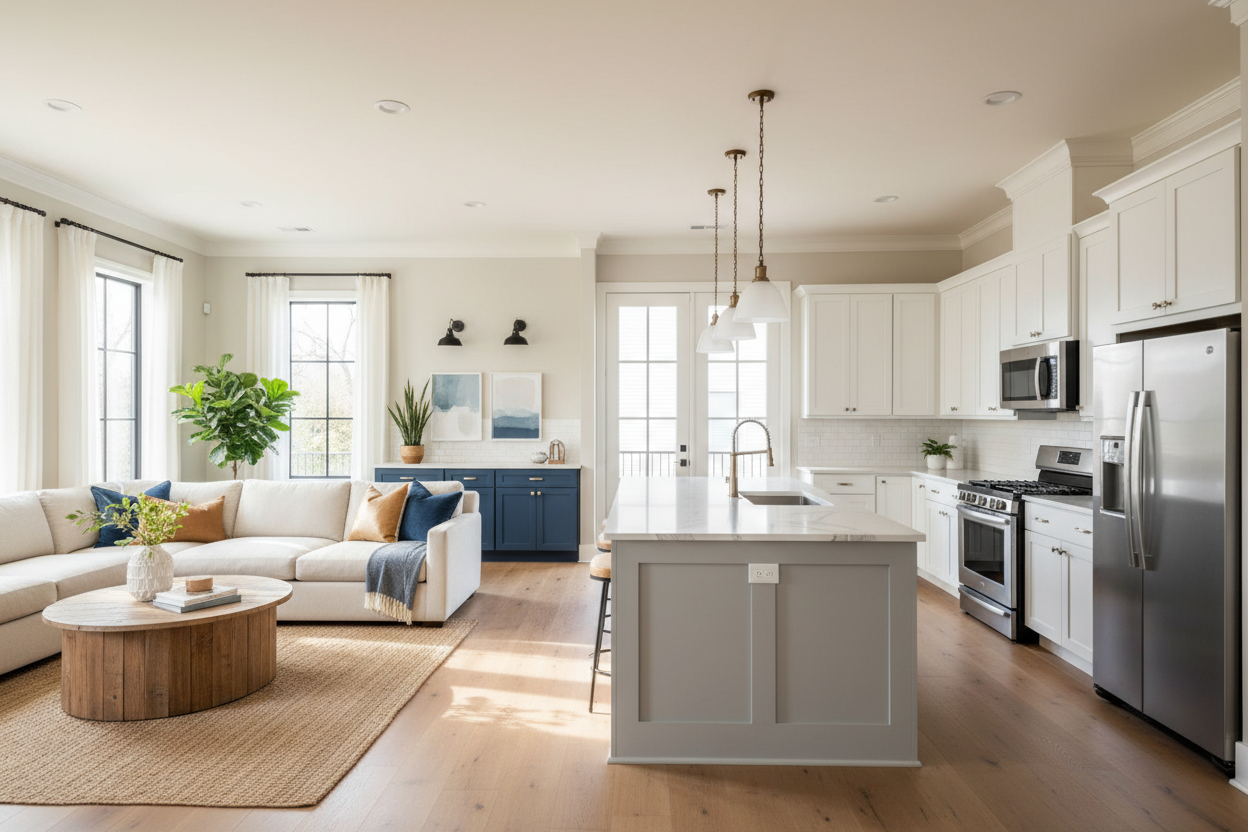
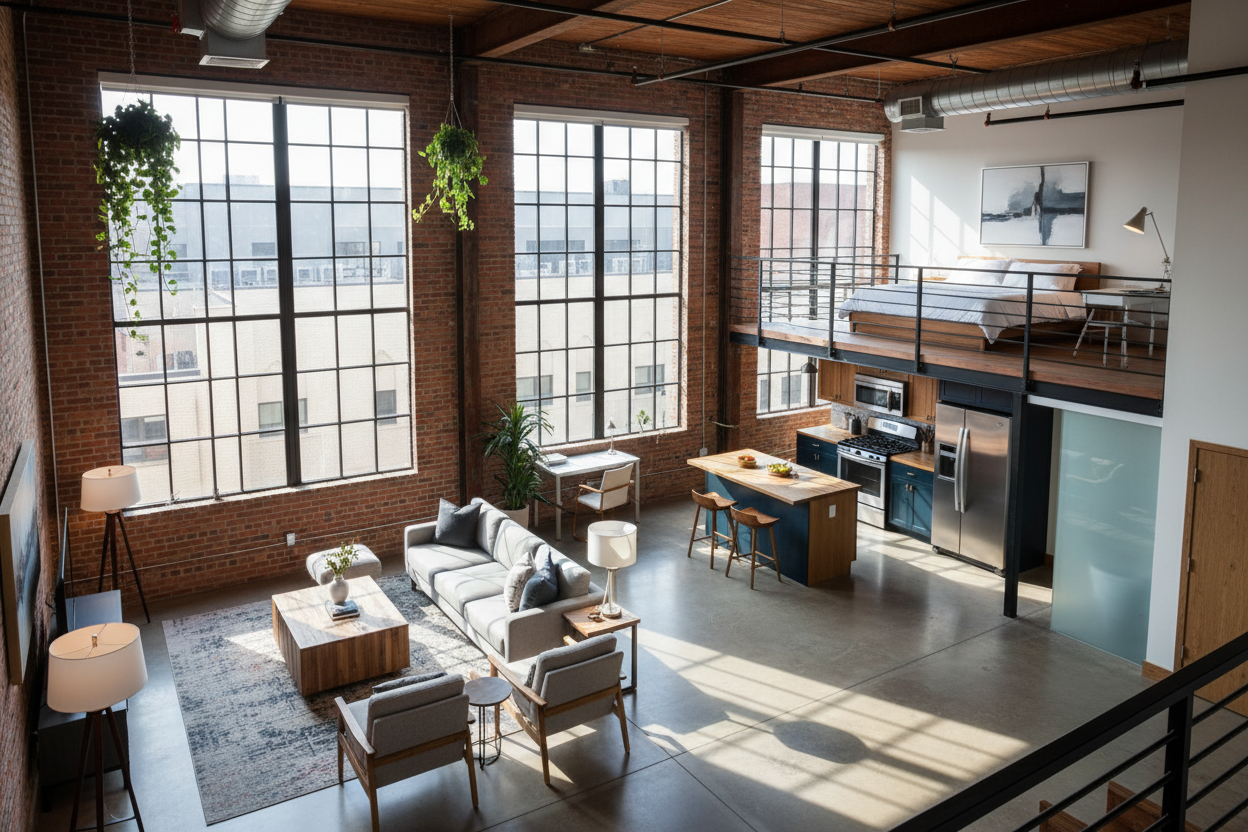
The allure of high ceilings, exposed brick, and massive industrial windows is undeniable. As a designer, I frequently hear clients fantasize about the loft aesthetic found in commercial districts. However, the question of can you live in an office space is not just about style—it is a complex intersection of zoning laws, comfort, and safety. While the idea of converting a raw workspace into a chic dwelling is romantic, the reality involves navigating strict municipal codes and overcoming significant livability challenges.
Quick Decision Guide: The Feasibility Check
- Zoning & Legality: Most commercial leases strictly prohibit residential use. You must check for "Live/Work" zoning designations.
- HVAC Limitations: Commercial climate control often shuts down after business hours (nights and weekends).
- Sanitation Facilities: Does the space have a full shower and residential-grade kitchen, or just a communal restroom and kitchenette?
- Insurance Void: Living in a space insured only for commercial activity can void your policy in the event of a fire or theft.
- Acoustics: Commercial spaces lack the sound insulation required for privacy and sleep quality.
The Legal Landscape: Is It Illegal to Live in an Office Space?
Before we discuss floor plans and furniture, we must address the elephant in the room: is it illegal to live in an office space? Generally, the answer is yes. Commercial buildings are issued a specific Certificate of Occupancy (CO) that dictates their use. These buildings often lack the fire exits, ventilation requirements, and gas line hookups mandated for residential safety.
However, the trend of "Adaptive Reuse" is shifting the market. Many developers are rezoning properties to create legal "live/work" lofts. If you are living in office space that has been properly rezoned, you get the best of both worlds. If you are secretly living at the office to save rent, you are risking eviction and severe legal penalties.
Transforming the Commercial Shell: Design & Layout
If you have secured a legal live/work unit, the challenge shifts to making a cold, sterile environment feel like a home. Living in an office space requires a sophisticated approach to spatial planning.
Softening the Industrial Edge
Commercial interiors are defined by hard surfaces—concrete floors, glass partitions, and metal ductwork. To make living in an office comfortable, you must introduce textural contrast. I recommend layering high-pile wool rugs to dampen the echo and visually warm the concrete. Swap out standard vertical blinds for floor-to-ceiling linen drapery; this softens the harsh architectural lines and provides necessary light filtration.
Lighting Temperature is Critical
Office lighting is designed for alertness, typically hovering around 4000K–5000K (cool blue-white). This is disastrous for a living environment. When living in office space, you must bypass the overhead fluorescent grid entirely. Introduce floor lamps and sconces with 2700K bulbs to create a residential ambient glow. If possible, install dimmer switches to transition the space from "work mode" to "lounge mode."
Furniture Selection for Open Concepts
One common mistake when living in your office or a converted loft is using furniture that is too small. In a sprawling commercial footprint, standard apartment-sized sofas look miniature. You need "contract-grade" durability with residential proportions.
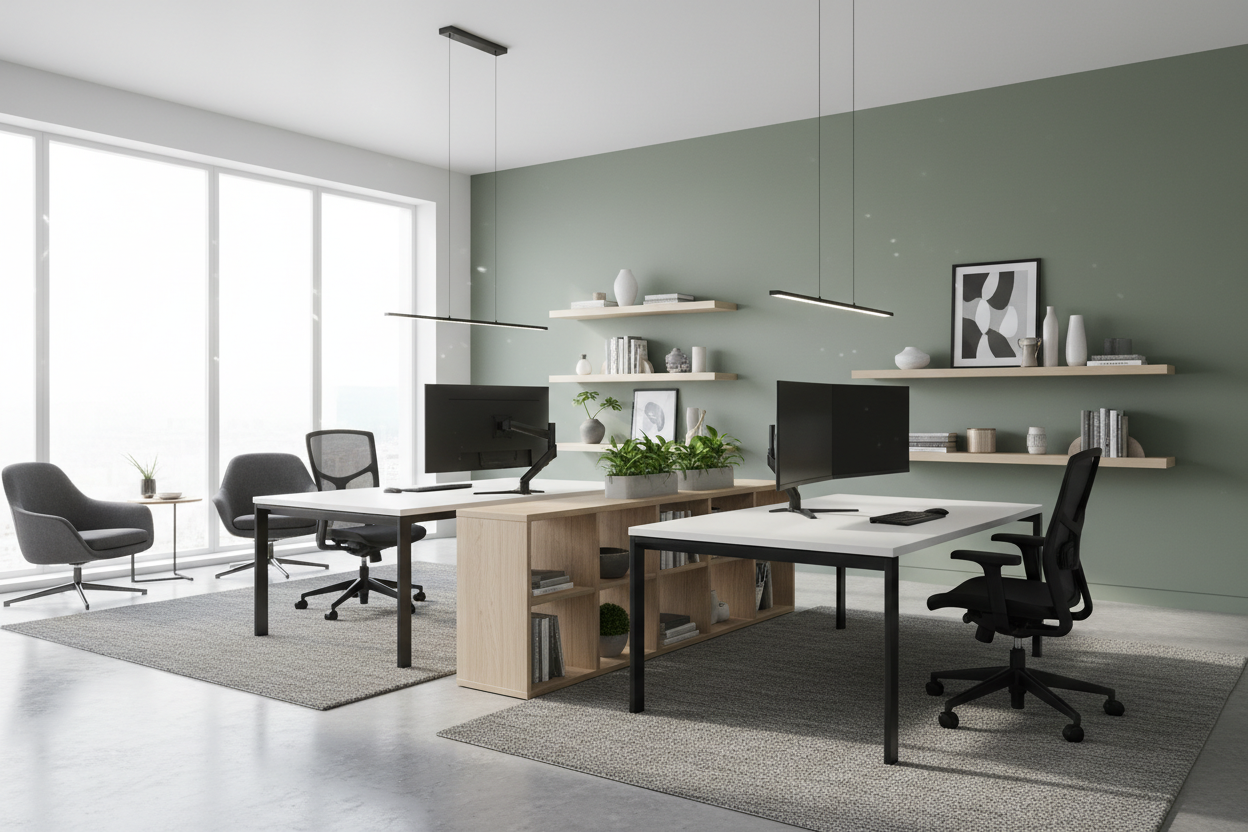
Opt for modular sectionals that anchor the room. Use open shelving units as room dividers to create psychological separation between the bedroom area and the workspace. This visual zoning is essential for mental health; without it, you never truly feel "off the clock."
My Personal Take on Living in an Office Space
Early in my career, I consulted for a client attempting to convert a former architect's studio into a residence in a mixed-use building. The aesthetic was breathtaking—20-foot ceilings and polished concrete. However, there was a detail we overlooked that made living in an office space a nightmare for him initially: the building management system.
Commercial buildings are automated for efficiency. The central heating was programmed to drop to 55 degrees at 6:00 PM on Fridays and stay there until 6:00 AM on Mondays. The first weekend he spent there, he nearly froze. We had to retrofit the unit with independent mini-split systems, which cost thousands over budget. Furthermore, the lack of soundproofing meant he could hear the cleaning crew buffing the hallway floors at midnight. It taught me that while the visual of living in a office space is editorial-worthy, the invisible infrastructure—HVAC and acoustics—is what actually dictates your quality of life.
Conclusion
So, can you live in an office space? Legally, only if it is zoned for it. Aesthetically, it offers a blank canvas for incredible industrial design, provided you are willing to invest in softening the acoustics and upgrading the lighting. It is not a shortcut to cheap housing, but rather a unique lifestyle choice that demands intentional design.
Frequently Asked Questions
Is it legal to live in an office space if I own the building?
Ownership does not override zoning laws. Even if you own the commercial property, you cannot legally use it as a primary residence without applying for a "Change of Use" permit and bringing the building up to residential code standards.
Can I live in office space temporarily while renovating my home?
Can i live in office space temporarily? Most commercial leases explicitly forbid sleeping on the premises. While you might get away with it for a few nights, it violates fire codes and insurance policies. It is rarely worth the liability risk.
What furniture works best for living in an office?
Focus on pieces that serve dual purposes. A Murphy bed or a high-quality sleeper sofa can hide the "bedroom" aspect during client meetings. Look for storage solutions that hide clothes and personal items completely to maintain a professional appearance if clients visit.

Leave a comment
This site is protected by hCaptcha and the hCaptcha Privacy Policy and Terms of Service apply.