










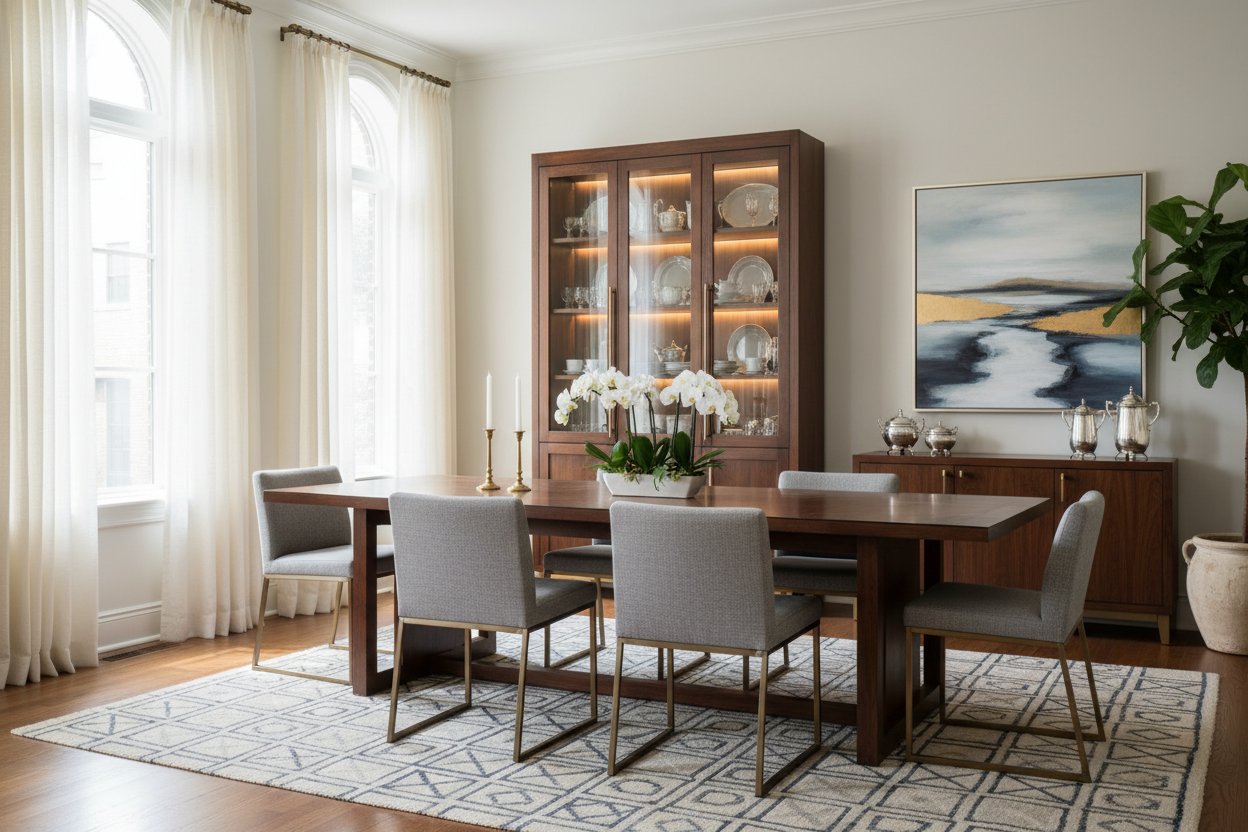
I remember walking into a client's dining room last year. They had a beautiful, traditional mahogany dining table with eight chairs, but their china cabinet and dining room set situation was a mess. The cabinet was a sleek, modern piece they'd bought on clearance, shoved against the wall. It looked like two different rooms. That's when I realized most people treat their china cabinet as an afterthought. You wouldn't pair a formal wingback chair with a plastic patio table, right? The same principle applies here.
After furnishing over 200 homes, I've seen how a coordinated dining space can transform how a family uses the room. It's not just about looks—it's about creating a functional, inviting space for meals and memories. Let's talk about how to make your china cabinet and dining room set work together seamlessly.
Quick Takeaways
- Treat your china cabinet as part of the dining set from the start, not an accessory you add later.
- Match the style first (modern, traditional, farmhouse), then worry about exact wood stains.
- Scale is crucial: a massive 96-inch long table needs a substantial cabinet, not a petite 36-inch one.
- Function dictates form—consider what you'll store (everyday dishes vs. heirloom china) before choosing cabinet features.
Why Your China Cabinet Shouldn't Be an Afterthought
Think of your dining room as an ensemble. The table and chairs are the lead actors, but the china cabinet is the supporting character that makes the whole scene work. When you treat it as an afterthought—something you buy because you 'need somewhere to put the dishes'—you end up with a disjointed space. I've had clients tell me their dining room just feels 'off,' and nine times out of ten, it's because the cabinet doesn't relate to the set.
Coordination matters for both aesthetics and daily life. A well-chosen cabinet provides essential storage without cluttering your table. It can also define the room's style. For example, a glass-front, lighted cabinet adds formality, while an open-shelf pine hutch creates a casual, farmhouse feel. When these elements clash, the room feels unsettled. For a deeper dive into what makes a set truly cohesive, I often point clients to resources on Dining Room China Cabinet Sets.
The Style Match Game: Getting It Right
Matching styles is simpler than you might think. Start with the big picture: modern, traditional, transitional, or farmhouse. If your dining set is modern—think clean lines, metal accents, and minimal ornamentation—pair it with a cabinet that shares those traits. A flat-panel door in a matte finish, perhaps with metal legs, would work. Don't get hung up on the wood grain matching exactly; focus on the silhouette first.
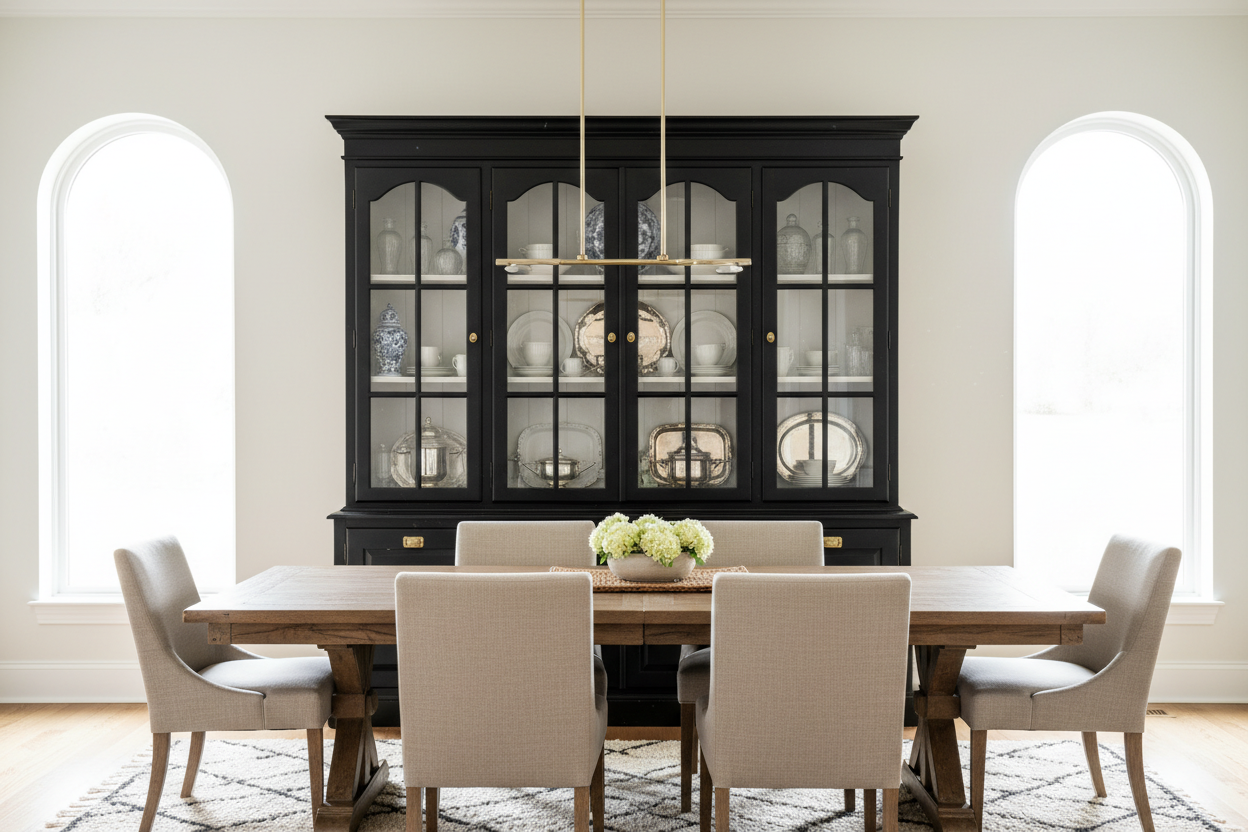
For a traditional set with carved details and a dark stain, look for a china cabinet with similar proportions and decorative elements. A transitional space (mixing modern and traditional) is forgiving. Here, you might pair a simple shaker-style table with a cabinet that has one traditional detail, like beveled glass doors. In a farmhouse setting, think about materials. A rustic oak table pairs beautifully with a distressed white hutch. Remember, your room size matters too. If you're working with a smaller space, check out tips for a Small China Cabinet to maintain proportion.
Scale and Proportion: The Designer's Secret
This is where I see the most mistakes. A huge, ornate cabinet next to a delicate, spindly table will swallow the room. Conversely, a tiny cabinet beside a substantial 10-seater table looks lost. Here's my rule of thumb: the height of your china cabinet should relate to your ceiling. In a standard 8-foot room, keep the cabinet under 84 inches tall to allow for breathing room. The width should be roughly proportional to your table length. For a 72-inch table, a cabinet around 60 inches wide feels balanced.
Leave at least 36 inches of walkway between the edge of your dining chairs (when pulled out) and the cabinet. This ensures comfortable movement. I once worked on a condo where the client insisted on a massive 48-inch deep cabinet. In their 10x12 dining area, it left only 24 inches to squeeze by. We swapped it for a slimmer 18-inch deep model, and the room instantly felt twice as large.
Function Meets Form: Storage Solutions That Work
Your china cabinet needs to work as hard as it looks good. Start by auditing what you actually need to store. Is it formal china used twice a year? Or everyday dishes, glassware, and linens? For frequently used items, prioritize easy access. Adjustable shelves are a must—they let you customize for platters, wine glasses, or stacks of plates.
Lighting is a game-changer. Interior LED lights not only showcase your pieces but also provide ambient light for evening meals. I recently used a modern buffet cabinet with LED lighting for a client who loves to entertain. The soft glow makes their crystal sparkle and eliminates the need for harsh overhead lights during dinner parties. Also, consider door styles. Glass doors show off collections but require dusting. Solid doors offer a cleaner look and protect contents from light exposure.
Material Harmony: Wood, Glass, and Metal
You don't need a perfect match, but you do need harmony. If your dining table is oak, your cabinet doesn't have to be the exact same oak. It can be a complementary wood like walnut, or even a painted finish that picks up a color from your chairs or rug. The key is to repeat materials. If your table has chrome legs, incorporate a hint of chrome in the cabinet's hardware or feet.
Texture matters too. A sleek, high-gloss lacquer table pairs well with a cabinet featuring some glass to maintain that reflective quality. A rough-hewn live-edge table might work with a cabinet that has natural wood grain visible. For clients seeking durability and warmth, I often recommend options like a solid wood storage cabinet. Solid wood construction, like kiln-dried hardwood frames, ensures longevity that veneered or engineered wood can't match.
Putting It All Together: Real Room Examples
Let me walk you through two recent projects. First, a suburban family home with a transitional style. The clients had a 60-inch round extension table in a warm walnut finish. We paired it with a 54-inch wide china cabinet in a complementary cerused oak finish. The cabinet had clean lines (transitional) with traditional brass hardware. The scale was perfect for their 12x14 dining room, leaving ample walkway.
Second, a downtown loft with a modern aesthetic. The dining set was a concrete-topped table with black powder-coated steel legs. The challenge was storage without bulk. We chose a low, 72-inch long sideboard in matte black with integrated LED lighting. It provided massive storage (for all their serving platters) while maintaining the room's sleek, horizontal lines. The lighting became a functional art piece at night.
Personal Experience: The Honest Downside
In my early days, I made a scale error I'll never forget. A client bought a stunning, oversized antique china cabinet before consulting me. Their dining table was a modest 66-inch farmhouse style. The cabinet overwhelmed it completely, making the table look like a toy. We couldn't return the cabinet. The solution? We actually replaced the table with a larger, more substantial 84-inch trestle table to balance the visual weight. It worked, but it was an expensive lesson. Always decide on the table and cabinet together, or at least have clear measurements in mind first.
FAQ
Can I mix a wood dining table with a painted china cabinet?
Absolutely. This is a great way to add interest. Ensure the undertones harmonize. A table with warm, yellow-toned oak pairs well with a cabinet painted in a warm white or cream, not a cool, blue-based white.
How much should I spend on a china cabinet relative to my dining set?
There's no fixed ratio, but I generally see cabinets costing between 30% and 70% of the dining table's price. Invest more if you need specialized storage (for a large collection) or if the cabinet is a major focal point.
Is a buffet or sideboard different from a china cabinet?
Yes, primarily in form. A traditional china cabinet is tall with display shelves above closed storage. A buffet or sideboard is lower and wider, offering concealed storage and a surface for serving. Both can coordinate with your set; choose based on your storage needs and ceiling height.
My dining set is dark and my walls are light. What cabinet color works?
You have options. A cabinet in the same dark finish creates a bold, unified look. A medium-toned wood (like a walnut) can bridge the dark furniture and light walls. A painted cabinet in a neutral from your wall color can also work beautifully, making the dark set pop.
Coordinating your china cabinet and dining room set is one of the most satisfying parts of designing a dining space. It's where storage meets style. Start by defining your overall look, measure your room meticulously, and choose pieces that speak to each other. For more inspiration and to see coordinated pieces in action, exploring a curated dining room collection can be incredibly helpful. Remember, the goal is a room that feels intentional, inviting, and uniquely yours.

Leave a comment
This site is protected by hCaptcha and the hCaptcha Privacy Policy and Terms of Service apply.