










I spent my entire twenties living in apartments that looked like a 'Best Of' IKEA catalog. My most prized possessions—vintage cameras, obscure vinyl figures, and a collection of mid-century lighters—were shoved into those cheap, frameless glass towers that every twenty-something buys. Every time a guest walked in, I felt the need to apologize for my 'hobby room' vibe. It looked like a liquidation sale, not a home.
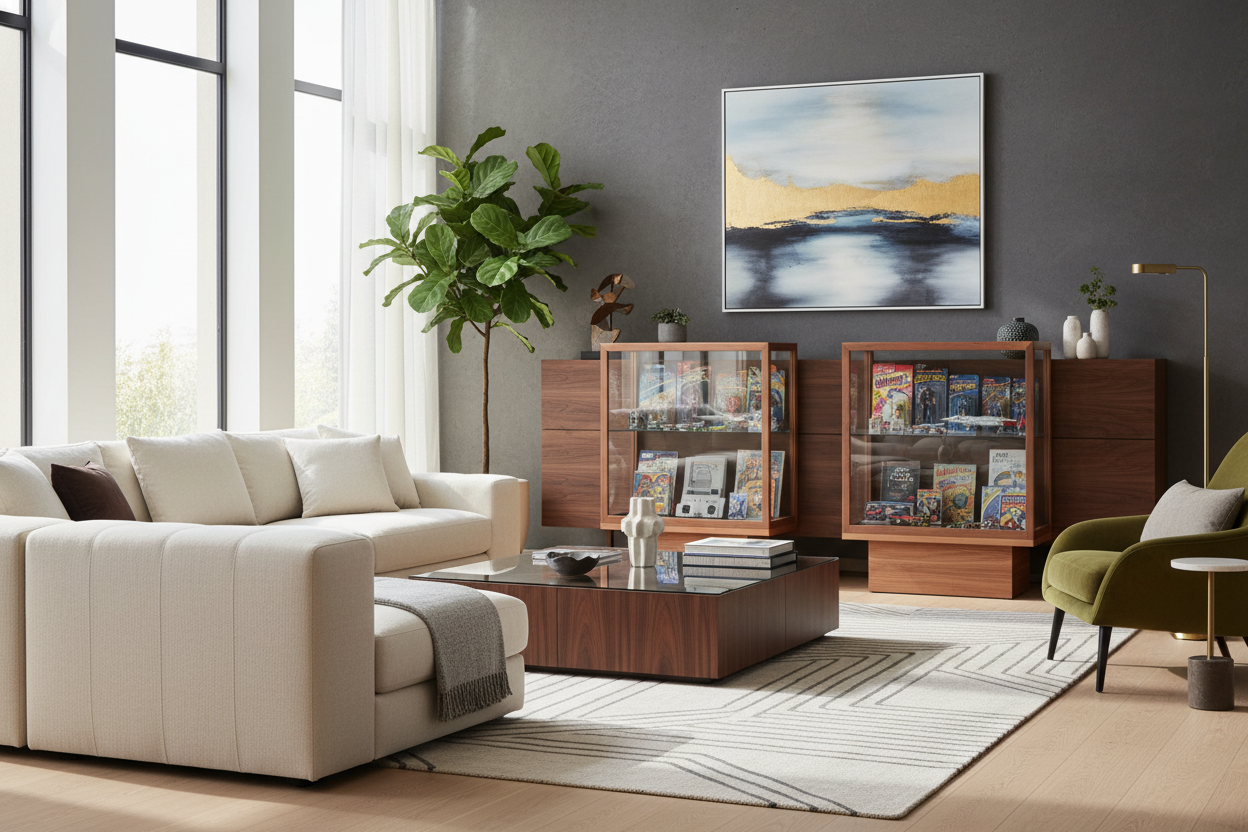
The shift happened when I finally invested in wood display cases. There is something about the warmth of grain and the architectural weight of a solid frame that changes the energy of a living room. Suddenly, my geeky collectibles didn't look like clutter; they looked like a curated museum exhibit. If you want your home to feel like an actual adult lives there, you have to stop treating your treasures like retail inventory.
- Wood frames act as a visual anchor for the room's layout.
- Glass-and-wood combinations feel more intentional than all-acrylic units.
- Darker woods provide high contrast for colorful or metallic collectibles.
- Small cases can turn an awkward corner into a functional focal point.
The 'Retail Store' Trap of Frameless Glass
We’ve all seen them: those all-glass pillars that stand precariously in the corner of a living room. While they are great for showing off every angle of a model ship, they are terrible for interior design. A frameless wood and glass display box might look clean in a showroom, but in a real home, it lacks soul. It feels sterile. It strips the warmth out of your space and makes your decor look like a transaction waiting to happen. I've found that these all-glass units often use 1.5 lb density shelving that sags under the weight of anything heavier than a comic book.
When you use a wood glass display case, you are adding texture and history. The wood provides a boundary. Without that boundary, your eye just slides right past the display and hits the wall behind it. You want people to stop and look, not scan the room like they are looking for a price tag. A wooden display case with glass creates a sense of permanence that acrylic just can't touch. It’s about creating a 'destination' for the eye rather than just a storage solution.
Why Heavy Furniture Anchors a Room Better
Visual weight is a real thing in design. If all your furniture is spindly, thin, and light, the room feels like it could blow away in a stiff breeze. A large wood display case acts as a grounded, functional piece of architecture. It tells the room, 'I belong here.' It doesn't look like a floating, temporary fixture you'll toss during your next move. I prefer kiln-dried hardwood frames over that flimsy plywood or MDF stuff that swells the second a humid day hits.
I’ve found that a large wooden display box or a heavy wood glass showcase provides a necessary 'stop' for the eye. It balances out the softness of a plush sofa or the flatness of a wall-mounted TV. Even if you are living in a tight rental, one substantial wood glass case can make the entire floor plan feel more deliberate. It’s the difference between 'decorated' and 'furnished.' When you have a piece that weighs 200 pounds and features solid joinery, the items inside—even if they are just plastic action figures—suddenly feel like they have gravity.
Treating Your Shelves Like Picture Frames
Think about why we frame art. We don't just tape a Picasso to the wall; the frame draws the eye inward and signals that what’s inside has value. A wood display box does the exact same thing for your objects. The wooden borders act as a frame, elevating the perceived value of whatever is sitting on the shelf. It’s a psychological trick that works every time. I’ve seen 50-cent shells from a beach look like high-end decor simply because they were placed inside a well-lit wood and glass display box.
Whether you are using a small wooden display case for pocket watches or a wood display case for sale you found at an antique mall, the framing effect is the same. When styling small wooden display cases, remember that the wood is part of the art. It creates a 'moment' in the room. Even a simple wood glass display case box can make a handful of smooth river stones look like a high-end collection. The key is to leave some negative space—don't crowd the frame, or you lose the effect.
Sneaking Storage Into Awkward Layouts
Not everyone has a massive wall to dedicate to a library-style unit. Sometimes you're dealing with a weird 45-degree angle or a narrow hallway that feels like a wasted opportunity. This is where a small wood and glass display case or a small wood display box becomes your best friend. These pieces occupy vertical space without eating up your entire walking path. I once lived in a 500-square-foot studio where a tall, narrow wood glass case was the only thing that kept the room from looking like a storage unit.
I’m a huge fan of tucking a corner display case into those dead zones that usually just collect dust. It’s a smart way to utilize the architecture of your home without overwhelming the floor plan. Even small wood glass display cases can hold a surprising amount of personality if you stack them right. Don't be afraid to go vertical in a small room; it draws the ceiling up and makes the space feel taller than it actually is. It’s about working with the room, not against it.
My Go-To Rules for Mixing High-End Wood With Weird Trinkets
The key to making this work is contrast. If you put a formal, dark mahogany wood glass case in a room and fill it with nothing but pristine porcelain, it looks like your grandmother’s house. But if you fill that same case with neon-colored vinyl toys or rusted industrial gears, you’ve created a 'cabinet of curiosities.' It’s intentional, edgy, and deeply personal. I love seeing a 19th-century style wood glass showcase filled with 1980s Nintendo cartridges.
I always suggest starting with a small wood cabinet with glass doors if you’re intimidated by massive units. Mix your textures. Put a heavy, leather-bound book next to a plastic robot. Use wooden showcases to house things that feel 'too weird' for a coffee table. By placing 'low' culture inside 'high' furniture, you're telling a story about who you are. If you’re looking for small wooden display cases for collectibles, look for ones with adjustable shelves—my biggest mistake was buying a fixed-shelf unit and realizing my tallest figure was a half-inch too big.
Personal Experience: The 400-Pound Mistake
I once bought a vintage, solid oak wood display cases for collectibles at an estate sale. It was seven feet tall and weighed as much as a small car. I didn't measure my hallway. It took three friends, a specialized dolly, and two hours of sweating to get it into my living room. I almost gave up and left it on the sidewalk. But once it was in place, and I filled it with my collection of vintage tin robots, the room finally felt finished. The downside? I can never move. That cabinet owns the house now. Measure your door frames, people—32 inches is standard, but some of these heavy wood glass cases are 34 inches deep.
FAQ
How do I keep wood display cases from looking dusty?
Wood is a dust magnet, but glass is worse. Use a microfiber cloth for the glass and a simple beeswax-based polish for the wood. Avoid those cheap aerosol sprays; they leave a waxy film that actually attracts more dust over time. If you have a wood glass display case box, a quick wipe once a week is all it takes.
Can I mix different wood tones in one room?
Absolutely. In fact, matching all your woods makes a room look like a furniture showroom. As long as the undertone—warm or cool—is similar, you can mix oak, walnut, and cherry without it looking messy. A dark wood and glass display box can actually look great on a lighter oak side table.
Are wood and glass display cases safe for heavy items?
Always check the shelf weight rating. Solid wood shelves are incredibly sturdy, but glass inserts have limits. If you're displaying heavy geodes or bronze statues in a large wooden display box, make sure the glass is tempered and at least 6mm thick to avoid a disaster.


Leave a comment
This site is protected by hCaptcha and the hCaptcha Privacy Policy and Terms of Service apply.