










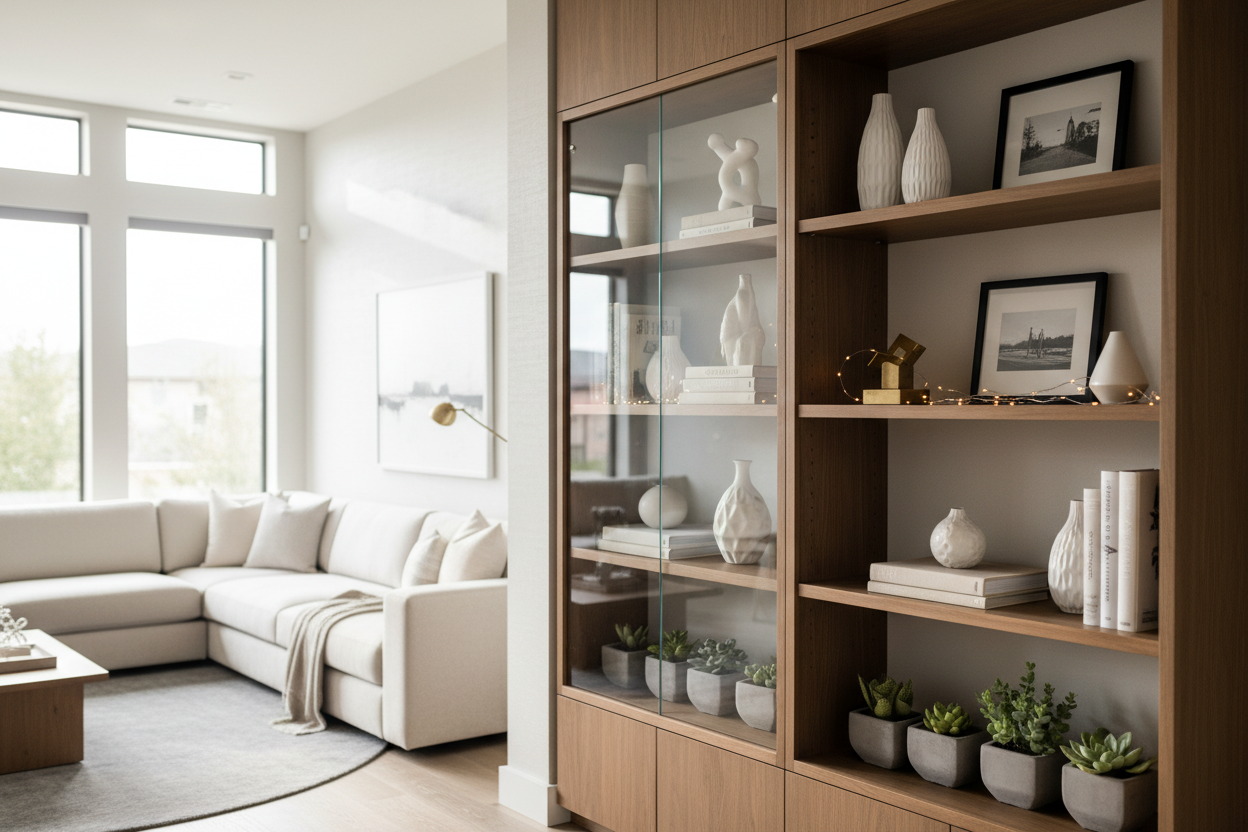
We have all seen it: a gorgeous glass-front piece of furniture that starts out with the best intentions, only to become a graveyard for random trinkets, half-read books, and forgotten wedding favors. Learning how to decorate display cabinet shelves is one of the most common hurdles my clients face. It is easy to buy a beautiful piece of furniture, but filling it without making the room look messy is an entirely different skill.
In this guide, I will walk you through the exact styling formulas I use in my residential projects. You will walk away knowing how to balance proportion, manage negative space, and turn that empty glass box into a curated focal point.
Quick Decision Guide
- Embrace negative space: Leave at least 30% of your shelf space completely empty to let your objects breathe.
- Use the zig-zag method: Stagger similar materials or colors diagonally across different shelves to pull the eye downward.
- Vary your heights: Mix tall, vertical pieces (vases, candlesticks) with low, horizontal grounding objects (stacked books, bowls).
- Anchor the bottom: Place your heaviest, most visually dense items on the lowest shelves to ground the piece.
Style & Coordination: The Anatomy of a Styled Shelf
Mastering Visual Weight
When you start looking for display cabinet decor ideas, the sheer volume of options can be overwhelming. The secret is not necessarily what you buy, but how you group it. Visual weight refers to how heavy an object looks, regardless of its actual mass. A dark, solid ceramic bowl carries more visual weight than a taller, delicate glass vase.
To keep the cabinet from feeling top-heavy, place your visually heaviest items on the bottom two shelves. Think large woven baskets, oversized art books, or solid wood boxes. As you move up the cabinet, transition to lighter materials like glass, wire, and slender ceramics.
The Zig-Zag Method for Balance
If you place all your brass accents on the left side of the cabinet, the piece will feel lopsided. Instead, use the zig-zag method. If you place a brass frame on the top left, place a brass figurine on the middle right, and a brass tray on the bottom left. This creates a subconscious path for the eye to follow, making the entire arrangement feel cohesive and intentional.
Layering and Depth
Start with an Anchor
Never line your objects up in a straight row like soldiers on parade. Good styling requires depth. Start with a tall anchor piece in the back—a piece of framed artwork leaning against the back panel, or a decorative plate on a stand. Then, layer medium-sized objects slightly in front and to the side, finishing with a small, interesting object (like a magnifying glass or a geode) in the very front.
Adding Organic Elements
A cabinet full of hard materials—glass, metal, and polished wood—can quickly feel cold and sterile. You need to introduce organic textures to soften the silhouette. A trailing pothos plant (real or high-quality faux) spilling off a middle shelf breaks up the rigid horizontal lines. Woven rattan boxes, driftwood, or unglazed terracotta pots bring warmth that is essential for North American transitional and modern farmhouse interiors.
Designer's Honest Take
Early in my career, I was hired to style a massive, built-in mahogany display cabinet for a client in a Chicago suburb. I spent hours meticulously arranging dozens of beautiful, delicate crystal pieces and small porcelain figurines. It looked like a museum.
It was a disaster. First, from across the room, all those tiny objects just looked like a blurry, chaotic mess. There was no focal point. Second, the matte dark wood background highlighted every single speck of dust, and the client called me a month later frustrated by the upkeep.
I learned the hard way that fewer, larger objects always look more expensive than a collection of tiny trinkets. I went back, removed half the items, swapped in some chunky, oversized pottery, and added battery-operated puck lighting to the top of the cabinet. The difference was night and day. If you take nothing else from this article, remember: scale up your objects, and scale down your quantity.
Frequently Asked Questions
What should I put in the bottom of a display cabinet?
The bottom shelf should house your largest, heaviest items to visually ground the furniture. Stacks of large coffee table books, decorative storage boxes, or heavy ceramic bowls work best here. This is also a great spot to hide items you do not want on full display by using attractive opaque bins.
How much empty space should I leave on a shelf?
Aim for the 70/30 rule. Fill about 70% of the shelf visual space and leave 30% empty. Negative space is what allows the eye to rest and prevents the cabinet from looking like a cluttered storage closet.
How do I light a display cabinet without hardwiring?
If your cabinet did not come with built-in lighting, use rechargeable, motion-sensor LED puck lights. You can attach them to the underside of the shelves using double-sided mounting tape. Just be sure to place them close to the front edge, angled slightly backward, to wash the objects in light rather than casting harsh shadows straight down.

Leave a comment
This site is protected by hCaptcha and the hCaptcha Privacy Policy and Terms of Service apply.