










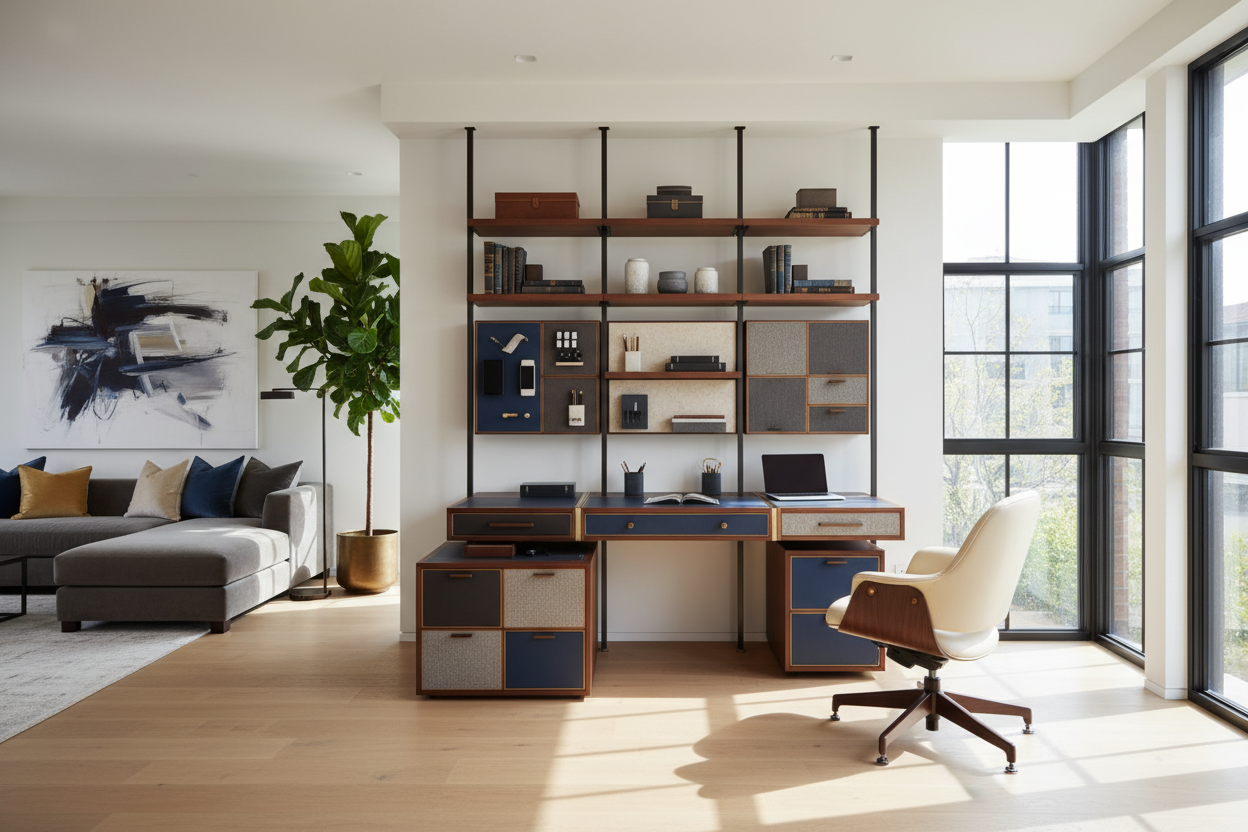
Standard, flat-pack furniture often forces you to compromise, leaving you with awkward gaps, wasted corners, and a generic aesthetic that feels more "cubicle" than "creative sanctuary." A customizable office solves this dilemma by adapting the architecture of the room to your specific workflow, rather than forcing you to adapt to the furniture. Whether you are an executive needing impressive video-call backdrops or a creative requiring expansive surface area, the goal is to curate a space that feels intentional, sophisticated, and deeply personal.
Key Features to Look For
- Modular Joinery: Look for systems that allow you to swap shelving heights or drawer configurations as your equipment needs change.
- Ergonomic Integration: Ensure the design accommodates monitor arms and sit-stand mechanisms without ruining the visual lines.
- Material Durability: Prioritize commercial-grade laminates or sealed hardwoods that resist heat from electronics and coffee rings.
- Integrated Power: A truly custom setup hides the spaghetti of cables within the leg or modesty panel structure.
Defining Your Custom Office Space
The foundation of a high-end workspace lies in space planning. When designing a custom office space, we move beyond simply placing a desk against a wall. We look at the "command position"—orienting the desk to face the door while maximizing natural light without glare.
For smaller footprints, consider floating millwork. By mounting the desk and storage units to the wall, you expose more floor area, which tricks the eye into perceiving the room as larger. However, ensure your wall blocking is sufficient to hold the weight of heavy tech setups; a standard drywall anchor will not suffice for a solid walnut slab.
The Art of Custom Office Design: Materials Matter
The difference between a big-box store purchase and a luxury custom office design is almost always tactile. In my showroom consultations, I steer clients toward matte finishes over high-gloss options. While gloss looks stunning in photos, it is a nightmare for glare under task lighting and highlights every fingerprint.
Selecting the Right Wood Species
If you opt for wood veneers, ensure they are book-matched for a continuous grain pattern across drawer fronts. Walnut provides a warm, mid-century gravity, while White Oak offers a lighter, Scandinavian airiness. If you anticipate heavy writing or sketching, consider a leather or linoleum desktop inlay; it provides a superior writing surface and prevents the wood from scratching over time.
Beyond the Desk: The Custom Office Closet
Visual clutter is the enemy of productivity. This is where a custom office closet becomes essential. We aren't just talking about hanging rods for coats; we are talking about dedicated zones for printers, shredders, and file archives.
A popular solution in luxury fit-outs is the "hidden station." We install pull-out shelves on heavy-duty slides inside the closet to house the ugly peripherals—printers and routers—wired through the back. This keeps your main workspace pristine while maintaining full functionality. Incorporating soft-close cabinetry and velvet-lined drawers for tech accessories adds that final layer of sensory luxury.
Lessons from My Own Projects
I want to share a specific detail from a recent custom office project that taught me a valuable lesson about "cable management vanity." I designed a stunning, minimalist floating desk for a client with a glass top and invisible supports. It looked incredible—until they plugged in their computer.
Because we hadn't accounted for the sheer volume of power bricks (the chunky blocks attached to power cords), we ended up having to zip-tie them to the underside of the frame. It was a mess that was visible from the hallway. Now, I always insist on a "modesty trough"—a dedicated, hidden channel at the back of the desk at least 6 inches deep. It’s not the sexiest feature to talk about during the design phase, but when you are crawling under your desk three months later to plug in a new lamp, you will thank me. Real luxury is never seeing a wire you don't want to see.
Conclusion
Investing in a tailored workspace is an investment in your own efficiency and peace of mind. By focusing on quality materials, intelligent layouts, and hidden storage, you create an environment that pulls you in rather than pushes you away. Don't settle for the generic; build a space that works as hard as you do.
Frequently Asked Questions
How long does a custom office design usually take to install?
Timeline depends heavily on materials. Modular semi-custom systems can be installed in 4-6 weeks, while fully bespoke millwork involving exotic veneers or complex built-ins often requires 10-14 weeks for fabrication and finishing.
Is a custom office closet worth the investment for resale value?
Yes, particularly if the design is versatile. Potential buyers view built-in storage as a premium asset. However, avoid overly specific customizations (like cutouts for specific printer models) to ensure the space appeals to future owners.
Can I fit a customizable office into a dual-purpose room?
Absolutely. This is the primary strength of custom furniture. We can design "murphy" style desks or cabinetry that blends seamlessly with a guest bedroom or living area, allowing the function of the room to shift instantly when the workday ends.

Leave a comment
This site is protected by hCaptcha and the hCaptcha Privacy Policy and Terms of Service apply.