










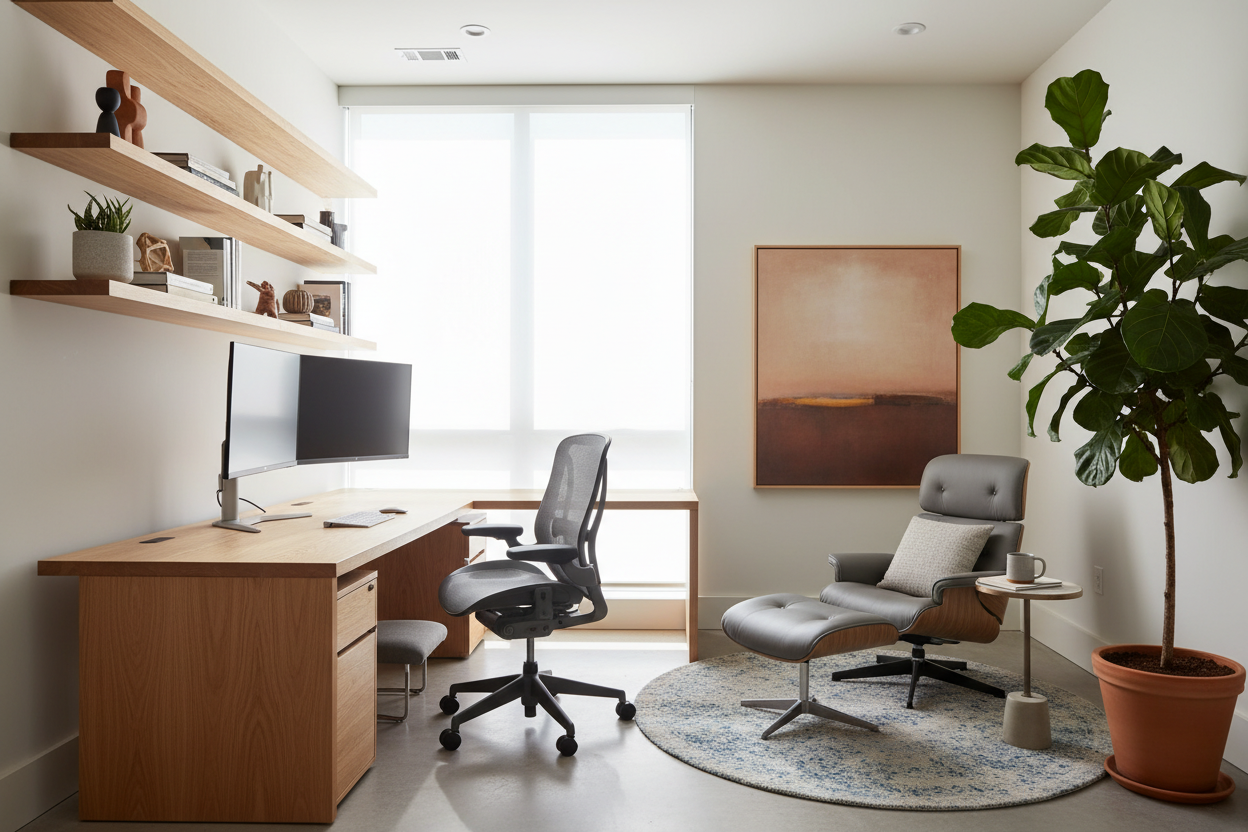
The distinction between our sanctuary and our office has blurred, creating a unique design dilemma for homeowners. The challenge isn't just about connectivity; it is about psychological zoning and maintaining the visual integrity of your living space. If you are struggling with distraction or discomfort, the issue likely lies in your interior architecture. Here is how to work from home without compromising the elegance of your personal environment.
Quick Decision Guide: The Essentials
Before purchasing new pieces, evaluate these core elements to ensure your space functions as a professional environment.
- Ergonomics Over Aesthetics: Always prioritize a chair with adjustable lumbar support and seat depth over a sculptural silhouette.
- Lighting Temperature: Aim for 4000K (cool white) task lighting to maintain focus, layered with 2700K (warm) ambient light for the room.
- Surface Material: Choose matte finishes (wood veneer or laminate) over glass or high-gloss lacquer to reduce eye-straining glare.
- Spatial Zoning: Ensure the desk placement allows for a "command position"—facing the door, not the wall, whenever possible.
Defining the Workspace: Layout and Zoning
When clients ask what to do to work from home effectively, I start with the floor plan. The most common error is shoving a desk into a dark corner. To maintain a professional mindset, you must treat the workstation as a focal point, not an afterthought.
If you lack a dedicated room, use visual anchoring. An area rug can delineate the "office" from the "living" area. This physical boundary signals to your brain that you have entered a workspace. For open-plan homes, consider a console desk behind a sofa; it saves space and keeps the sightlines clear.
The Furniture Foundation: Materiality and Comfort
Understanding how to really work from home requires a deep dive into furniture specifications. An easy way to work from home simply does not exist if your body is in pain. Investing in a high-quality task chair is non-negotiable.
Choosing the Right Desk Surface
Solid wood offers warmth and durability but requires maintenance to avoid ink stains or water rings. High-pressure laminate is a practical alternative that mimics organic textures without the fragility. Ensure your desk depth is at least 24 inches to accommodate monitors while keeping the keyboard at a comfortable reach.
Textiles and Acoustics
Hard surfaces bounce sound, creating an echo that disrupts video calls. To solve how can work from home setups sound professional, introduce soft textures. Upholstered occasional chairs, heavy drapery, or acoustic wall panels in wool or felt can dampen noise and add a layer of sophistication to the room.
Lighting: The Invisible Design Element
Many homeowners wonder how to do work from home without suffering from eye fatigue. The answer lies in layered lighting. Relying solely on overhead recessed cans creates harsh shadows. Introduce a dedicated task lamp with an adjustable arm. This allows you to direct light onto documents without creating glare on your screen.
My Personal Take on How to Work From Home
Lessons from My Own Projects
I learned the hard way that "commercial grade" matters, even in a residential setting. When I first set up my home studio to work my home office into a functional space, I bought a stunning, vintage mid-century teak desk. It was beautiful, but the apron (the wood strip beneath the drawer) was too low.
Every time I crossed my legs, my knees hit the wood. After two weeks, I had bruises and a terrible posture from sitting awkwardly. I also chose a high-gloss finish for a nearby shelving unit, which reflected my monitor constantly, causing migraines. Now, I always advise clients to measure the "knee clearance" height (aim for 28-30 inches) and stick to matte finishes within the visual field of the computer. It’s these unpolished, practical details that dictate whether a space is livable or just photographable.
Conclusion
Creating a functional workspace is about balancing structural needs with your personal style. By selecting the right materials, prioritizing ergonomics, and mastering your lighting, you can build an environment that fosters productivity. Curate your space with intention, and the work will follow.
Frequently Asked Questions
How do I fit a workspace into a small bedroom?
Utilize vertical space. A wall-mounted secretary desk or a ladder shelf with a drop-down surface provides a workspace that can be folded away, preserving the bedroom's primary function as a rest zone.
What is the best color for a home office?
Greens and blues are known as low-wavelength colors that promote focus and calmness. Avoid overly bright reds or yellows, which can cause visual fatigue over long periods.
Is a standing desk worth the investment?
From a design and health perspective, yes. However, look for models with motors concealed within the legs and cable management systems to avoid the "cluttered industrial" look that ruins a home's aesthetic.


Leave a comment
This site is protected by hCaptcha and the hCaptcha Privacy Policy and Terms of Service apply.